


The digital environment in 2026 is more crowded and competitive than ever before. AI-generated content floods the web, making it difficult for search engines like Google to distinguish valuable information from automated noise. This shift forces a change in how we approach search engine optimization. Today, mastering Subscriber Engagement SEO is essential for online visibility and authority.
The new key is the “Behavioral Feedback” loop, where email-referred traffic is now treated as a powerful “Verified User” signal. High-engagement email campaigns create a direct impact on your site’s reputation through repeat visits and high dwell time, a phenomenon we can call the “NavBoost” effect. This post explores how to use subscriber engagement to drive and protect your search rankings.
Where Your Rivals Are Falling Behind
Many marketers are stuck in the past, focusing on outdated metrics. This creates a significant opportunity for you to gain a competitive edge. Understanding where others go wrong is the first step to getting it right.
The Vanity Metric Trap
For years, open rates have been a primary measure of email success. However, in the current SEO climate, this metric is insufficient. The Click-to-Open Rate (CTOR) has emerged as the only email metric that truly correlates with SEO success.
Why? Because it measures intent. A subscriber who not only opens your email but also clicks through to your website is sending a strong signal of interest and engagement.
The Pogo-Sticking Crisis
Driving traffic is only half the battle. Many competitors send users to unoptimized pages, causing them to bounce back to the search results quickly. This “pogo-sticking” behavior tells Google that your content is not helpful.
We focus on Dwell Time, ensuring that every click from your email list validates your content’s quality and, by extension, your search ranking.
Ignoring Branded Search
A frequently missed opportunity is using email to stimulate branded search queries. Your rivals are not prompting their subscribers to search for “Brand + Keyword” combinations.
These searches are a massive signal of authority and relevance, especially for influencing Google’s AI Overviews and establishing your brand as a trusted entity.
Pillar 1: Leveraging Direct User Signals for Ranking Power
Your email subscribers are your most valuable asset for building ranking power. Their interactions provide direct, verifiable signals that Google’s algorithms now prioritize. Here is how you can leverage these signals.
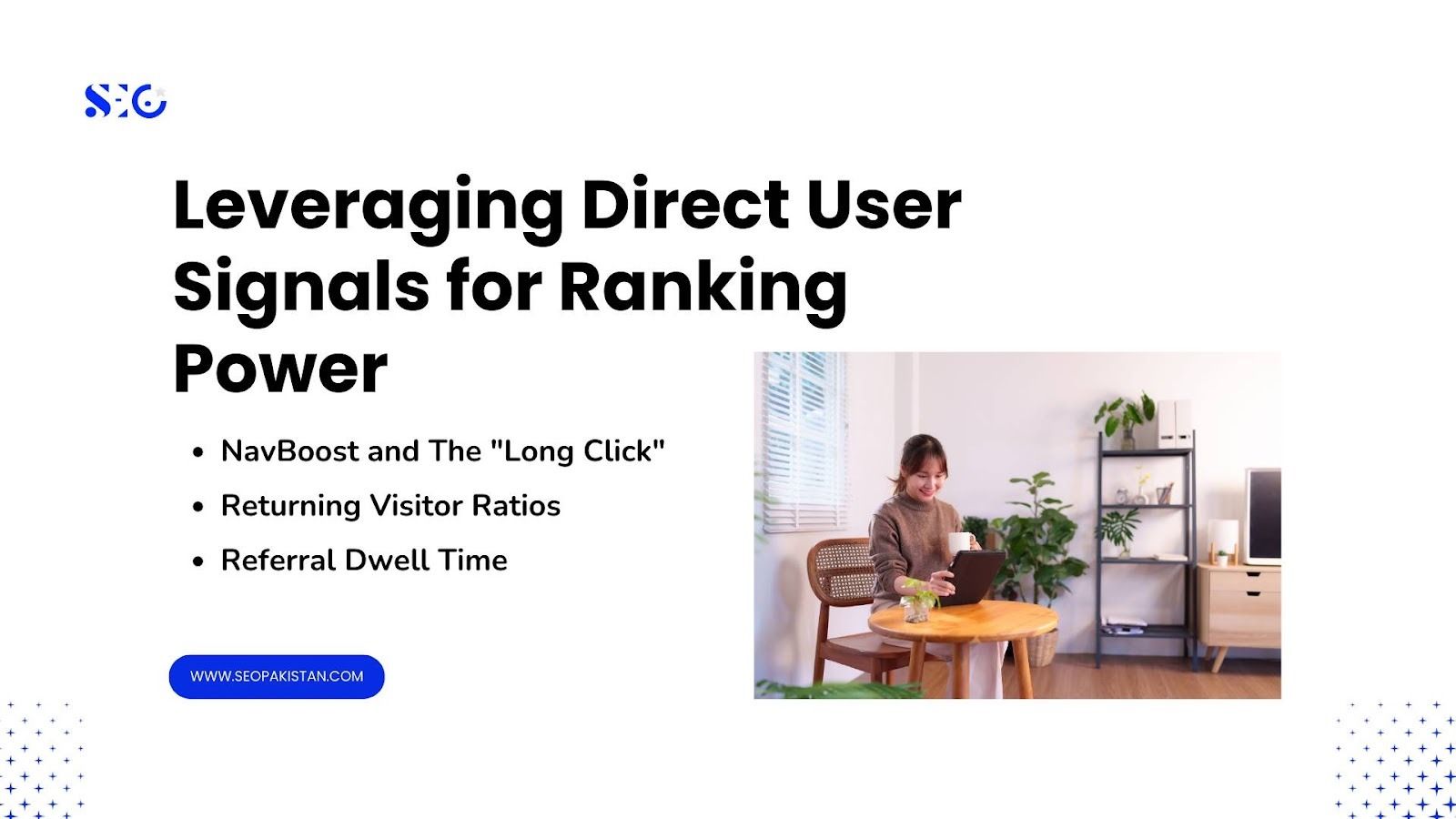
NavBoost and The “Long Click”
Historical engagement data is a powerful defense against algorithm volatility. Over 13 months of consistent engagement from your subscribers can create a protective shield for your rankings.
This “Long Click”, where a user repeatedly visits and stays on your site, demonstrates sustained value and builds a strong foundation that is difficult for competitors to replicate.
Returning Visitor Ratios
A high volume of repeat users from your email list directly signals Topical Authority to Google. When the same users return to your site for information on a specific topic, it validates your expertise, experience, authority, and trustworthiness (E-E-A-T). This is a clear indicator that you are a go-to source in your niche.
Referral Dwell Time
Keeping email visitors on your page is critical. The 2026 benchmark for a “Quality Engagement” signal is a dwell time of eight seconds or more. To achieve this, you must deliver on the promise of your email’s call-to-action.
Strategies include embedding videos, using interactive elements, and ensuring your content is immediately engaging and easy to navigate.
Pillar 2: Technical Trust and Deliverability as SEO Assets
Your technical email setup has a direct and indirect impact on your SEO performance. Building trust in the inbox translates to building trust in search results.
BIMI & DMARC for Brand Recognition
Brand Indicators for Message Identification (BIMI) and Domain-based Message Authentication, Reporting, and Conformance (DMARC) are no longer just email security protocols.
By displaying your verified brand logo directly in the inbox, you increase brand awareness and user trust. This familiarity leads to a higher click-through rate (CTR) when your brand appears in organic search results, as users are more likely to click on a name they recognize.
The Spam-to-Ranking Correlation
High spam complaints do more than hurt your deliverability. They can indirectly damage your domain’s trust score within AI-powered search engines.
A domain associated with spam is seen as less credible, which can negatively affect your rankings across the board. Maintaining a clean email reputation is essential for a healthy domain authority.
Zero-Party Data for Keyword Gaps
Your subscribers can tell you exactly what they are looking for. Use email polls and surveys to gather zero-party data information that users willingly provide. This data can help you identify “Keyword Gaps” that your competitors are completely ignoring, allowing you to create targeted content that perfectly matches user intent.
Pillar 3: Rescuing Your Brand from “Zero-Click” Searches
AI Overviews and other rich snippets are leading to more “zero-click” searches, where users get their answers without ever visiting a website. A loyal email list is your best defense against this trend.

AI Overview Protection
By building a dedicated subscriber base, you create a moat around your brand. You can bypass AI-generated summaries and drive users directly to your official pages.
This direct traffic from a loyal audience is a signal that your website is the definitive source of information, which can influence how and when your content is featured.
The “Search for Us” Prompt
Do not be afraid to directly ask your subscribers to engage with you on other platforms. Craft email CTAs that encourage subscribers to search for your brand on Google.
For example,
A CTA like “Find our latest guide by searching for [Your Brand] SEO tips” can significantly boost your Branded Search Volume, reinforcing your authority with search engines.
Strategic Mapping: Email Engagement vs. SEO Impact
Understanding the direct line between email metrics and SEO outcomes is crucial. This table illustrates how specific email actions translate into ranking signals.
| 2026 Email Metric | Corresponding SEO Signal | Ranking Impact (1-10) |
| Click-Through Rate | Traffic Freshness / Indexing | 8 (Fast-track) |
| Average Session Duration | Content Helpfulness / Dwell Time | 10 (Critical) |
| Forwarding/Viral Rate | Natural Backlink Potential | 9 (Authority) |
| Email Replies | Entity Trust (E-E-A-T) | 7 (Reputation) |
Case Study: The Engagement Recovery
Let’s look at a real-world example. A client experienced a 40% drop in organic traffic following a major AI search update. Their content was being overshadowed by AI-generated summaries.
We implemented a re-engagement campaign that focused on “Interactive Long-Form Guides” sent exclusively to their email list. These guides were packed with high-utility content and a strong internal linking structure to encourage exploration.
The result was immediate and powerful. Returning visitor metrics spiked, and average session duration increased significantly. Within three weeks, the client had restored Page 1 rankings for 12 of their primary keywords. This demonstrates that a focused subscriber engagement strategy can rapidly reverse negative SEO trends.
Conclusion: Your 2026 Engagement Roadmap
In this new era of search, your email list is your most powerful SEO laboratory. Every click, every page view, and every minute a subscriber spends on your site is a direct vote for your ranking authority. Do not just chase the click; you must optimize the entire user journey to prove your value to search engines and to your audience.
Is your subscriber engagement seo falling flat? It might be time to rethink your strategy with SEO Pakistan. An Omnichannel Engagement Audit can help you turn your loyal list into a powerful ranking engine.
Frequently Asked Questions (FAQs)
How does email engagement impact SEO rankings?
Email engagement boosts SEO by driving repeat traffic, increasing dwell time, and signaling user intent to search engines like Google.
What is the NavBoost effect in SEO?
The NavBoost effect refers to improved site reputation through high engagement metrics like repeat visits and long session durations from email-referred traffic.
Why is CTOR important for SEO in 2026?
Click-to-Open Rate (CTOR) measures user intent, making it a critical metric for SEO success as it reflects genuine interest and engagement.
How can email campaigns reduce zero-click searches?
Email campaigns encourage direct site visits and branded searches, bypassing AI-generated summaries and driving organic traffic.
What email metrics correlate with SEO success?
Metrics like Click-Through Rate, Average Session Duration, and Forwarding Rate directly influence SEO signals like traffic freshness, dwell time, and backlink potential.