

The Pakistani e-commerce market is on a trajectory to surpass PKR 500 billion, making e-commerce SEO Pakistan more essential than ever. This digital frontier is rapidly maturing into a fiercely competitive arena. For businesses in Karachi, Lahore, and beyond, simply ranking on search engines is no longer sufficient. The landscape is shifting dramatically, demanding a more sophisticated approach to online visibility.
We are moving beyond traditional search engine optimization (SEO) and into the era of Generative Engine Optimization (GEO). This new reality means your products must become the cited, authoritative answers within AI-powered search summaries. This guide provides the blueprint for local market dominance by focusing on technical excellence, cultural context, and strategic foresight.
Gap Analysis: Where Local Competitors Are Failing
Many online stores in Pakistan are leaving significant revenue on the table. Identifying these gaps provides a clear opportunity for ambitious brands to capture market share.
The “Roman Urdu” Blind Spot
A substantial portion of the online user base, estimated at around 40%, searches using transliterated or “Roman” Urdu. Queries like “sasta aur accha mobile” are common, yet most competitors optimize their websites exclusively for English.
This creates a massive blind spot. By strategically targeting Roman Urdu keywords, you can connect with a large, underserved segment of the market that your rivals are completely ignoring.
Mobile Bandwidth Neglect
A fast, responsive website is not a luxury; it is a necessity. Many local e-commerce stores are too “heavy,” with slow loading times that frustrate users and kill conversions. In 2026, failing to optimize for mid-range Android devices operating on 4G and 5G networks will lead to a direct drop in sales. Every second of delay can cause a conversion drop of up to 20%. A lightweight, speedy site is fundamental to success.
The Payment Schema Void
Trust is a critical currency in e-commerce. While rivals focus on basic product information, they often overlook the trust-building power of highlighting local payment solutions.
By using structured data (Schema markup) to explicitly showcase integrations with Raast, SadaPay, and JazzCash, you signal security and local credibility. This technical detail enhances your site’s Experience, Expertise, Authoritativeness, and Trustworthiness (E-E-A-T), which search engines reward.
Pillar 1: Technical Infrastructure for Dominance
A solid technical foundation is the bedrock of any successful e-commerce SEO strategy. It ensures your store is fast, accessible, and correctly indexed by search engines.
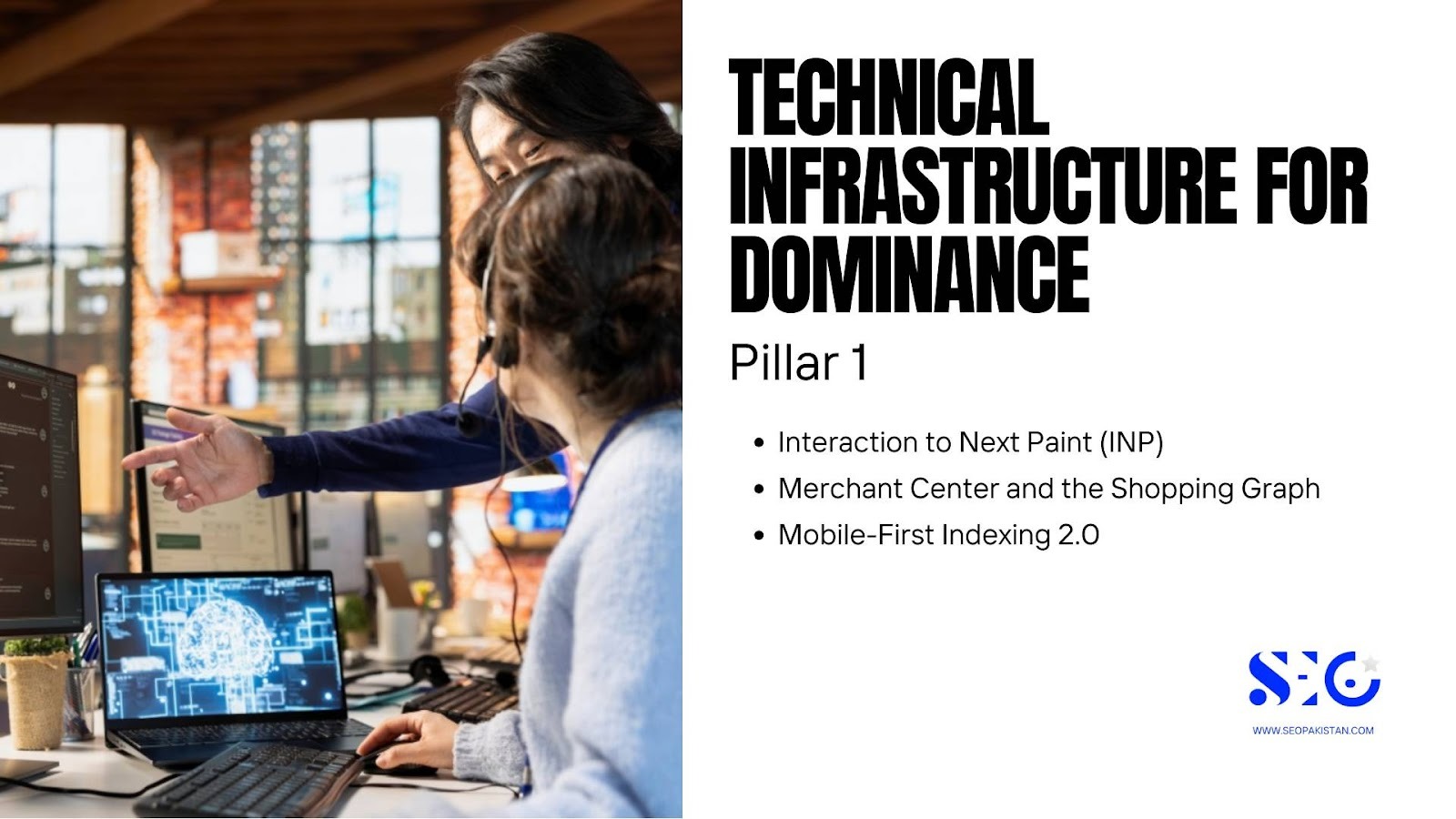
Interaction to Next Paint (INP)
Interaction to Next Paint (INP) is the 2026 benchmark for measuring a store’s responsiveness. It gauges how quickly your website reacts to user interactions, such as clicking a product filter or adding an item to the cart.
Optimizing your site to achieve an INP of under 200 milliseconds creates a “snappy” user experience that directly impacts conversions and search rankings.
Merchant Center and the Shopping Graph
To compete effectively, you must automate your product data. By correctly setting up and managing your Google Merchant Center account, you can feed real-time information about your products, prices, and stock levels directly into Google’s Shopping Graph.
This ensures your items appear accurately in the dynamic, grid-based shopping results that users increasingly rely on.
Mobile-First Indexing 2.0
Google has long prioritized the mobile version of websites for indexing and ranking. The next evolution of this is a focus on seamless mobile experiences, even in low-connectivity areas. Progressive Web Apps (PWAs) are the solution.
They offer an app-like experience directly in the browser, function offline, and provide a superior shopping journey for users in rural or less-connected regions of Pakistan.
Strategic Mapping: SEO vs. Pakistan Market Intent
A one-size-fits-all SEO strategy will not work. Success requires aligning technical tactics with the specific nuances and search behaviors of the Pakistani market.
| 2026 SEO Strategy | Pakistan-Specific Nuance | Ranking Impact |
| Urdu Voice Search | Optimizing for conversational, long-tail queries. | Critical (High Intent) |
| Local Trust Signals | Verified WhatsApp Support & local office schema. | High (E-E-A-T) |
| Hyper-Local SEO | City-specific landing pages (e.g., “Online Grocery Faisalabad”). | High (Relevance) |
| Visual Search (Lens) | High-resolution, Alt-text optimized local product photography. | Medium (Discovery) |
Pillar 2: Intent-First Content Strategy
Your content must do more than just exist; it must serve a purpose. An intent-first strategy involves matching your content to the specific needs of Pakistani buyers at every stage of their journey.
The Three Cs of Intent
Understanding buyer behavior requires analyzing the three Cs: Content Type, Content Format, and Content Angle.
- Informational Intent: Users searching for “best lawn brands” need blog posts, comparison guides, and lookbooks.
- Transactional Intent: Users searching for “buy Khaadi lawn online” need clear, optimized product and category pages.
By aligning your content with user intent, you create a more effective and satisfying customer journey.
Seasonal “Mela” SEO
Pakistan’s cultural and national events drive massive commercial activity. Develop content clusters for major occasions like Eid-ul-Fitr, Blessed Friday, and Pakistan Day at least three months in advance.
This proactive approach builds topical authority and “freshness” in the eyes of search engines, ensuring you rank prominently when shopping interest peaks.
Pillar 3: AI-Driven Visibility & Internal Linking
Artificial intelligence is reshaping how users find products and how search engines rank them. Your strategy must adapt to this new paradigm.
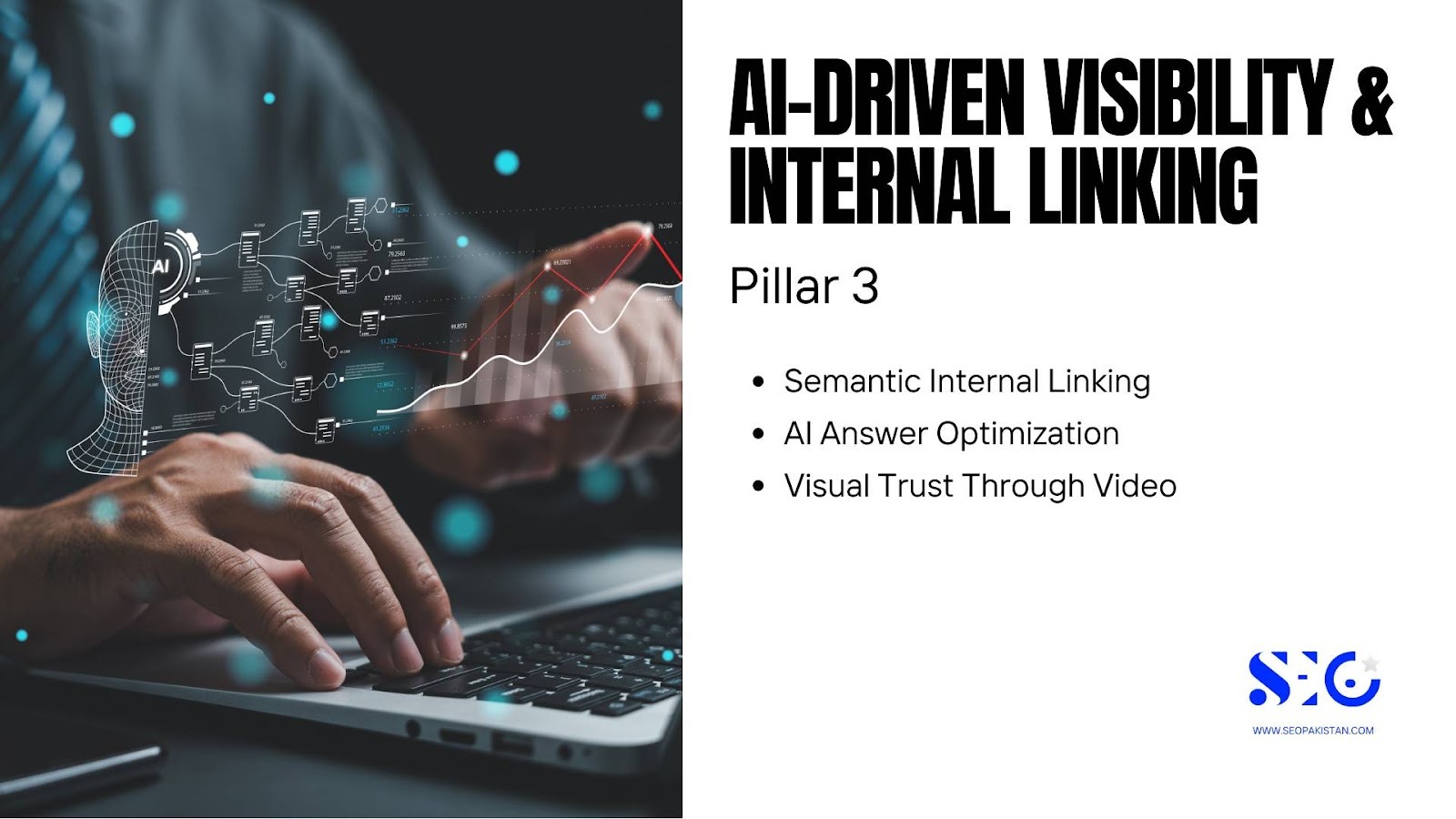
- Semantic Internal Linking: Use AI-powered tools to analyze your site structure. These tools can identify “orphaned” product pages with few internal links and connect them to high-traffic category pages, distributing authority and improving visibility.
- AI Answer Optimization: Structure your product descriptions and FAQ sections to be easily digestible for AI assistants. Use clear question-and-answer formats so AI can extract your data and present it as the definitive answer to user queries.
- Visual Trust Through Video: Integrate short-form videos from platforms like TikTok and Reels directly onto your product pages. This not only showcases your products dynamically but also significantly increases “Dwell Time,” the amount of time users spend on your page. Dwell Time is a primary ranking signal in 2026.
Case Study: Transforming a Local Fashion Label
Problem: A Lahore-based fashion brand was receiving high organic traffic but suffering from very low “Add to Cart” rates and poor conversions.
Solution: We conducted a full audit and implemented a two-pronged solution. First, we optimized the site’s code to improve Interaction to Next Paint (INP), making the filtering and checkout process faster. Second, we developed an FAQ section using Schema markup, targeting common customer queries in Roman Urdu.
Result: The brand achieved a 45% increase in mobile organic revenue within three months. The brand achieved the top ranking for the competitive keyword “Designer Lawn 2026,” showcasing the effectiveness of blending technical efficiency with cultural insight.
Conclusion: Your Roadmap to the Top
E-commerce SEO in Pakistan is no longer a simple game of keywords. Victory is achieved at the intersection of cultural context and technical speed. You must understand how your customers search, speak their language, and provide a flawless, fast online experience.
In 2026, if you are not the AI’s first choice, you will not be the customer’s first choice. The brands that embrace this new reality will not just compete; they will dominate the digital bazaar.
Ready to take your business to new heights with e-commerce SEO Pakistan? Secure your place at the forefront of the digital market by optimizing every aspect of your online store for both users and search engines. Contact our expert team today for a comprehensive e-commerce SEO Pakistan audit and start your journey to local market dominance.
Frequently Asked Questions (FAQs)
What is E-commerce SEO in Pakistan?
E-commerce SEO in Pakistan involves optimizing online stores to rank higher in search engines, focusing on local keywords, Roman Urdu queries, and mobile-friendly designs to attract Pakistani shoppers.
How can I optimize my website for Roman Urdu searches?
Use transliterated keywords like “sasta aur accha mobile” in your content, meta tags, and FAQs to target the 40% of users searching in Roman Urdu.
Why is mobile optimization critical for Pakistani e-commerce?
Most users shop on mid-range Android devices. A fast, lightweight website ensures better user experience and higher conversions, especially on 4G/5G networks.
What are local trust signals in SEO?
Local trust signals include verified WhatsApp support, local office schema, and highlighting payment options like Raast, SadaPay, and JazzCash to build credibility.
How does AI improve e-commerce SEO?
AI enhances SEO by optimizing internal links, structuring FAQs for AI assistants, and integrating short-form videos to boost dwell time and rankings.