

Have you ever wondered how search engines instantly deliver the exact information you need from the vast expanse of websites? Imagine an unstoppable army of silent digital explorers, tirelessly mapping every corner of the internet for you.
Meet the web crawler, a core technology that drives how you access knowledge, gain competitive insights, and protect your site’s visibility.
This complete guide to automated web browsing reveals how web crawlers work, their importance for SEO, and the hidden applications that power smarter business strategies.
If you want to succeed in today’s digital environment, understanding the web crawler definition is essential. Continue reading to discover why web crawlers serve as the backbone of the searchable web.
The Core Web Crawler Definition, Features, and How It Works
Understanding the web crawler definition starts with knowing its purpose and function. Web crawlers are the foundation of making the internet a searchable resource. They have unique features and follow a looping process to collect information efficiently.
Web Crawler: Definition and Core Identity
A web crawler, otherwise known as a spider program, is an automated agent designed to systematically browse the World Wide Web to discover, download, and index content.
This process forms the basis of all web indexing software. The key term is systematic. Crawlers operate on highly organized and prioritized paths set by algorithms.
From a web server’s view, a web crawler appears as a simple, non-interactive HTTP client. It is easily recognized by its User-Agent string, such as “Googlebot” or “Bingbot.”
Essential Web Crawler Features and the Politeness Protocol
Web crawlers observe strict protocols to ensure efficient and respectful web browsing.
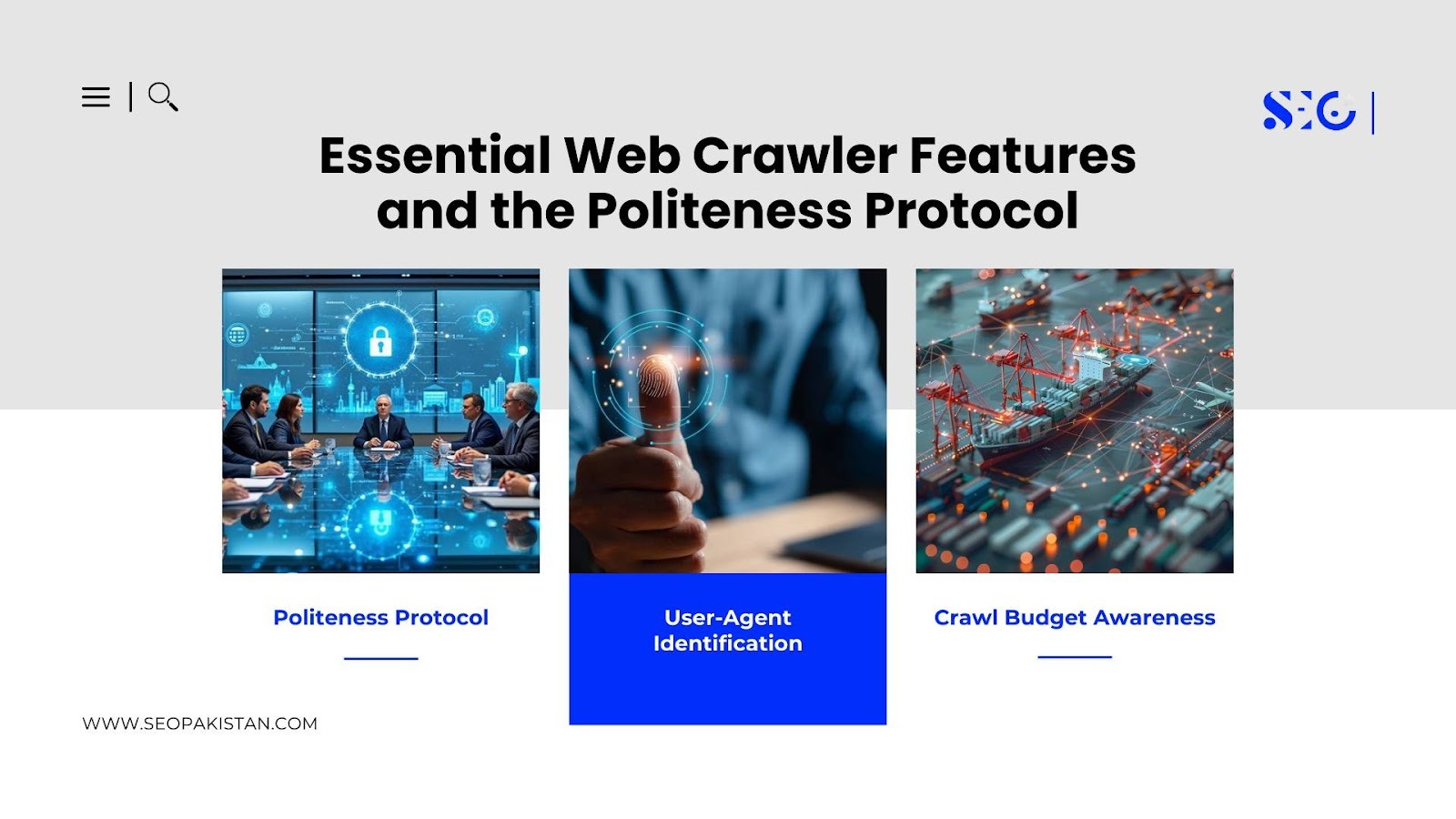
- Politeness Protocol: Every crawler must read and obey a site’s robots.txt file before beginning its crawl, determining which pages it may access.
- User-Agent Identification: By identifying themselves, web crawlers like Googlebot or Bingbot allow site owners to track and manage bot activity easily.
- Crawl Budget Awareness: Each crawl has a limited time or “budget” per site, making content prioritization vital for effective indexing.
The 3-Step Web Crawler Execution Loop
Web crawlers perform in a continuous, three-step process for gathering data:
- Fetching (The Request): The web crawler selects a URL from its queue and sends an HTTP request to the server.
- Parsing & Content Analysis: The crawler downloads the HTML, reads content and metadata, and analyzes elements like titles, keywords, and links.
- Storing & Linking (The Index): Extracted data is moved to the search engine’s index, with discovered links added back to the crawl queue.
Types, Strategy, and Implementation of Web Crawlers
There are several web crawler types, each engineered for different strategies and operational needs. Implementation requires a strong technical approach.
Web Crawler Types and Examples
Distinct web crawler categories address varied operational goals:
- Focused Crawlers: Target content concerning specific subjects, such as price monitoring on e-commerce websites.
- Incremental Crawlers: Frequently revisit sites to keep the search engine’s index and URLs up to date.
- Parallel Crawlers: Run several crawling processes at once to boost speed and coverage.
- Distributed Crawlers: Utilize decentralized systems worldwide for maximum reach.
Notable web crawler examples include Googlebot, Bingbot, and Amazonbot.
Web Crawler Strategies and Key Requirements
Smart strategies mix different crawler types for the best results. Combining incremental with focused crawling ensures both timely data and resource savings.
Effective web crawler implementation demands robust queue management for countless URLs, IP rotation for non-search bots, and secure, isolated data storage.
True Automated Web Browsing with Advanced Crawlers
The most sophisticated web crawlers feature a real-time, autonomous feedback loop. When a crawler finds high-value data, like a new competitor product price, its algorithm instantly reorders the crawl queue to focus on nearby links, maximizing useful data. This self-correcting path sets apart advanced automated web browsing.
Web Crawler Purpose, Importance, and Strategic Distinctions
Recognizing the Web Crawler Purpose is crucial for digital strategy and technical SEO foundations.
Why the Web Crawler is Important
Web crawlers are vital because they form the backbone of search engine optimization (SEO) and digital visibility. They systematically index website content, ensuring it is discoverable in search engine results.
Without proper crawling, a website cannot rank effectively, limiting its reach and impact. Additionally, web crawlers enable businesses to gather critical data for competitive analysis, compliance monitoring, and market insights, making them indispensable for both technical and strategic operations in the digital landscape.
Web Crawler Purpose: Dual Mission in SEO and Business Intelligence

The primary Web Crawler Purpose includes:
- Discovery and Indexing: Feeding search engines with fresh, relevant web content.
- Strategic Data Collection and Intelligence: Supporting price monitoring, fraud detection, and learning from real-time competitor moves. Mastering the Web Crawler Purpose is essential for data-driven operations.
API vs Web Crawler: Key Differences
The API vs Web Crawler question is vital for data collection:
- API: A structured, controlled data access method from the website owner, regulated and sometimes limited.
- Web Crawler: Gathers unstructured, real-time data by crawling public web pages directly. When APIs do not exist or fall short, understanding API vs Web Crawler ensures uninterrupted access to key information.
Six Secret Applications of Web Crawlers
Beyond search engines, web crawlers empower:
- Compliance Auditing: Scanning for legal text, such as privacy policies.
- Defacing Detection: Checking site visuals for unauthorized changes.
- Broken Feature Testing: Detecting failed API calls hidden in JavaScript.
- Link Injection Forensics: Monitoring outbound links for security.
- Predictive Modeling Input: Collecting data for marketing analytics.
- Load and Stress Testing: Simulating traffic surges to test infrastructure.
Web Crawler Benefits, Improvements, and Industry Impact
Web crawlers offer transformative benefits across industries by enabling businesses to gain market transparency, spot real-time trends, and ensure regulatory compliance. They improve operational efficiency by reducing reliance on costly APIs, enhancing website health, and fostering data independence.
By implementing advanced crawling strategies, businesses can transition from reactive to proactive decision-making, leveraging real-time insights for pricing, inventory, and marketing.
This technology not only optimizes SEO but also drives innovation in data collection, making it a cornerstone for competitive advantage in the digital age. A sound web crawler strategy delivers measurable business value and operational efficiency.
Six Benefits of Web Crawler Strategies for Business
- Market Transparency: Full competitive landscape visibility.
- Real-Time Trend Spotting: Detect industry changes as they happen.
- Improved Regulatory Compliance: Prevent costly compliance mistakes.
- Cost Efficiency: Replace expensive API fees with internal crawlers.
- Data Independence: Control your entire data pipeline.
- Enhanced Website Health: Consistently boost SEO and user experience quality.
Business Improvement Through Web Crawler Implementation
Leveraging web crawlers transforms businesses from reactive choices to proactive decision-making, directly influencing pricing, inventory, and marketing.
Web Crawler Comparison Table: Indexing Bots vs. Intelligence Crawlers
| Crawler Characteristic | Indexing/Search Bots | Strategic/Intelligence Bots |
| Primary Goal | Map the entire web | Gather specific data points |
| Data Flow | Public → Index | Public → Internal Data Lake |
| Constraint | Crawl Budget | Anti-bot Measures/Rate Limits |
| Core Technology | Large-scale web indexing software | Focused/Parallel automated web agents |
Conclusion: The Backbone of the Searchable Web
The web crawler definition highlights a deceptively simple tool with profound impact. Web crawlers build the structure needed for automated web browsing, powering search, business insight, and compliance on a global scale.
By mastering the fundamentals of web crawlers, you secure your position in the digital landscape. Check your site for crawl issues now. Effective web crawler strategies keep your site visible and competitive. Must visit seo pakistan for more
Frequently Asked Questions
What is a web crawler and how does it work?
Automated program that browses the internet to discover, download, and index content for search engines. Fetches URLs, analyzes content, stores data in searchable index.
Why are web crawlers important for SEO?
Index your website content making it discoverable in search results. Without proper crawling, your site cannot rank—no index means no visibility.
What’s the difference between an API and web crawler?
API: Structured data access granted by website owner, controlled permissions.
Web crawler: Collects unstructured real-time data by browsing public pages, no permission needed.
How do I optimize my site for crawlers?
Clear site structure, robots.txt file for crawl instructions, XML sitemap, fix broken links, prioritize important pages with internal linking.
What are the main web crawler types?
Focused: Topic-specific content
Incremental: Updates changed pages only
Parallel: Multiple crawlers for speed
Distributed: Global coverage across servers