


The definition of an “SEO-friendly website” has evolved. As we approach 2025, merely implementing basic SEO practices will no longer suffice. The new standard is compliance, which means your site must be ready for advanced AI search. We are not just optimizing for old rules; we are preparing for the future of search. This shift from basic optimization to deep compliance is crucial. A compliant site is the foundation for effective website conversion optimization and, ultimately, increased revenue.
This post provides a comprehensive checklist to help you ensure your website meets the latest standards for search engine compliance. We will cover the technical foundation, performance metrics, on-page elements, and the growing influence of AI. Following these guidelines will help search engines understand your site, improve your search engine rankings, and create a better user experience.
Technical Foundation: A Crawler’s Compliance Checklist
Search engine crawlers are more sophisticated than ever. For your site to be considered SEO-friendly, its technical foundation must be flawless. This allows search engines like Google to crawl and index your web pages efficiently.
Indexability Mastery
Your website’s accessibility to search engine crawlers is paramount. The introduction of AI crawlers like GPTBot and Google-Extended requires a new approach to indexability.
- robots.txt: Configure your robots.txt file to grant access to these new AI agents. Blocking them could limit your visibility in emerging AI-driven search results.
- XML Sitemaps: Your XML sitemap acts as a roadmap for search engines. Keep it updated and error-free to guide crawlers to all important pages, ensuring they do not miss valuable site content.
Site Architecture
An organized site structure benefits both visitors and search engines. We recommend implementing the “3-Click Rule,” which ensures any web page on your site can be reached within three clicks from the homepage.
This clear path improves crawl budget efficiency, allowing search engine crawlers to index more of your website’s content with their allotted resources. A well-organized URL structure also contributes to a user-friendly experience, helping users navigate your site with ease.
HTTPS and Security
Security is a non-negotiable trust signal. An SSL/HTTPS encryption is a critical ranking factor. It secures the connection between a user’s browser and your server, protecting sensitive data.
Google has confirmed that HTTPS is a ranking signal, making it an essential component of any modern SEO strategy. A secure site builds trust with visitors and search engines alike.
The Performance Pillar: Speed as a Ranking Signal

Site speed is a cornerstone of technical SEO and user experience. Websites with slow loading times can lead to user dissatisfaction and harm search engine rankings. For mobile users, especially, a fast page speed conversion is critical.
Core Web Vitals 2.0
Google’s Core Web Vitals are key metrics for evaluating page experience. While Largest Contentful Paint (LCP) has been a focus, the new benchmark is Interaction to Next Paint (INP).
INP evaluates how effectively a page responds to user interactions. A low INP score indicates that your site reacts quickly to clicks and keyboard inputs, providing a smoother experience. Optimizing for INP is crucial for better user retention and higher rankings.
The Conversion Link
Technical speed directly correlates with conversions. A quick-loading website enhances user engagement and minimizes bounce rates. Studies consistently show that even a one-second delay in page load time can significantly decrease conversions.
By optimizing for page speed, you are not just appeasing search engines; you are creating a better path for a user to become a customer.
Mobile-First Indexing
Google primarily relies on a site’s mobile version for indexing and ranking. Therefore, your mobile site must offer the same content and functionality as your desktop version.
This means having a responsive web design that adapts to all mobile devices.
Ensure your mobile-optimized site provides a seamless experience to capture the vast majority of search traffic that comes from mobile users.
On-Page Optimization: Semantic and Search Engine Compliance
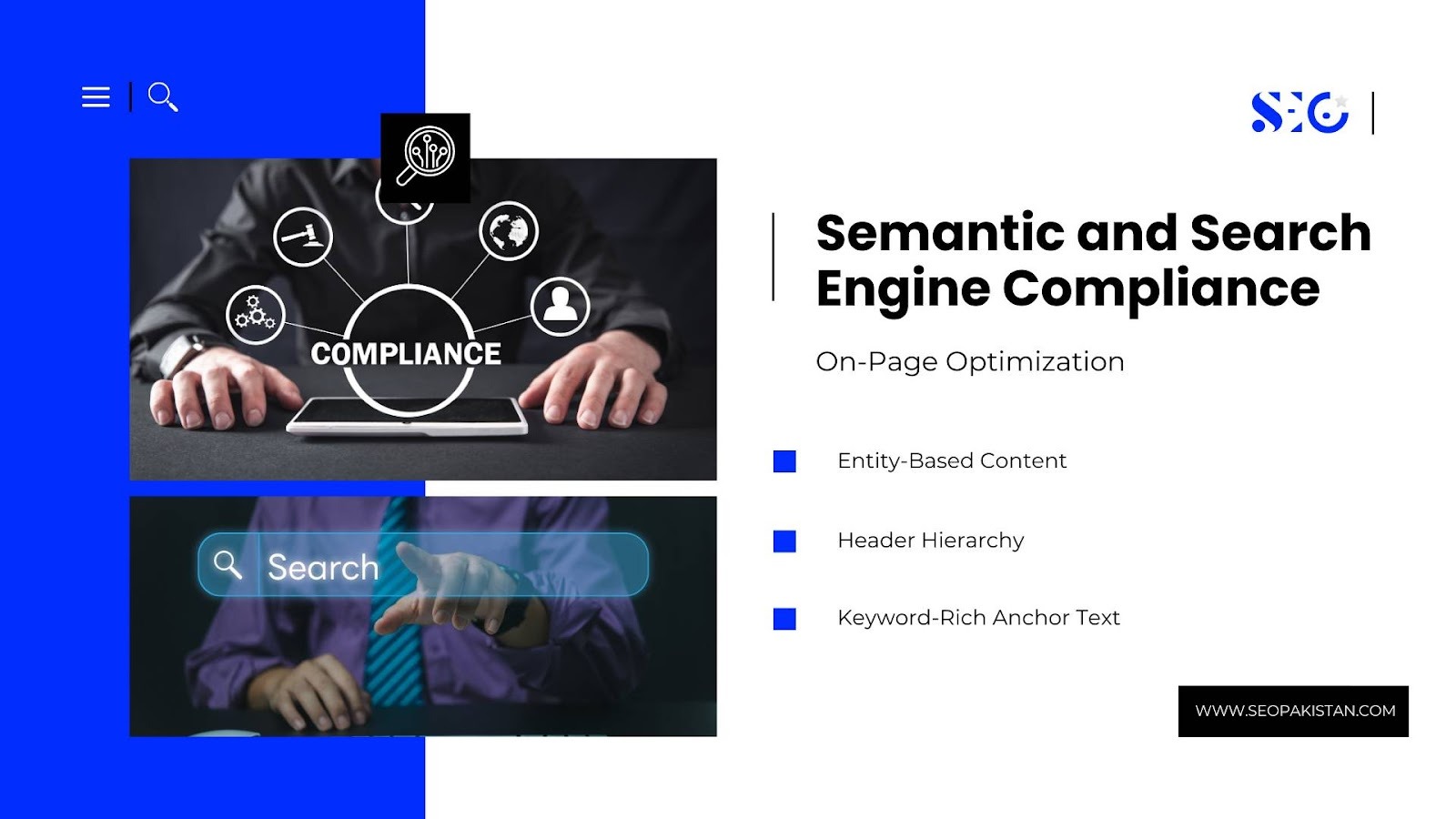
High-quality, relevant content is the heart of SEO. On-page optimization ensures your web page’s content is structured for both machine readability and human engagement.
Entity-Based Content
Contemporary search engines leverage semantic search to interpret the context and purpose of a query. Move beyond simple target keywords and embrace entity-based content. Use Latent Semantic Indexing (LSI) keywords, synonyms, and related topics to build topical authority.
This practice helps search engines understand the depth of your knowledge on a subject, leading to better rankings for a wider range of queries. Avoid keyword stuffing, which can harm your SEO performance.
Header Hierarchy
Properly structured header tags (H1 through H3) create a logical hierarchy for your content.
- H1: The main title (use only one per page).
- H2: Major sections or chapters.
- H3: Sub-points supporting the H2.
This organization makes your content scannable for readers and easier for search engines to crawl and comprehend.
Keyword-Rich Anchor Text
Internal links help users navigate your website and spread link equity. Use keyword-rich anchor text for your internal links to provide context about the linked page.
This “compliance way” of linking avoids over-optimization penalties by using natural, descriptive phrases instead of just exact-match keywords. It helps both users and search engines understand your site’s structure and the relationship between different web pages.
Data Visualization: The 2025 SEO Compliance Checklist
Use this table to scan and implement the most critical compliance factors for your website.
| Category | Compliance Factor | Priority | Benefit |
| Technical | Schema Markup (JSON-LD) | Critical | Rich Snippets & AI Citations |
| Speed | Interaction to Next Paint (INP) | High | Better User Retention & Rankings |
| UX | Mobile Responsiveness | Critical | Mobile-First Indexing Compliance |
| Content | Semantic Keyword Mapping | High | Topical Authority |
| Security | SSL/HTTPS Encryption | Critical | Trust Signal & Security Ranking |
The AI Gap: Preparing for Search Generative Experiences
The rise of AI in search, such as Google’s Search Generative Experience (SGE), presents a new frontier for SEO. To stay ahead, you must optimize for these answer engines.
Answer Engine Optimization (AEO)
AEO involves structuring your site to become a “Cited Source” in AI-generated results. This means creating clear, concise, and factual content that directly answers common user questions. Use data, lists, and step-by-step guides to position your content as the definitive answer.
Structured Data
Structured data, or schema markup, is the “ID card” for your website. It provides explicit information to help search engines understand your content. Implementing the FAQ and the Organization schema is particularly important.
FAQ schema helps your content appear in “People Also Ask” sections and AI answers, while Organization schema validates your brand’s identity. WordPress users can use various plugins to implement schema markup easily.
Conclusion: Building a Future-Proof Asset
An SEO-friendly website is a moving target. Today’s benchmarks will serve as the foundation for tomorrow’s expectations. By focusing on deep compliance from technical foundations and site performance to semantic content and AI readiness, you are not just chasing rankings. You are building a durable digital asset.
Regularly conduct SEO audits using tools like Google Search Console and Google Analytics to monitor your site’s performance and identify issues like broken links or duplicate content. A proactive SEO strategy that embraces these advanced metrics and concepts is essential for long-term success.
Is your site compliant with 2025 standards? Contact SEOPakistan for a deep-dive technical audit today. We do not just follow checklists; we build authority.
Frequently Asked Questions
What makes a website SEO-friendly?
An SEO-friendly website has a technical setup, content, and user experience designed for search engines to easily crawl, understand, and rank. Key elements include fast page speed, a mobile-first design, relevant content, and a secure (HTTPS) connection.
How does site speed affect my SEO?
Site speed is a critical ranking factor. Slow-loading websites create a poor user experience, leading to higher bounce rates and lower search engine rankings. Optimizing for metrics like Core Web Vitals helps improve both your site performance and SEO.
Why is a mobile-friendly website important for SEO?
Google uses mobile-first indexing, meaning it primarily ranks the mobile version of your site. An SEO-friendly web design must be responsive and provide a seamless experience on mobile devices to achieve high search engine rankings.
What is technical SEO, and why does it matter?
Technical SEO helps search engine crawlers access and index your site without issues. It involves optimizing your site’s architecture, using structured data (schema markup), and ensuring a clean URL structure to help search engines understand your website’s content.
How do I create SEO-friendly content?
Focus on creating high-quality, relevant content that matches user search intent for SEO-friendly website. Use target keywords naturally, structure articles with clear header tags (H1, H2), and use internal links to guide users and search engines through your site’s content.