


You have done everything right. You performed extensive keyword research, crafted high-quality content, and built authoritative backlinks. Yet your web pages stay on the second page of search engine results pages (SERPs). The real issue is the strategy. Modern search engine optimization is no longer about just keywords; it is about search intent, semantic understanding, and how search engines interpret meaning and context.
Semantic SEO marks the quantum leap in search engine optimization. It goes beyond traditional SEO and individual keywords, focusing on search queries, entities, and semantic keywords.
Today’s search engines understand topics, relationships, and user intent, using semantic analysis, natural language processing, and the Knowledge Graph to interpret every web page’s meaning. You must shift from mere keyword matching to owning topical authority and delivering relevant semantic keywords across your content.
This is a detailed, advanced guide to modern SEO! Here is the Table of Contents, clearly structured with numbering for easy navigation of the semantic secrets and the strategy.
Semantic SEO At a Glance
To master semantic search SEO, focus on strategies and tools that align with the way Google Search and other search engines understand content. Strategic internal linking, semantic keyword research, topic clusters, and schema markup are all vital. Here is a quick overview:
| Component | Feature / Concept | Key Tool or Cost | How it Works |
| User Intent | Satisfy the user’s search query and next intent | AnswerThePublic, People Also Ask (PAA) | Drives semantic rankings by predicting and addressing users’ queries and related search queries |
| Entity Mapping | Identify all relevant connected concepts | NER Tools, Google Knowledge Graph | Builds contextual completeness and semantic authority |
| Structured Data | Add structured data with schema markup | Schema.org, JSON-LD | Helps search engines interpret and index your content more accurately, improving featured snippets |
| Time & Expertise | Strategic investment in semantic SEO strategies | In-depth research, semantic analysis | Requires expert knowledge for optimizing content and clustering semantically related keywords |
| Estimated Cost | Low upfront, high strategic input | Free (GSC) or premium SEO tools | Focus investment in effective tools that help create content and improve search engine rankings |
- Entity Mapping: Map entities and related keywords to cover the topic comprehensively, using tools like the Google Knowledge Graph and Named Entity Recognition (NER). This aligns your web content with what search engines expect for semantic web authority.
- Structured Data: Add structured data using schema markup. Label information for search engines and enable your web pages to qualify for enhanced search results, featured snippets, and knowledge panels.
- Strategic Focus: Invest your effort in building topical authority, using semantic keywords, semantically related keywords, and natural language processing to create content that search engines reward.
The Blueprint: 8 Hidden Keys to Semantic Search Engine Optimization
Here are the advanced secrets to unlocking semantic search SEO and dominating search engine rankings.
The Knowledge Graph ID Lookup
Embed the Google Knowledge Graph ID for your main entity directly in your schema markup. This action leaves no doubt for search engines about the subject of your content. For example, associating your pillar page with the correct Knowledge Graph entry boosts topical clarity and search engine results.
Content Pruning by Entity Gap
Improve search engine rankings by auditing and pruning underperforming content targeting the same entity. Focus on a content strategy that eliminates keyword stuffing and consolidates content for ultimate intent satisfaction. Use SEO tools and site audits to remove overlap and increase topical authority.
Advanced Internal Linking
Enhance your site’s structure with internal linking that relies on entity-rich, related semantic keywords. Connect pillar pages, topic clusters, and subtopic pages using semantically relevant anchor text. This creates logical paths for search engines to crawl and understand your content relationships.
Semantic Gap Analysis
Analyze competitors using semantic analysis rather than focusing on just keywords. Identify missed semantic signals, related terms, and topical gaps. Target these gaps to create content that captures more relevant search results and meets a wider range of user queries and intent.
“See Also” Schema Integration
Strengthen entity relationships using schema markup properties. Mark related content and topic clusters at the code level, establishing firm connections that search engines interpret as topical authority.
Image Semantic Optimization
Optimize every image for semantic understanding. Use descriptive and semantic filenames, alt-text, and captions such as “semantic-seo-pillar-page.png” to reinforce relevance for the search engine, increase search volume, and support long tail keywords.
The Content Velocity Signal
Maintain authority and improve search engine rankings by regularly refreshing your content with new related semantic keywords and emerging sub-entities. Use trend analysis and structured updates to reflect shifts in search intent and maintain topical freshness.
Named Entity Recognition (NER) Tools
Leverage NER tools to validate that your web content includes all relevant and related keywords and entities, supporting semantic SEO principles and natural language coverage. This semantic audit ensures you address the user’s intent comprehensively.
How Search Engines Understand Meaning
Modern search engines use latent semantic indexing, BERT, and RankBrain to interpret natural language and understand the relationships between entities. Entity resolution allows Google to match ambiguous phrases to the correct entry in the Knowledge Graph, delivering relevant search results for every user’s search query.
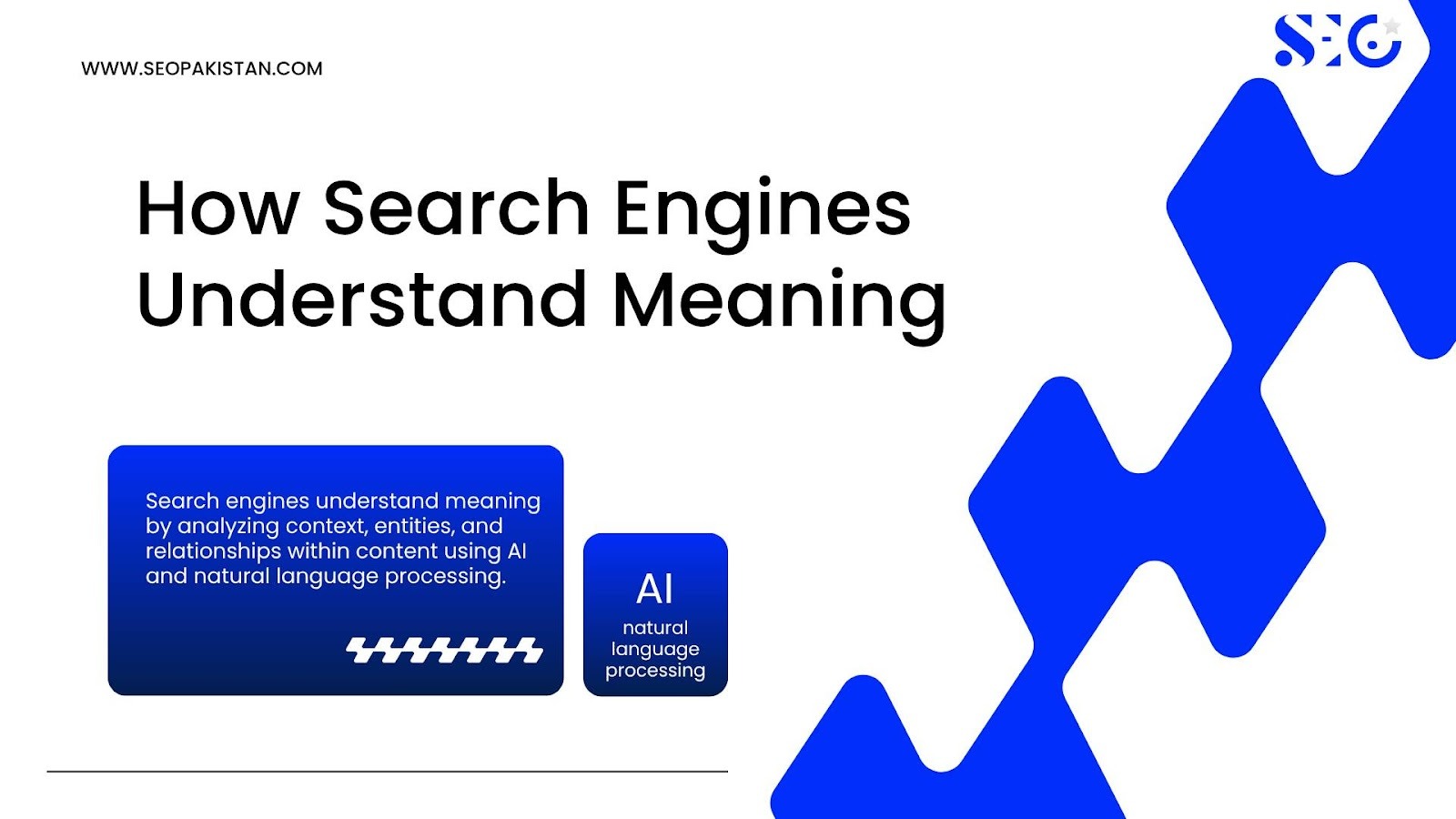
Algorithms weigh the proximity and frequency of related semantic keywords, determining which web pages best match the search intent. Schema markup, semantic signals, and optimizing content with semantic keywords help your site stand out in every search engine optimization effort.
The Business Impact of a Semantic SEO Strategy
Implementing a robust semantic SEO strategy offers lasting results:
- More Long Tail and Keyword Variations: Rank for hundreds of related keywords, not just your primary keyword. Capture increased search volume and dominate relevant search results.
- Higher Organic CTR and Featured Snippets: Enhanced schema markup can win more featured snippets, PAA, and rich results.
- Superior E-A-T & Resiliency: Topical authority and comprehensive semantic keyword coverage protect your site from Google Search updates.
- Lower Bounce Rate, Higher Engagement: By fully interpreting and meeting the user’s intent, users stay longer and engage more with your web page content.
- SERP Dominance: Appear in knowledge panels, answer boxes, and multiple locations across the search engine results pages.
- Protection Against Algorithm Shifts: Semantic SEO strategies evolve with search engines and their deeper understanding of natural language.
Conclusion: Your Next Move Toward Semantic SEO Authority
The foundation of semantic SEO is a strategic, data-driven approach focused on understanding user intent, embedding structured data, interpreting related search queries, and owning topical authority. You move away from traditional keyword research and create content that satisfies modern search engines.
Make your first step by finding and embedding the Knowledge Graph ID into your pillar page. Commit to optimizing content and internal linking across every semantic signal. The future of search engine optimization belongs to those who focus on semantic search and understanding not just keywords.
Begin mapping your semantic SEO strategy today with seo pakistan and unlock search engine authority.
Frequently Asked Questions
What is semantic search SEO?
Semantic search SEO focuses on optimizing content to align with the meaning and context of user queries, rather than just targeting specific keywords. It emphasizes understanding user intent, related entities, and the relationships between them to provide more relevant search results.
What is the difference between SEO and semantic SEO?
Traditional SEO primarily targets individual keywords and technical optimizations, while semantic SEO goes beyond keywords to focus on context, user intent, and entity relationships. Semantic SEO aims to create content that satisfies broader, topic-based queries and aligns with how search engines interpret meaning.
What are the 4 types of SEO?
- On-Page SEO: Optimizing content, keywords, and HTML elements on your website.
- Off-Page SEO: Building backlinks and improving external signals.
- Technical SEO: Enhancing site structure, speed, and crawlability.
- Local SEO: Optimizing for location-based searches and local visibility.
What is a semantic keyword in SEO?
A semantic keyword is a term or phrase closely related to the primary keyword, sharing contextual meaning. These keywords help search engines understand the topic comprehensively and improve content relevance.
What is a semantic SEO example?
An example of semantic SEO is creating a pillar page about “Digital Marketing” that includes subtopics like “SEO,” “Content Marketing,” and “Social Media Strategies,” with structured data and internal links connecting related content. This approach satisfies user intent and demonstrates topical authority.