


Effective email segmentation SEO goes far beyond increasing open rates. It actively improves engagement signals like click-through rates, dwell time, and return visits. By driving highly qualified traffic to specific landing pages, you send strong positive indicators to search engines.
This strategic approach also supports AI Overview visibility by aligning user intent with structured content. When you execute targeted campaigns, you directly influence search engine algorithms. These optimized workflows ultimately improve your overall conversion rates and search engine visibility.
What Is Email Segmentation in the SEO Context?
Marketing professionals often view email lists as a single distribution channel. However, treating email as a ranking tool requires a deeper understanding of user behavior and data flow.
How Segmentation Connects to Search Rankings
Search engines monitor how visitors interact with your website. Email marketing directly fuels these critical metrics. When highly interested subscribers click your links, they improve several key behavior signals.
Here are the metrics that search engines evaluate closely:
- Click-through rate from email to site pages.
- Time on page and overall session duration.
- Bounce rate reduction due to high relevance.
- Increase in direct and branded search queries.
Most marketers stop at opens. But Google looks at what happens after the click.
How Email Segmentation Directly Improves SEO Performance
Sending the right message to the right person does more than secure a sale. It optimizes the entire user journey.
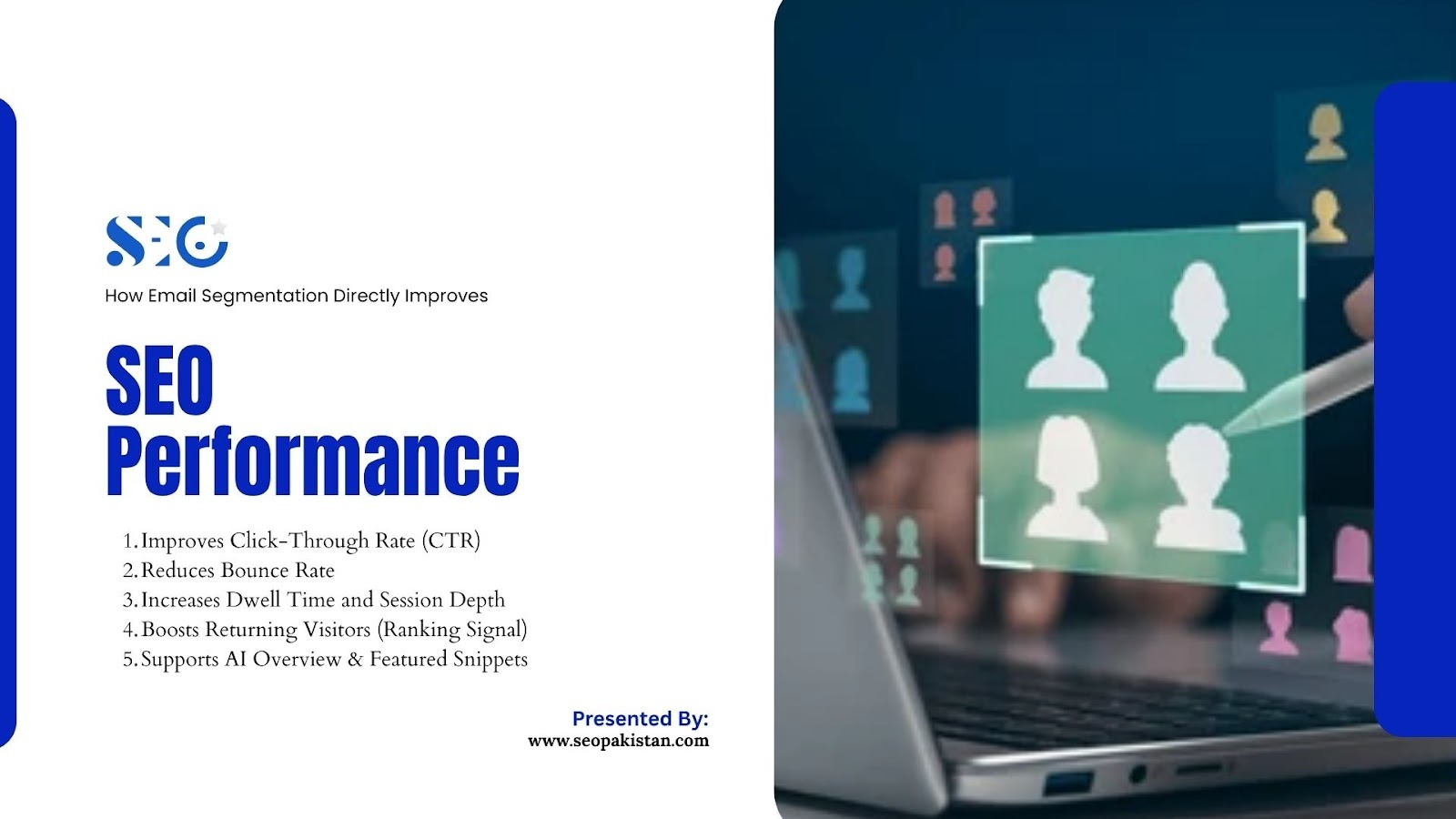
Improves Click-Through Rate (CTR)
Better targeting leads to higher engagement. When subscribers receive content that matches their specific interests, they click links more frequently.
Reduces Bounce Rate
Matching user intent ensures visitors arrive at relevant landing pages. A relevant page keeps the user reading and prevents them from leaving immediately.
Increases Dwell Time and Session Depth
Content relevance encourages users to explore your website further. Visitors who find immediate value will click internal links and read multiple articles.
Boosts Returning Visitors (Ranking Signal)
Search engines view repeat website visitors as a major trust signal. Regular email newsletters bring users back to your domain consistently.
Supports AI Overview & Featured Snippets
AI search models reward high-quality, structured content. Engaged email traffic validates that your content answers specific queries accurately.
High-Impact Email Segmentation Strategies That Drive SEO Results
Deploying strategic segments transforms a dormant email list into a traffic engine. You must categorize users based on actionable data.
Behavior-Based Segmentation
User actions provide a clear roadmap of their interests. You can track their digital footprint to send highly relevant follow-up content.
Focus your tracking on these specific user actions:
- Specific pages visited on your website.
- Total time spent reading particular articles.
- Click actions within previous email campaigns.
Intent-Based Segmentation (MOST IMPORTANT)
Understanding why a user subscribes is critical for SEO alignment. You must separate informational readers from transactional buyers.
Align your campaigns with these intent categories:
- Blog content for top-of-funnel educational queries.
- Product pages for high-intent purchasing queries.
Geographic Segmentation (Local SEO Boost)
Local search visibility relies heavily on location-specific signals. You can drive targeted regional traffic to local landing pages.
Implement these geographic tactics to dominate local search:
- Distribute region-specific content and offers.
- Target local keywords within regional email campaigns.
Engagement-Level Segmentation
Not all subscribers interact with your brand equally. You must separate your active readers from your inactive audience members. Use these strategies to manage list engagement:
- Send premium content to highly active users.
- Deploy re-engagement campaigns to win back dormant readers.
Lifecycle Stage Segmentation
Subscribers move through distinct phases of the buyer journey. Tailoring content to these stages improves user experience and search signals.
Map your content to these specific lifecycle stages:
- Awareness content for new subscribers seeking information.
- Consideration content for users comparing different solutions.
- Decision content for prospects ready to make a purchase.
| Segmentation Type | SEO Benefit | Key Metric Improved | Example Use Case |
| Behavior-Based | Higher dwell time | Session duration | Content follow-ups |
| Intent-Based | Better keyword alignment | CTR + rankings | Blog to service funnel |
| Geographic | Local SEO boost | Local visibility | City-specific campaigns |
| Engagement-Level | Lower bounce rate | Bounce rate | Re-engagement emails |
| Lifecycle Stage | Conversion + UX | Conversion rate | Funnel nurturing |
| Device-Based | UX optimization | Mobile engagement | Mobile-first emails |
Step-by-Step Process to Implement Email Segmentation for SEO
To effectively implement email segmentation for SEO, you need a methodical approach to data management. Follow these precise steps to bridge your email marketing and organic search efforts.
Step 1: Define SEO Goals (Traffic vs Conversion)
You must determine what outcome matters most for your current campaign. This decision dictates the types of links you share.
Ask yourself these critical questions before launching:
- Do you want to boost keyword rankings for a new post?
- Do you need to generate more qualified leads?
Step 2: Map Audience to Search Intent
Understanding where your audience is in their buying journey is crucial for effective targeting. By mapping their position to search intent, you can deliver content that resonates and moves them down the funnel.
- Top-of-funnel users: Need informational content like guides and blog posts.
- Bottom-of-funnel users: Are ready for conversion-focused content like case studies and product pages.
Step 3: Segment Your Email List
Once you understand your audience’s intent, you can segment your email list for more personalized messaging. This ensures the right people receive the right content at the right time, increasing engagement and the likelihood of conversion.
- Use logic rules in your email marketing software to group subscribers based on behavior and demographics.
- Ensure your email platform integrates seamlessly with your website analytics to track user actions effectively.
Step 4: Align Email Content with Landing Pages
A consistent user experience is key to building trust and driving conversions. The content of your email should be a direct preview of what the user will find on the landing page, creating a seamless transition from their inbox to your website.
- Ensure the messaging, tone, and offers in your email perfectly match the content on the destination page.
- Implement a strong internal linking strategy on your landing pages to guide visitors to other relevant content and improve SEO.
Step 5: Track SEO + Email Performance Together
Monitoring results ensures your strategy actually works. You must measure how email clicks influence website behavior.
Track these performance indicators weekly:
- Email click-through rate versus website visits.
- Average dwell time of email-referred visitors.
- Keyword rankings for the promoted pages.
Tools for Email Segmentation and SEO Integration
The right software stack makes complex segmentation achievable. For a successful Email Segmentation SEO strategy, you need robust platforms that share data seamlessly.
Email Marketing Tools
Modern email platforms offer powerful automation features. These tools handle the heavy lifting of list management. Consider these industry-leading platforms for your campaigns:
- HubSpot for comprehensive inbound marketing workflows.
- Mailchimp for straightforward tagging and segmenting.
- ActiveCampaign for advanced behavioral automation logic.
SEO + Analytics Tools
Data visibility is mandatory for search engine success. You must observe how your email audience interacts with your domain.
Rely on these foundational analytics platforms:
- Google Analytics to monitor user behavior and traffic sources.
- Search Console to track query performance and index status.
Common Email Segmentation Mistakes That Hurt SEO
When it comes to Email Segmentation SEO, poor execution can damage both your email deliverability and your search rankings. Avoid these frequent errors to protect your digital assets.
Email segmentation and SEO are a powerful duo, but only when executed correctly. Many marketers make critical errors that not only tank their email metrics but also drag down their search engine rankings.
Here are four of the most deadly mistakes to avoid:
- Sending Generic Campaigns: Blasting the same message to everyone on your list is a recipe for disaster. This approach guarantees poor engagement, leading to high bounce rates and low dwell times—two factors that signal to search engines that your content isn’t valuable.
- Ignoring Search Intent: When you send a promotional email to a subscriber looking for informational content, you create a jarring experience. This mismatch forces users to abandon your website almost immediately, harming your site’s authority and user trust.
- Not Tracking Post-Click Behavior: If your analysis stops at the email click, you’re missing half the story. Failing to track what users do after they land on your site means you’re leaving valuable behavioral data on the table, preventing you from optimizing the user journey and improving SEO performance.
- Over-Segmentation: While segmentation is key, creating too many micro-segments can lead to operational paralysis. If your groups are too small, you won’t gather statistically significant data, making your efforts ineffective and difficult to manage..
Conclusion
Email segmentation and SEO may seem like two separate channels, but they’re a powerful combination when used correctly. By sending targeted emails, you drive highly qualified traffic to your website, boosting engagement signals that search algorithms love.
Intent-based email segmentation SEO is key to improving your search performance and user experience. As search evolves with features like AI Overviews, this level of personalization becomes even more critical.
Integrating email segmentation with your SEO strategy is a fundamental approach to sustainable growth. It ensures your content reaches the right audience at the right time, solidifying your authority in search results.
Ready to improve your SEO with email marketing? The experts at seopakistan.com can create a tailored strategy that drives targeted traffic and delivers sustainable growth for your business.
Frequently Asked Questions
How does email segmentation impact SEO?
Email segmentation impacts search performance by driving highly qualified, interested visitors directly to your website. When these targeted users click through, they spend more time reading your content and visit multiple pages. Search engines interpret this extended dwell time and low bounce rate as strong indicators of content quality.
What is the best email segmentation strategy for SEO?
The most effective strategy relies heavily on intent-based targeting. You must categorize your subscribers based on their specific goals, separating informational researchers from transactional buyers. When you match the email content perfectly with the destination landing page, you guarantee strong user engagement metrics.
Can email marketing improve Google rankings?
Yes, email marketing improves rankings indirectly by generating positive user behavior signals. Search engines monitor how much time visitors spend on your site and how often they return. Consistent email campaigns send a steady stream of returning visitors, which builds critical domain authority and trust over time.
What metrics connect email segmentation with SEO performance?
You should monitor the click-through rate from your emails alongside the resulting website metrics. The most critical data points include average session duration, bounce rate, and the number of pages visited per session. Improvements in these areas correlate strongly with increased keyword rankings.
Is segmentation necessary for small businesses?
Yes, small businesses must segment their lists to compete effectively in search results. Sending relevant content builds stronger customer relationships and protects your sender reputation. A small, highly engaged email list often outperforms a massive, unsegmented list in terms of driving valuable organic traffic.