

The methods customers use to discover restaurants have undergone a complete transformation. Google is no longer the first stop for hungry diners. A notable change in consumer habits shows that 67% of Gen Z and Gen Alpha now rely on TikTok and Instagram as their go-to platforms for searching “food near me.”
This social search revolution demands a new approach. For restaurants to thrive in the current attention economy, the focus must move beyond vanity metrics like followers and likes.
The new goal is to convert online engagement into measurable results: bookings, direct orders, and foot traffic. An integrated approach to marketing for restaurants is no longer optional; it is the only way to survive.
The 2026 Social Media Landscape for Restaurants
Each social media channel now plays a distinct and powerful role in a customer’s dining journey. Understanding how to leverage each platform is crucial for building a comprehensive digital presence that drives business.
| Channel | Primary Role in 2026 | Content Strategy | Key Performance Indicator (KPI) |
| TikTok | The Search Engine | SEO-optimized captions & trending “vibe” clips. | “Save” rate and |
| The Digital Menu | High-resolution Reels & real-time Story updates. | Direct Message (DM) Bookings. | |
| The Neighborhood Network | Promoting events and leveraging highly targeted local advertisements. | Event RSVPs and Offer Redemptions. | |
| Google Maps | Final Decision | Geotagged user-generated content and review responses. | “Directions” and “Call” taps. |
Building Your Digital Dining Room: The Strategy Pillars
A successful restaurant digital marketing strategy requires more than just being online. A “mobile-first” approach is outdated. Today, your strategy must be “action-first,” incorporating instant booking buttons and seamless conversion paths.
Harnessing the Power of Short-Form Video
Short-form video is the engine of modern social media marketing. However, the key to success is consistency and authenticity, not just a single, polished advertisement.
- Embrace Series Over Campaigns: Create recurring content series like “Staff Picks,” “Behind the Dish,” or “Kitchen Secrets.” These build anticipation and a loyal following far more effectively than one-off promotions.
- Master the 2-Second Hook: You have mere moments to capture a hungry scroller’s attention before they swipe away. Start your videos with the most visually appealing action, like cheese pulling, sauce pouring, or a satisfying crunch.
- Leverage Audio SEO: One of the most effective restaurant social media tips is to use trending sounds that are popular in your specific city or region. This tactic helps algorithms show your content to a relevant local audience.
- Adopt Human-to-Human (H2H) Content: People connect with people. Show the chef’s hands carefully plating a dish, a server’s genuine smile, or the energetic hustle of your kitchen. This authenticity builds trust and makes your brand relatable.
Local Dominance: Winning Your Neighborhood
Local restaurant marketing is about owning your immediate area. Your goal is to become the go-to spot for people nearby. This requires a targeted, high-intent strategy.
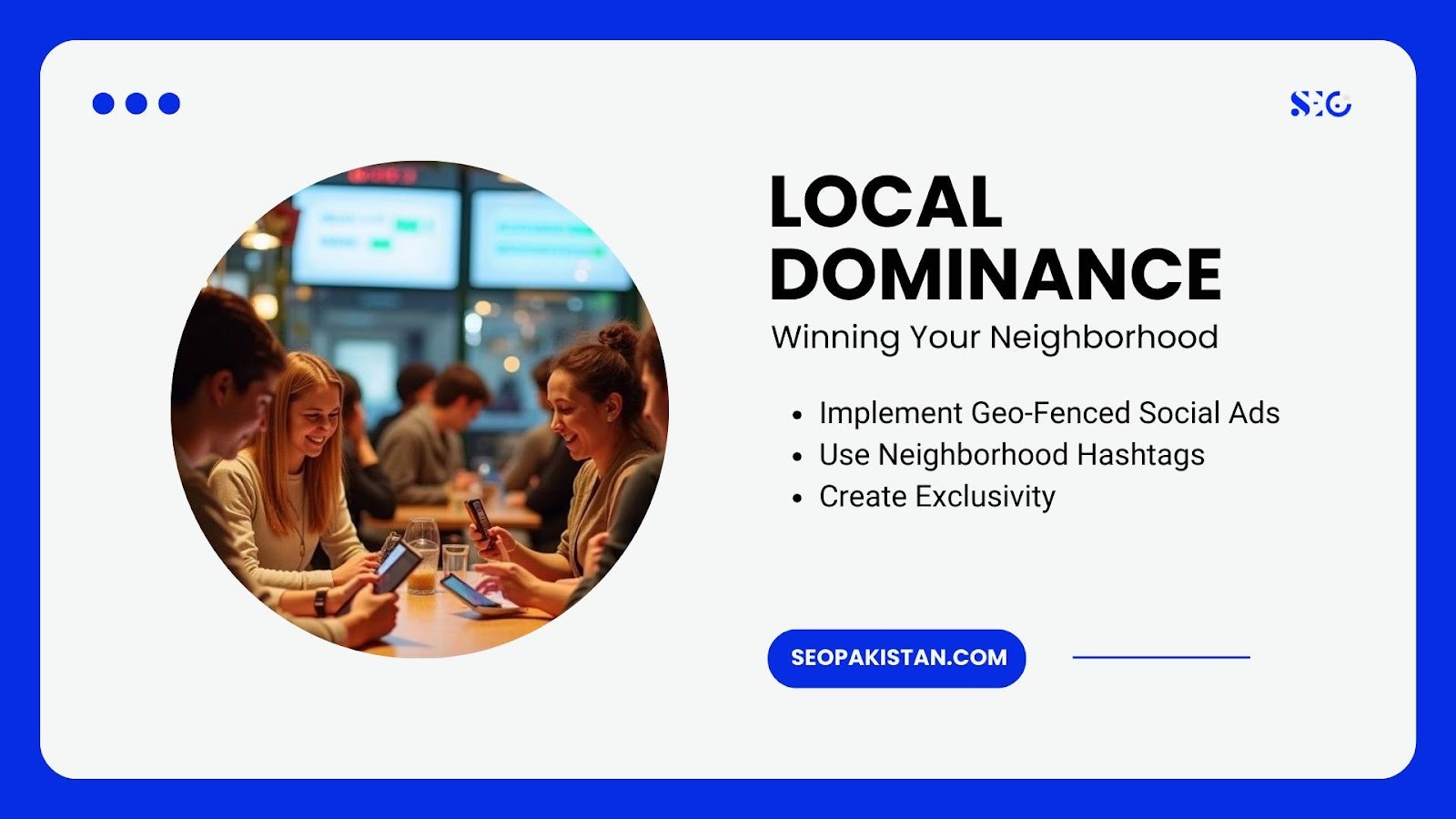
- Implement Geo-Fenced Social Ads: Imagine serving a “Happy Hour” ad directly to the phones of people working in office buildings within a two-kilometer radius of your restaurant, right before they finish their day. This is the power of geo-fencing.
- Use Neighborhood Hashtags: Broad hashtags like #Foodie are too crowded. Attract high-intent traffic by using specific, local hashtags such as #KarachiEats, #LahoreFoodScene, or #[YourNeighborhood]Bites.
- Create Exclusivity: A powerful restaurant online promotion tactic is to offer “secret menu” items that are only available to your social media followers. This not only rewards your audience but also creates a compelling reason for them to visit in person.
Branding and Engagement: From Followers to Fanatics
Strong restaurant branding online means your digital presence should feel like an extension of your physical space. A sarcastic, fast-paced voice might work for a quick-service eatery, while an elegant, calm tone suits a fine-dining establishment. Consistency is key.
True restaurant customer engagement is about creating a community. It is about digital hospitality.
- The 15-Minute Rule: Responding to direct messages and comments in under 15 minutes is the new standard. A prompt, personal reply can be the deciding factor for a customer choosing your restaurant over a competitor.
- Gamify Loyalty: Encourage and reward customers who post about their experience. Offer digital tokens, “Member-Only” perks, or a free dessert to guests who share user-generated content (UGC). This turns your happy customers into your most effective marketers.
AI Automation: Your Hidden Kitchen Hand
Artificial intelligence can work behind the scenes to streamline your marketing and improve customer service without losing the human touch.
- Personalized Retargeting: Use AI to automatically send a “We Miss You” Reel to a customer who has not ordered or visited in 21 days. This gentle nudge can reactivate dormant customers.
- Sentiment Analysis: AI tools can scan social media comments and reviews for you. They can detect negative sentiment and flag potential service issues, allowing you to address problems before they escalate into viral public relations nightmares.
Creative Marketing Ideas for 2026
Standing out requires constant innovation. Here are some restaurant marketing ideas to capture attention.
- “Table-Side” POV Videos: Film content from the first-person perspective of a diner. This point-of-view footage gives the viewer the exact experience of sitting at your table.
- Creator Collaborations: Move away from expensive celebrity influencers. Instead, partner with “neighborhood advocates,” micro-influencers with 5,000 to 10,000 highly engaged local followers who genuinely love your food.
- Augmented Reality (AR) Menus: Create social media filters that allow users to “place” your signature dish on their own table using their phone’s camera. This interactive and shareable experience is a powerful promotional tool.
Why Your Competitors Are Failing
Many restaurants are stuck in old digital habits. Identifying these gaps provides a clear path to gaining a competitive advantage.
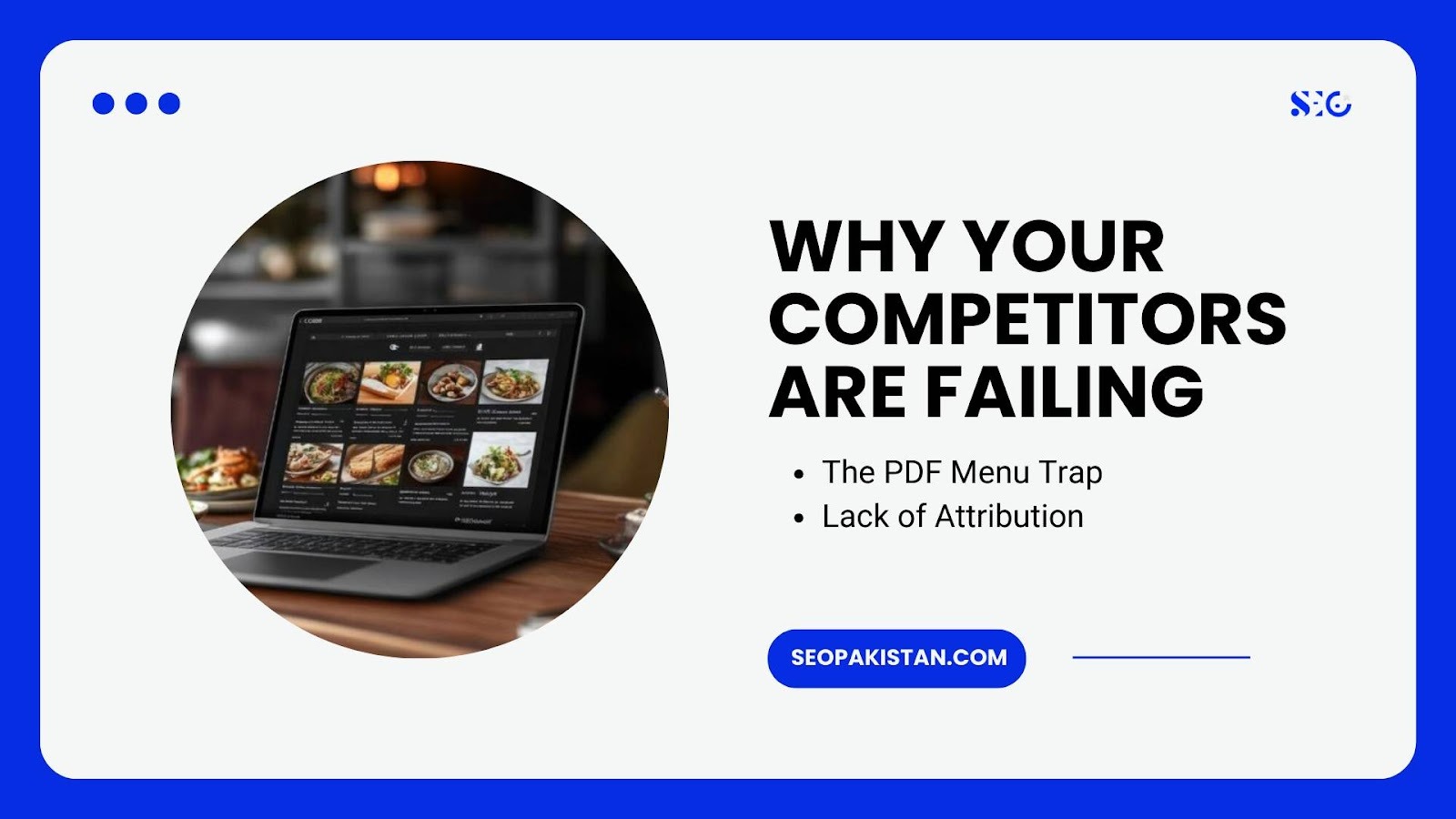
- The PDF Menu Trap: A common mistake is posting a static image or PDF of a menu. Search engine AI cannot read this text, making your dishes undiscoverable. We convert menus into searchable, interactive data that works for modern social search.
- Lack of Attribution: Most agencies struggle to prove that a social media post led to an actual sale. We use advanced conversion tracking to link social media views directly to your point-of-sale (POS) data, demonstrating clear return on investment.
Conclusion: The Future of Dining is Social
In 2026, the success of your restaurant is directly tied to the strength and sophistication of your digital signature. Social Media Marketing for Restaurants is no longer about simple promotion; it is about ensuring your social media profiles act as your new front door, your menu, and your reservation book. By embracing social search, focusing on action-first strategies, and engaging your local community with authentic content, you can build a resilient and profitable business.
Ready to turn your followers into your best-paying customers? Contact SEO Pakistan today for a data-driven social media marketing audit, and let’s dominate your local map.
Frequently Asked Questions
What is marketing for restaurants?
Marketing for restaurants involves promoting a restaurant’s brand, menu, and experience to attract and retain customers. It includes strategies like social media promotion, local SEO, online reviews, loyalty programs, and targeted advertising.
What is the best social media platform for restaurant marketing in 2026?
TikTok and Instagram are leading platforms, with TikTok acting as a search engine and Instagram serving as a digital menu. Both are essential for driving engagement and conversions.
How can restaurants use TikTok for marketing?
Restaurants can create SEO-optimized captions, trending short videos, and use local hashtags to attract nearby diners and increase map clicks.
Why is local SEO important for restaurants?
Local SEO ensures your restaurant appears in searches like “food near me,” driving foot traffic and bookings through platforms like Google Maps and social media.
What are effective restaurant social media strategies?
Focus on short-form video series, geo-targeted ads, and user-generated content to engage your audience and convert followers into customers.
How can AI improve restaurant marketing?
AI tools can personalize retargeting, analyze customer sentiment, and automate responses to reviews, enhancing customer experience and retention.
Why is marketing important for restaurants?
Marketing for restaurants is crucial because it increases visibility, attracts new diners, and builds customer loyalty. Effective marketing helps restaurants stand out in competitive markets, boost reservations, and maintain consistent revenue.