

Understanding search engine crawling technology separates profitable websites from invisible domains. Most business owners focus entirely on publishing content while ignoring how systems actually discover that content. This fundamental misunderstanding costs companies thousands of dollars in lost revenue every single month.
Websites do not rank simply because they exist on the internet. You must build your digital assets for the web crawling process if you want to capture market share. Search engines use complex algorithms to decide which pages deserve attention and which ones they should ignore.
What Search Engine Crawling Technology Actually Does?
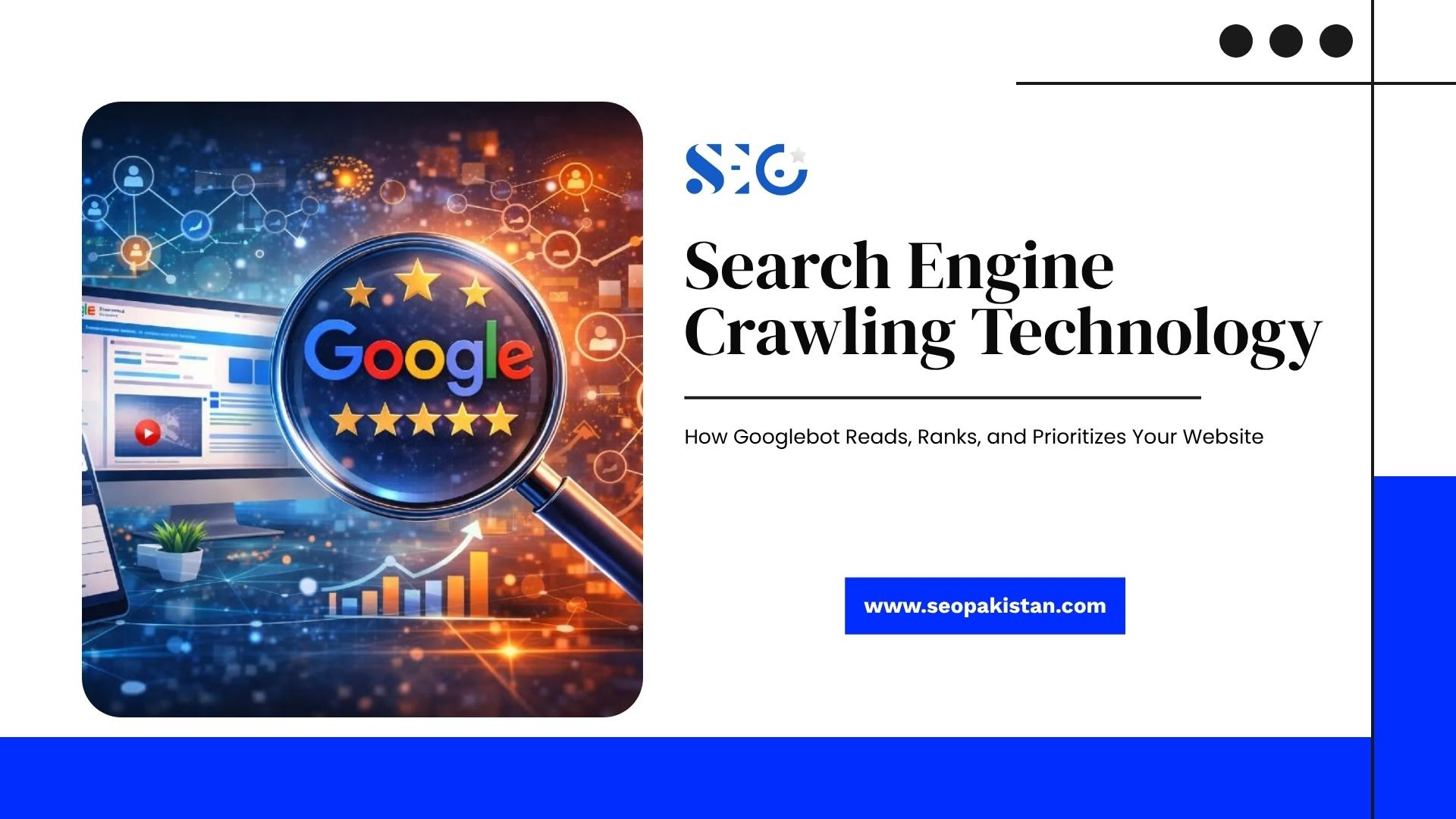
Crawling acts as a data discovery and prioritization system for the internet. Search engines send automated bots to find new URLs and evaluate their rendering eligibility. This process dictates whether a page ever makes it to the indexing phase.
Here’s a breakdown of how crawling, indexing, and ranking work together:
- Crawling: This is the first step. Search engine bots discover your page and download its code.
- Indexing: If the search engine deems the page worthy, it stores the page’s information in its vast database.
- Ranking: This is the final step. A page can only rank in search results if it has been successfully crawled and indexed. Technical SEO pros focus on optimizing the crawling phase to ensure pages are found.
A few other key concepts to keep in mind:
- Crawl Budget: Search engines only allocate a limited amount of time and resources to scan your website. It’s crucial to direct this “budget” toward your most important pages.
- Rendering: Modern crawlers must process both raw HTML and execute JavaScript to fully see and understand a page’s content. Optimizing this rendering process is essential for your site’s visibility.
How Modern Crawling Systems Actually Work
URL Discovery Sources
While sitemaps help search engines find your pages, internal links are the most powerful tool for guiding bots through your site. By controlling your site’s architecture, you can dictate how authority flows and optimize for modern search engine crawling technology.
Search engines discover URLs through multiple intelligent pathways:
- Internal linking structure (primary signal)
- External backlinks (authority-based discovery)
- XML sitemaps (priority hints only, not guarantees)
- Browser behavior signals (real user interaction data)
- Previously indexed URL expansion patterns
Internal linking remains the strongest discovery mechanism because it defines topical hierarchy and authority flow.
Crawl Queue Prioritization System
Search engines do not scan URLs in a random order. They use a strict importance scoring system to manage their crawl frontier logic.
Here are the primary factors that influence this scoring:
- Freshness signals tell the bot how often you update the content.
- Authority signals indicate the overall value of the domain.
- Server response signals prove your infrastructure can handle the traffic.
Fetching and HTTP Evaluation Layer
The fetcher layer evaluates status codes before downloading any content. A proper 200 status code tells the bot to proceed with the evaluation.
Errors like 404 or 5xx actively damage your crawl efficiency. The system also handles canonical selection and duplicate detection during this phase.
Rendering Engine
Modern search engines not only read HTML — they render pages like a browser.
This includes:
- Full DOM construction
- CSS rendering and layout interpretation
- JavaScript execution and hydration processing
This is especially critical for modern frameworks like React, Vue, and Angular.
If rendering fails or is delayed, key content becomes invisible to search engines, which directly impacts indexing accuracy and ranking potential.
Index Submission Decision Layer
After rendering, search engines decide whether a page enters the index. This decision is influenced by:
- Content originality and depth
- Semantic uniqueness
- Domain authority signals
- Duplicate clustering analysis
- Content usefulness for query matching
Even pages that are fully crawled may be excluded from the index if they fail to meet quality thresholds or are flagged as duplicates by the search engine crawling technology.
Types of Search Engine Crawlers
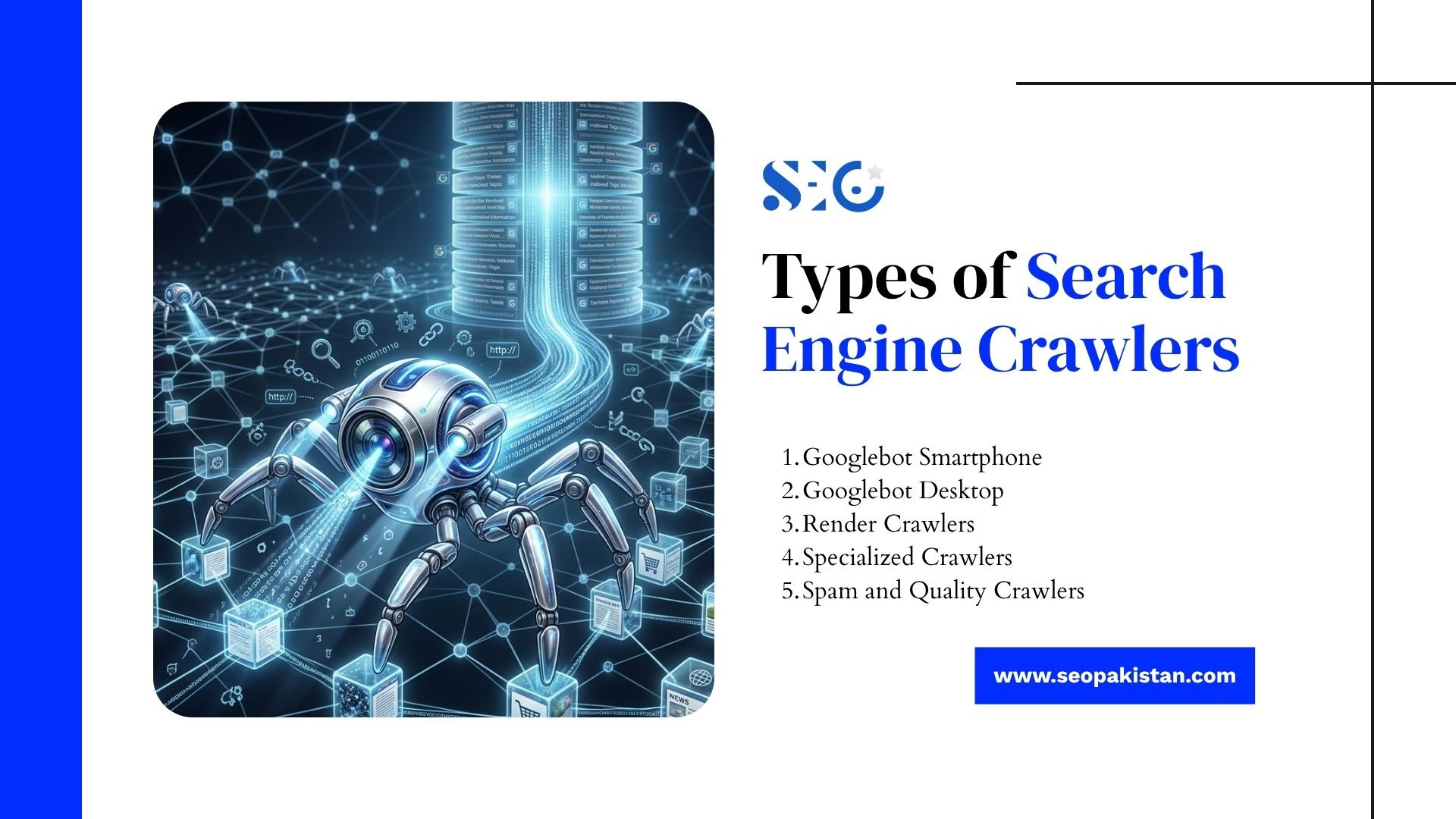
Googlebot Smartphone
Mobile-first indexing dominates the modern search landscape completely. Googlebot Smartphone acts as the primary indexing bot for almost all websites. You must ensure your mobile experience matches your desktop version perfectly.
Googlebot Desktop
The desktop crawler now serves a secondary role in the ecosystem. It gathers legacy signals and evaluates desktop-specific formatting. You should still monitor its behavior in your server logs.
Render Crawlers
Complex websites require specialized bots to execute their code. Render crawlers specifically handle React, Angular, and Vue applications. These bots consume massive amounts of computing power and operate with a delay.
Specialized Crawlers
Search engines deploy different bots for different media types.
You need to optimize for these specific crawlers to maximize visibility:
- The image crawler searches for visual assets and alt text.
- The video crawler indexes embedded media files.
- The news crawler demands rapid discovery for timely articles.
- The ad spam crawler ensures compliance with advertising policies.
Spam and Quality Crawlers
Trust evaluation forms the foundation of modern search algorithms. Spam crawlers constantly scan your site for malicious code and deceptive practices. Failing these checks will result in immediate algorithmic penalties.
Crawl Budget Explained Like an SEO Engineer
What Actually Controls Crawl Budget
Search Engine Crawling Technology works within a “crawl budget,” which defines how many URLs search engines will crawl on a website within a given time frame. This budget is controlled by two key variables:
- Crawl capacity: Server performance capability
- Crawl demand: Content importance and authority signals
If either side is weak, important pages may not be crawled frequently or at all.
Crawl Waste
Technical errors consume your crawl budget and hide your profitable pages. Infinite URL loops trap bots in a never-ending cycle of useless discovery.
Crawl waste occurs when bots spend resources on non-valuable URLs, such as:
- Faceted navigation URLs
- Parameter-based duplicate pages
- Infinite pagination loops
- Session-generated URLs
- Low-value archive pages
This reduces crawl efficiency and delays the indexing of revenue-driving pages.
How Google Decides What to Index
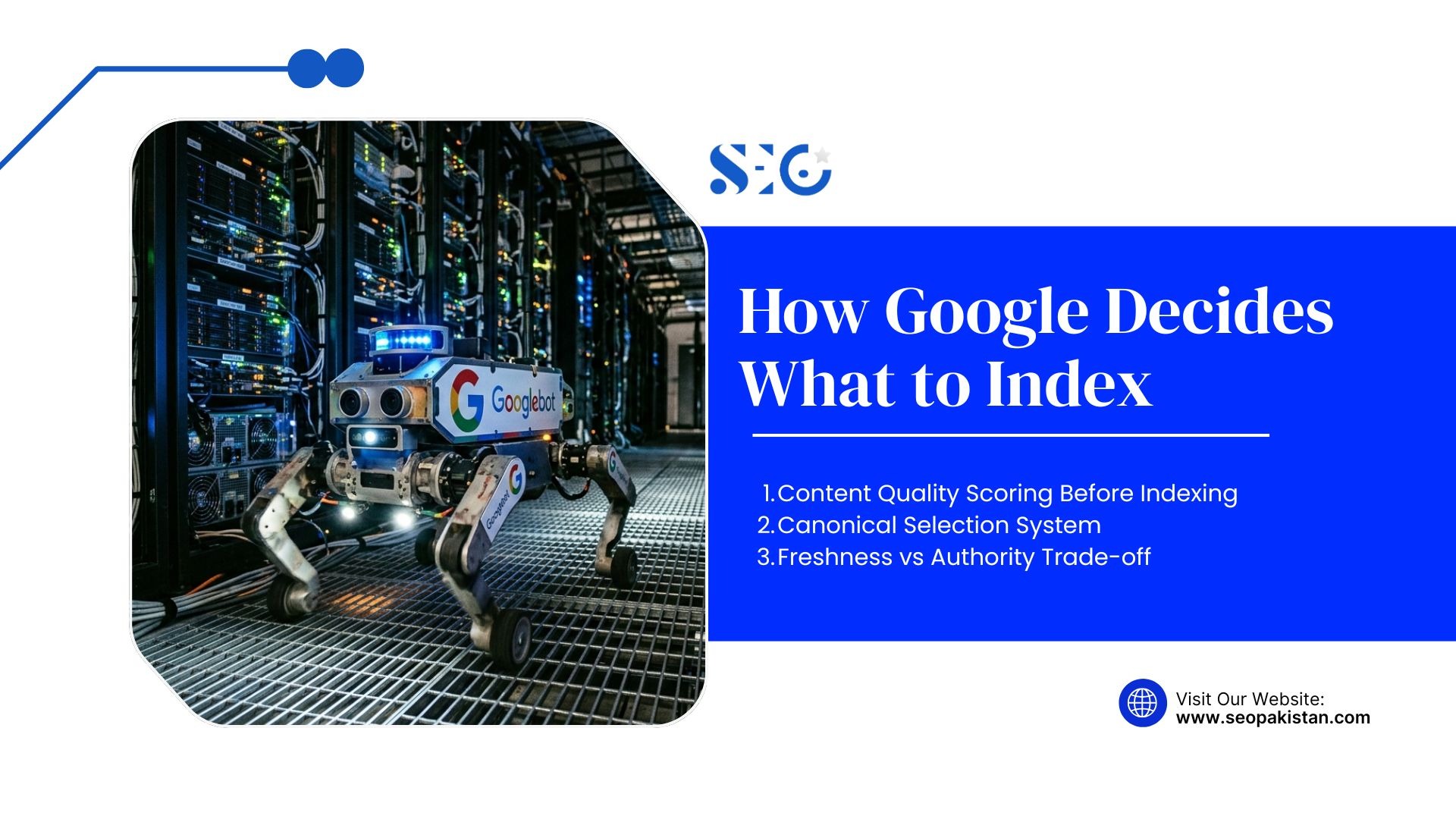
Content Quality Scoring Before Indexing
The indexing engine, a core component of search engine crawling technology, filters out useless pages before storing them. This thin content filtering prevents low-value URLs from wasting database space.
Google evaluates:
- Thin or low-depth content
- Duplicate or near-duplicate pages
- Semantic overlap across pages
- Lack of informational value
Low-quality pages are often crawled but excluded from indexing.
Canonical Selection System
You can suggest a canonical version of a page using tags. The search engine compares your self-canonical tags against external canonical behavior. It will ignore your tags if user signals point to a different URL.
Freshness vs Authority Trade-off
New content isn’t always indexed quickly, especially if it lacks freshness signals or comes from a site with low authority.
- Domain authority is low
- Competing pages already exist
- Crawl demand is low
This is why authority websites get faster indexing cycles.
Technical Architecture of a Search Engine Crawler
URL Frontier System
The crawl queue engine operates on a strict priority-based model. It schedules visits based on historical update frequencies and domain authority. You can manipulate this queue by improving your internal linking structure.
Fetcher Layer
The HTTP client behavior dictates how the bot interacts with your server. User-agent logic identifies the crawler and requests the appropriate file version. Rate limiting behavior protects your server from crashing during heavy crawls.
Parser and Renderer Layer
The bot constructs the document object model to understand page structure. Script execution handling determines when and how JavaScript runs. This layer extracts the final text and links for further processing.
Storage and Index Pipeline
Crawled data sits in temporary storage before final processing. The system separates this temporary cache from the main index database. This separation allows engineers to apply quality filters before finalizing the index.
Crawlability Signals That Actually Matter in 2026 SEO
Internal Linking Architecture
A hub-and-spoke model creates a logical path for crawlers to follow. This structure funnels authority directly to your most important sales pages.
You must eliminate orphan pages. Bots cannot find pages that lack incoming internal links.
Server Performance Signals
Server speed dictates your absolute crawl capacity. A fast TTFB encourages bots to request more pages during each visit. Server errors actively reduce your crawl frequency and damage your organic visibility.
Robots.txt vs Meta Robots Conflicts
Conflicting instructions confuse crawlers and destroy your SEO performance. You should never block a page in robots.txt if you want the bot to see a noindex tag. These common indexing mistakes cost businesses significant revenue.
XML Sitemap Strategy
Do not rely entirely on basic sitemap submission for discovery. You must use priority tagging logic to highlight your money pages. Update frequency signals tell the bot exactly when to return for fresh content.
Common Crawling Failures That Kill SEO Performance
JavaScript Rendering Failures
Client-side rendering often hides critical content from the initial crawl. This means advanced Search Engine Crawling Technology sees a blank page and assigns it zero value. You must implement server-side rendering for your most important assets.
Redirect Chains and Crawl Waste
Redirect chains force the bot to make multiple requests for a single page. This behavior causes massive crawl budget leakage across large websites. You should always point redirects directly to the final destination URL.
Duplicate URL Explosion
E-commerce sites frequently suffer from faceted navigation problems. Filtering options create thousands of duplicate URLs with different parameters. You must configure your robots.txt file to block these useless parameter combinations.
Orphan Pages
Publishing a page does not guarantee search engines will find it. Orphan pages have zero internal link visibility from your main site structure. You must link to every important page from a relevant category or hub.
Soft 404 and Thin Pages
A soft 404 occurs when a missing page returns a 200 success code. This confuses the crawler and leads to indexing suppression. You must serve proper 404 status codes for deleted or missing content.
Advanced Optimization Playbook
Log File Analysis
Log file analysis reveals exactly how crawlers interact with your server. You need this data to make profitable technical decisions.
- It tracks real crawler behavior instead of relying on third-party estimates.
- It highlights exact URLs that waste your crawl budget.
- It exposes server errors that you cannot see in your browser.
Crawl Budget Sculpting Strategy
You must actively manage where the search engine spends its time. Blocking low-value pages forces the bot to focus on your core assets. Prioritizing money pages ensures your revenue-generating content updates quickly in the search results.
Internal Link Flow Engineering
Every link passes a fraction of authority to its destination. Authority distribution mapping helps you visualize this flow across your domain. You can engineer this flow to boost the rankings of highly profitable pages.
Rendering Optimization Strategy
Your rendering approach dictates your technical SEO success. Server-side rendering provides the HTML immediately to the crawler. Client-side rendering introduces unacceptable risks for your primary revenue pages.
Crawl Efficiency Optimization Model
| Factor | Impact | Optimization Strategy | Risk Level |
| Server Speed | Crawl frequency | Improve TTFB | High |
| Internal Links | Discovery efficiency | Strengthen structure | Medium |
| URL Parameters | Crawl waste | Canonical rules | High |
| Sitemap Quality | Index guidance | Clean prioritization | Medium |
| JavaScript Rendering | Visibility | SSR implementation | High |
Strategic SEO Insights:
Crawling is not the same as ranking. A search engine bot can visit your page daily, but that doesn’t guarantee a top spot on the results page. Understanding the nuances of search engine crawling technology is key; high crawl frequency doesn’t automatically lead to indexing.
Google does not crawl everything equally across the internet. The system operates on a crawl demand versus crawl capacity model. Content depth directly affects your crawl revisit rate and overall visibility.
Conclusion
Your understanding of search engine crawling technology dictates your digital success. Crawling functions strictly as a discovery engine for your website. Indexing acts as a selection system to filter out low-quality pages.
Technical SEO fundamentally requires precise control of crawl efficiency. You generate revenue by forcing search engines to prioritize your best content. Ignoring your crawl budget will leave your most profitable pages invisible to buyers.
Mastering the indexing process requires expert strategic planning. Align your technical infrastructure with modern search engine requirements to ensure your site gets seen. Contact SEO Pakistan to engineer a highly profitable website architecture today.
Frequently Asked Questions
What is search engine crawling technology?
It’s the automated process search engines use to find new and updated content on the internet. These “bots” follow links to discover web pages, images, and other files.
How does Google decide which pages to crawl first?
Google prioritizes pages based on their importance and how often they change. Pages with more authority, fresh content, and many quality internal links are typically crawled first.
What is a crawl budget?
Your crawl budget is the number of pages search engines will crawl on your site within a specific time. It’s influenced by your site’s size, health, and server speed.
Why would a page be crawled but not indexed?
A page might not get indexed if search engines consider its content to be low-quality, thin, or a duplicate of another page. A crawl only means discovery, not indexing.
How can I improve my website’s crawlability?
Improve your site’s crawlability by increasing your server speed, fixing broken links, and creating a clear XML sitemap. A logical internal linking structure also helps bots navigate your site efficiently.
What is the difference between crawling and indexing?
Crawling is the discovery process where bots find your content. Indexing is the analysis and storage process, where search engines add your content to their database to show in search results.