

Artificial intelligence is transforming the search landscape, but a surprising trend is emerging behind the scenes: the companies building AI are relying heavily on traditional search engine optimization to fuel their growth. OpenAI’s ChatGPT SEO strategy is a clear example of how powerful organic search visibility can still be—even in an era dominated by artificial intelligence.
Industry analysis indicates that OpenAI has invested heavily in SEO talent, content strategy, and technical optimization to strengthen ChatGPT’s presence in search engines.
The results are striking. With tens of millions of monthly organic visits and hundreds of thousands of ranking keywords, ChatGPT is significantly outperforming competing AI platforms and converting search demand into rapid product growth.
Key Highlights
- OpenAI is estimated to be investing $410,000–$600,000 annually in SEO-focused roles.
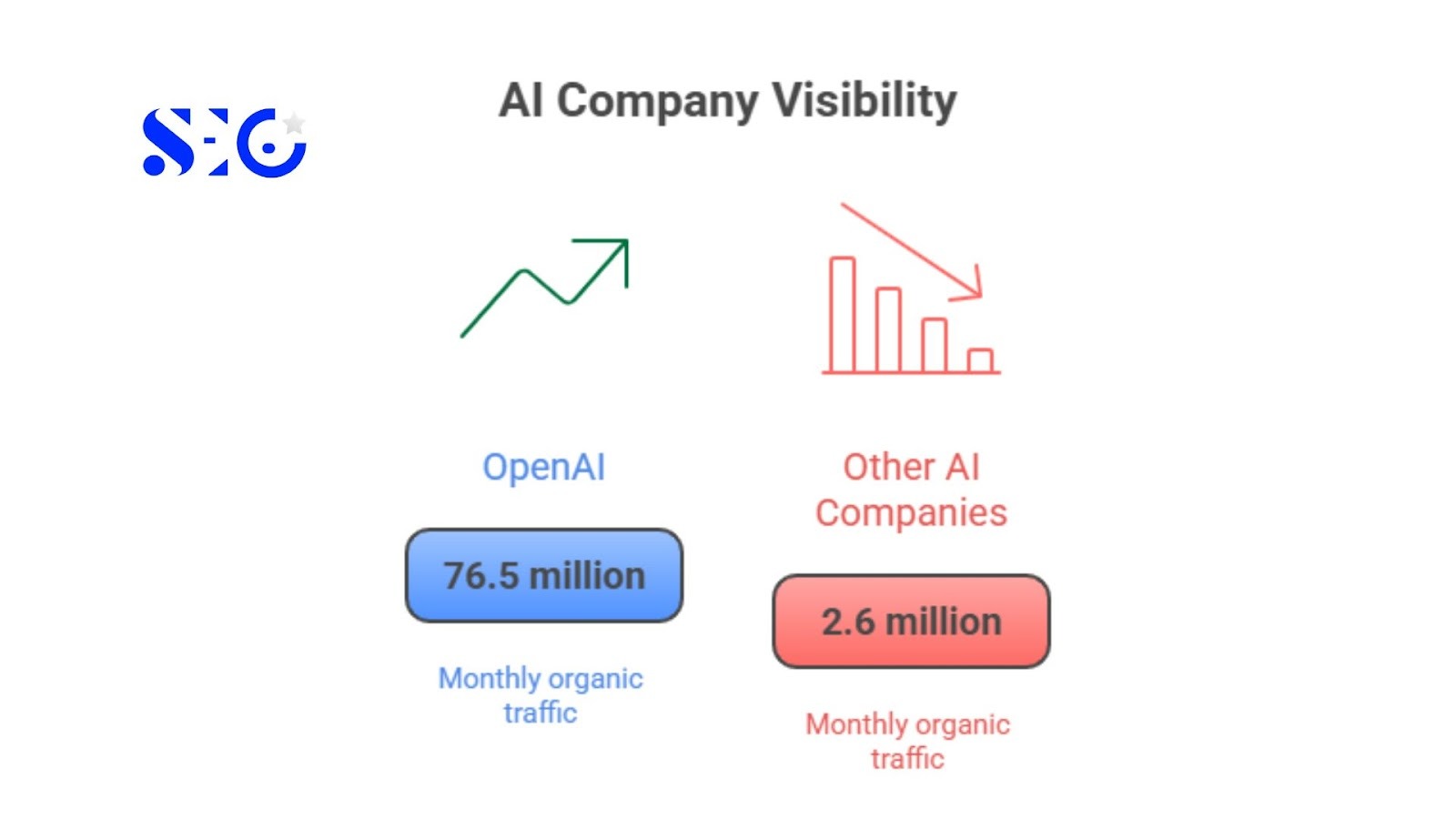
- ChatGPT attracts roughly 76.5 million monthly organic visits from search engines.
- The platform ranks for about 287,800 keywords, far more than its competitors.
- Analysts estimate SEO-driven traffic could generate around $92 million in annual revenue.
- Strong brand demand and technical SEO infrastructure are key drivers of ChatGPT’s growth.
The ChatGPT SEO Strategy Driving Massive Organic Growth
Competitive data from Semrush and industry SEO research shows that ChatGPT receives an estimated 76.5 million monthly organic visits, making it the clear leader among generative AI platforms in terms of search visibility.
Other AI tools attract far smaller levels of organic traffic. For example, Perplexity receives approximately 1.7 million organic visits per month, while Claude generates around 908,000 monthly visits.
These traffic numbers translate into significant revenue potential. Analysts suggest that if just 0.5% of ChatGPT’s organic visitors convert into paid subscribers, with an entry-level price of $20 per month, the platform could generate approximately $92 million annually from SEO-driven traffic alone.
Such projections represent an estimated 15,000% return on investment, highlighting the extraordinary financial impact that a strong SEO foundation can deliver.
OpenAI’s Investment in SEO Talent
Evidence suggests OpenAI has made deliberate investments in search expertise to support ChatGPT’s growth.
The company previously advertised a content strategist role focused on SEO, offering a salary range between $310,000 and $393,000. Another hiring initiative targeted professionals with expertise in SEO, conversion rate optimization (CRO), and web growth strategy.
Considering typical industry salary ranges for SEO growth specialists, generally $100,000 to $295,000 annually, analysts estimate that OpenAI may be spending between $410,000 and $600,000 each year on SEO-focused roles, excluding benefits and operational costs.
These hiring patterns suggest that OpenAI sees search visibility not just as a marketing tactic, but as a core growth strategy.
SEO Performance Comparison: ChatGPT vs Claude vs Perplexity
| Platform | Monthly Organic Traffic | Keyword Rankings | Authority Score |
| ChatGPT | ~76.5 million | ~287,800 | 99 |
| Perplexity | ~1.7 million | ~184,800 | 81 |
| Claude | ~908,000 | ~36,000 | 75 |
(Source: Semrush competitive SEO data)
Brand Authority and Search Demand
Another factor behind ChatGPT’s search dominance is its extraordinary brand demand.
Search data indicates that the branded keyword “ChatGPT” receives approximately 45.5 million searches every month. In comparison, Perplexity receives around 1 million branded searches, while Claude generates roughly 500,000 monthly searches.
This difference highlights the power of brand recognition. Widespread product adoption, social media discussions, and continuous media coverage have significantly amplified ChatGPT’s search demand.
Experts note that strong brand visibility often translates directly into organic search traffic, strengthening a platform’s ability to dominate search engine results.
What Businesses Can Learn From the ChatGPT SEO Strategy
The success of ChatGPT highlights an important lesson for businesses and marketers: SEO remains one of the most powerful digital growth channels, even in an AI-driven ecosystem.
Companies that prioritize technical optimization, authoritative content, and strong brand demand can still capture massive organic traffic opportunities.
As AI tools reshape how people interact with information online, visibility across search engines, AI assistants, and discovery platforms will become increasingly important. Organizations that invest early in strong SEO infrastructure may gain a significant competitive advantage in this evolving digital landscape.
The ChatGPT SEO strategy ultimately demonstrates that while artificial intelligence may transform how users search, the importance of being discoverable online remains as critical as ever.