

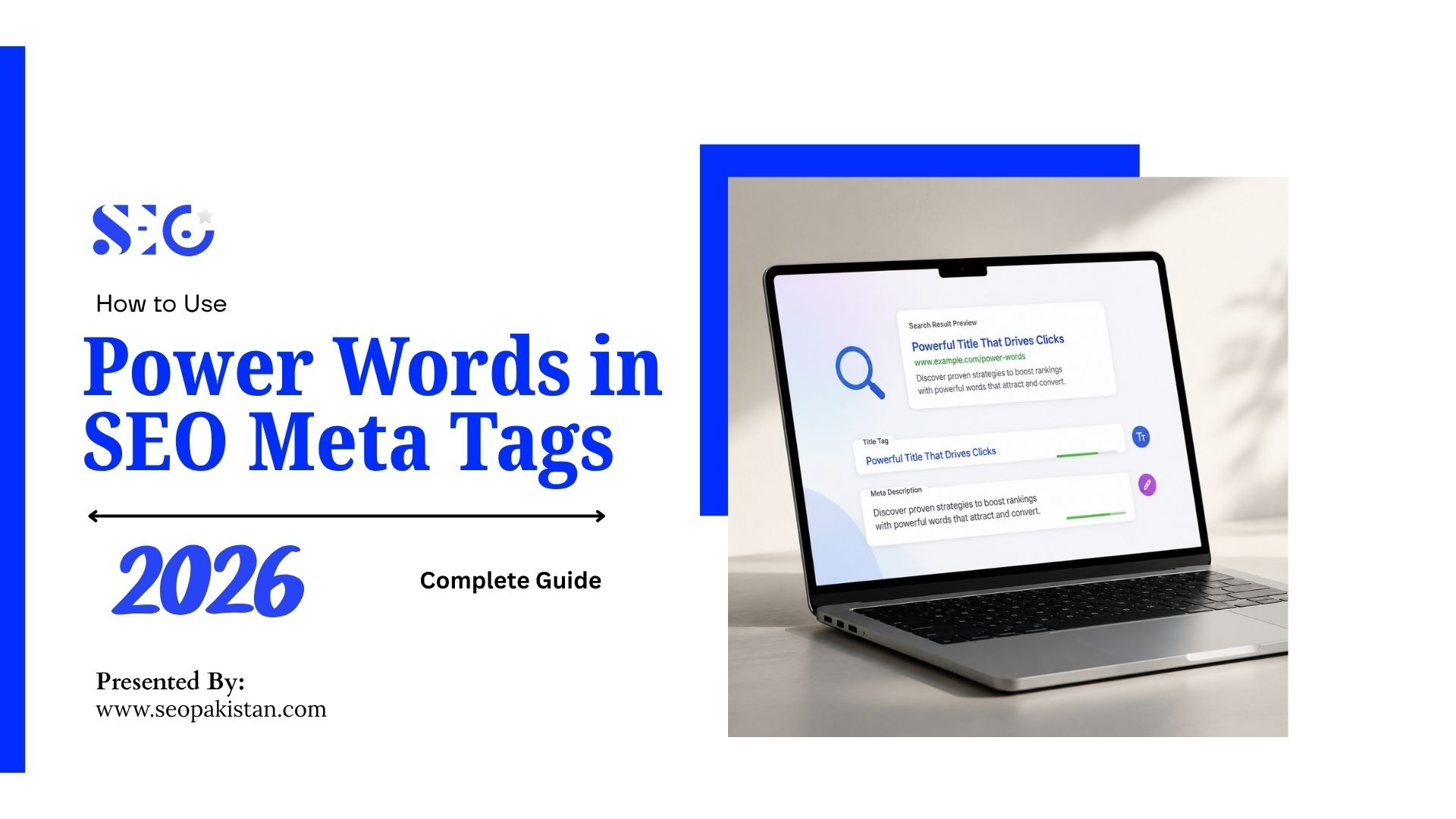
Power words in SEO meta tags 2026 make your titles and descriptions feel more useful, specific, and clickable when they match search intent. Use emotional trigger words SEO to highlight a pain point, benefit, or curiosity.
Use urgency words in ,title tags for time-sensitive offers, and add trust words meta description copy for service, health, finance, legal, and B2B pages. The best high CTR power words create honest appeal, never clickbait.
Why Your Meta Tags Lose Clicks Even When You Rank
Many pages rank on Google but still earn very few clicks. The reason is simple. Their title tags and meta descriptions sound flat, generic, or unclear.
A user scans the search results in seconds. If your snippet does not show value fast, the user clicks a competitor instead. This is where power words in SEO meta tags 2026 make a real difference.
Power words improve search snippet appeal when they help the user understand value quickly. They should never exaggerate, mislead, or promise something the page does not deliver.
This guide covers what power words are, how they affect organic click-through rate, and how to use them by intent and page type. You will also learn how to test changes inside Google Search Console using high CTR power words that actually work.
Here is what you will gain from this guide:
- Clear definitions: Understand what power words do and where they belong.
- Practical word lists: Get ready-to-use words sorted by intent and page type.
- Safe usage rules: Avoid clickbait that damages trust and conversions.
- Testing steps: Measure results instead of guessing.
What Are Power Words in SEO Meta Tags?
Power words are persuasive words that give a stronger emotional, practical, or trust-based reason to click. In SEO meta tags, they make a title tag or meta description feel more specific, useful, urgent, safe, or valuable.
A keyword tells Google what a page is about, while using power words in SEO meta tags 2026 tells the user why that page is worth their time. Both must work together inside the snippet to maximize clicks.
Where Power Words Appear
Power words help in many places across your site, not only in blog titles. Each placement reaches a different type of searcher.
You can use power words in these spots:
- Meta title: The clickable blue headline in search results.
- Meta description: The summary text below the title.
- SEO title in CMS plugins: Fields in tools like Yoast or Rank Math.
- Product and category snippets: Shopping and ecommerce result text.
- Service and local landing snippets: Pages targeting specific cities or services.
Power Words vs Normal Keywords
People often confuse keywords with power words. Both matter, but they do different jobs in the snippet.
Understanding the difference helps you write tighter copy:
- Keywords show relevance: They answer the question, “What is this page about?”
- Power words increase appeal: They answer the question, “Why should I click this result?”
- Keywords help indexing: Google reads them to match queries.
- Power words help action: They push the human to choose your result.
How Power Words Affect Organic CTR
Using power words in SEO meta tags 2026 won’t magically rank a page. They help users choose your result when the page already appears in search.
A stronger title and description can make the result feel more relevant, useful, or trustworthy than nearby competitors.
Why CTR Improves When Meta Tags Match Intent
A snippet that matches intent feels written for one specific person. That feeling drives the click. The match between query, snippet, and page builds instant relevance.
CTR improves for these clear reasons:
- The title feels relevant: It mirrors the words the user typed.
- The benefit is clear: The reader sees the payoff at a glance.
- The value stands out: Your result looks sharper than generic competitors.
- The concern is answered: The description calms the user’s main worry.
Why Misleading Power Words Hurt
Strong words can backfire. When a snippet overpromises, the user feels tricked and leaves fast. Google notices that pattern.
Clickbait can:
- Increase disappointment
- Push users back to search
- Damage brand trust
- Fail to satisfy search intent
- Hurt conversions
- Trigger Google title rewrites
Google recommends clear, descriptive title text. It warns against keyword stuffing, repeated boilerplate, and vague titles, because Google may generate its own title link when yours falls short.
The Main Types of Power Words for Meta Tags
There are a few simple categories for the best power words in SEO meta tags 2026. Each type fits a different searcher’s mindset. Knowing the category helps you pick the right word for the page.
Emotional Words
Emotional words work when the user has a pain point, a goal, a fear, or a desire. They connect the topic to a feeling, which makes the snippet memorable.
Use words like proven, powerful, simple, smarter, practical, easier, essential, effective, trusted, and clear. Emotional trigger words fit blog guides, SEO tutorials, health content, personal finance posts, and business growth articles.
Urgency Words
Urgency works best when timing genuinely matters. Fake urgency feels cheap, so reserve these words for real deadlines or fresh content.
Use words like today, now, quick, limited, latest, 2026, before, deadline, fast, and instant. Urgency words, suit offers, event pages, seasonal services, software updates, and trend-based 2026 guides.
Trust Words
Trust words reduce risk in the reader’s mind. They matter most when the user must rely on your expertise before buying or acting.
Use words like expert, verified, safe, trusted, reliable, professional, tested, transparent, and certified. Trust words meta description copy fits service pages, local SEO pages, B2B pages, medical topics, and financial content. Only use these words when the page can truly support the claim.
Benefit Words
Benefit words show the user exactly what they will gain. They turn a feature into a clear payoff inside the snippet.
Use words like improve, boost, save, grow, reduce, increase, convert, simplify, optimize, and protect. These fit SEO service pages, ecommerce pages, SaaS pages, and lead generation pages.
How to Match Power Words With Search Intent
Power words should match the user’s search stage. Informational users need clarity. Transactional users need action. Local users need trust and location relevance.
| Search Intent | Best Power Word Type | Example Words | Strong Meta Title Example | Best Use Case |
| Informational | Clarity and benefit | simple, practical, proven | Simple SEO Meta Tag Guide for 2026 | Blog posts and tutorials |
| Commercial | Trust and comparison | expert, trusted, best, reliable | Best SEO Services in Pakistan for Growth | Service comparison pages |
| Transactional | Urgency and action | fast, today, limited, book | Book an SEO Audit Today | Lead generation pages |
| Local | Trust and location | trusted, local, nearby, professional | Trusted SEO Agency in Lahore | City landing pages |
| Problem-solving | Pain and solution | fix, reduce, improve, avoid | Fix Low CTR With Better Meta Tags | SEO troubleshooting content |
| Ecommerce | Benefit and speed | save, top, new, popular | New Skincare Deals for Clearer Skin | Product and category pages |
How to Use Power Words in Meta Titles
When using power words in SEO meta tags for 2026, clarity comes first. The power word should support your primary keyword and its benefit, not overshadow them. .
Place the power word near the benefit so the value lands fast. Keep the title readable on mobile, where Google often truncates long lines.
Follow these rules to keep titles sharp:
- Keep the keyword clear: Lead with the main topic so relevance stays obvious.
- Use one strong power word: Avoid stacking emotional or urgency words.
- Match the page content: Never promise more than the page delivers.
- Use year modifiers wisely: Add “2026” only when freshness truly matters.
- Skip fake urgency: Reserve urgency words for real deadlines.
Before and After Title Examples
Small edits create big gains in appeal. Notice how each rewrite keeps the keyword but adds a clear reason to click:
- Weak: SEO Meta Tags Guide → Better: Practical SEO Meta Tags Guide for 2026
- Weak: SEO Services Pakistan → Better: Trusted SEO Services in Pakistan for Growth
- Weak: Meta Description Tips → Better: Simple Meta Description Tips to Improve CTR
- Weak: Local SEO Guide → Better: Local SEO Guide for More Calls and Leads
How to Use Power Words in Meta Descriptions
A meta description should sell the page honestly. It summarizes the value, names the benefit, and invites the click. Think of it as a two-line pitch.
Google states there is no fixed length limit for meta descriptions, but snippets get truncated to fit the device width. Keep descriptions short, specific, and relevant.
Follow these rules for stronger descriptions:
- State one clear benefit: Tell the reader the single biggest payoff.
- Use one or two power words: Keep the tone natural, not stuffed.
- Add a soft call to action: Words like “Learn” or “Get” guide the next step.
- Write unique copy: Avoid duplicate descriptions across important pages.
- Match the query: Mirror the user’s likely search wording.
Strong Description Examples
These examples show honest, persuasive meta tag copy that earns clicks without hype:
- Learn practical meta tag tips to improve organic CTR with clear titles, stronger descriptions, and safer power words.
- Get trusted SEO services in Pakistan with keyword research, technical fixes, content strategy, and measurable growth support.
- Discover simple title tag formulas that help your pages stand out without clickbait or keyword stuffing.
How to Match Power Words With Page Type
One tone does not fit every page. A blog post, a service page, a product page, and a local landing page each need a different voice. Matching tone to page type keeps your snippets believable.
Blog Posts
Blog readers want to learn or solve a problem. Use words that signal clear, useful guidance: practical, simple, mistakes, guide, checklist, proven, and latest.
Service Pages
Service buyers want credibility before they commit. Use words that build confidence: trusted, professional, expert, reliable, transparent, and measurable.
Ecommerce Pages
Shoppers want value and reasons to buy now. Use words that highlight product appeal: best, popular, new, save, top, and limited.
Local SEO Pages
Local searchers want a nearby provider they can trust. Use words like local, trusted, nearby, and professional, plus the city name where it fits naturally.
How to Avoid Clickbait in Meta Tags
Power words turn harmful when they promise more than the page delivers. Clickbait may earn a click, but it loses the customer right after.
Keep your copy honest with these safe rules:
- No guaranteed rankings: SEO results depend on many factors you cannot promise.
- No fake “instant results”: Only claim speed the page can prove.
- No false “free” labels: Use “free” only when the offer is truly free.
- No fear-based wording: Avoid scaring users on sensitive health or finance topics.
- No “best” without proof: Back up superlatives with real evidence.
How SEO Pakistan Helps With Meta Tag Optimization
Writing strong snippets across a whole website takes time and testing. SEO Pakistan helps businesses in Pakistan and the USA turn weak meta tags into click magnets that match real search intent.
The team supports your snippets and your wider strategy through services like these:
- SEO audits: Find pages with high impressions and low CTR.
- On-page SEO: Optimize titles, descriptions, and headings.
- Local SEO: Improve visibility for city and service pages.
- Search Console analysis: Track CTR, clicks, and rankings over time.
- Content optimization: Align page content with the meta promise.
You can book a free consultation with SEO Pakistan to review your current meta tags and plan honest, high-performing copy.
Final Takeaways
Power words in SEO meta tags 2026 can improve snippet appeal when used honestly. Emotional trigger words SEO should match the reader’s pain point, goal, or concern. Urgency words title tags work best for time-sensitive pages.
Trust words meta description copy helps service, local, B2B, finance, and health-related pages when the page can support the trust claim. High CTR power words should make the value clear without clickbait.
Frequently Asked Questions
What are power words in SEO meta tags?
Power words are persuasive words used in title tags and meta descriptions to make search snippets more useful, emotional, specific, or trustworthy. They can support organic CTR when they match user intent and page content. Good power words improve clarity and appeal, while clickbait words can damage trust and reduce conversions.
Do power words improve SEO rankings?
Power words do not directly guarantee rankings. They can improve click appeal and organic CTR when a page already appears in search and the meta tag matches user intent. They work best with clear keywords, useful content, accurate titles, and strong page quality. Misleading power words may attract poor clicks and hurt trust.
What are the best power words for title tags?
Good title-tag power words include practical, simple, trusted, proven, latest, expert, fast, essential, and improve. The best word depends on search intent and page type. A blog may need “practical,” while a service page may need “trusted” or “professional.”
How many power words should I use in a meta title?
Use one strong power word in most meta titles. Too many emotional or urgency words can look like clickbait and reduce trust. Keep the main keyword clear, add one useful modifier, and make sure the title matches the page. A clean title usually performs better than an overloaded one.
What trust words work well in meta descriptions?
Useful trust words for meta descriptions include trusted, expert, proven, verified, safe, professional, transparent, and reliable. Use them only when the page can support the claim. For example, do not use “certified” unless the business, process, or professional actually has a relevant certification.