


Email local SEO is the strategic practice of combining email campaigns with search engine optimization to improve visibility in specific regions. This approach enhances local marketing efforts by using geographic targeting to reach relevant audiences.
Email marketing helps businesses boost customer engagement, generate authentic reviews, and encourage repeat visits to physical locations. While emails do not rank directly, they indirectly improve local search rankings by driving consistent website traffic and sending strong brand signals to search engines.
What Is Email Local SEO?
Understanding the foundation of this strategy helps you maximize your marketing efforts. Do you know how email campaigns influence search algorithms? Consider the following core components of this approach.
- It combines traditional email marketing with local SEO strategies.
- The primary goal is to improve local search visibility.
- The strategy works by driving local website traffic.
- It encourages customers to leave valuable business reviews.
- It increases engagement signals that search engines monitor.
Insight: Google values user engagement and brand signals highly, and email campaigns drive both of these metrics effectively.
How Email Marketing Directly Impacts Local SEO Rankings
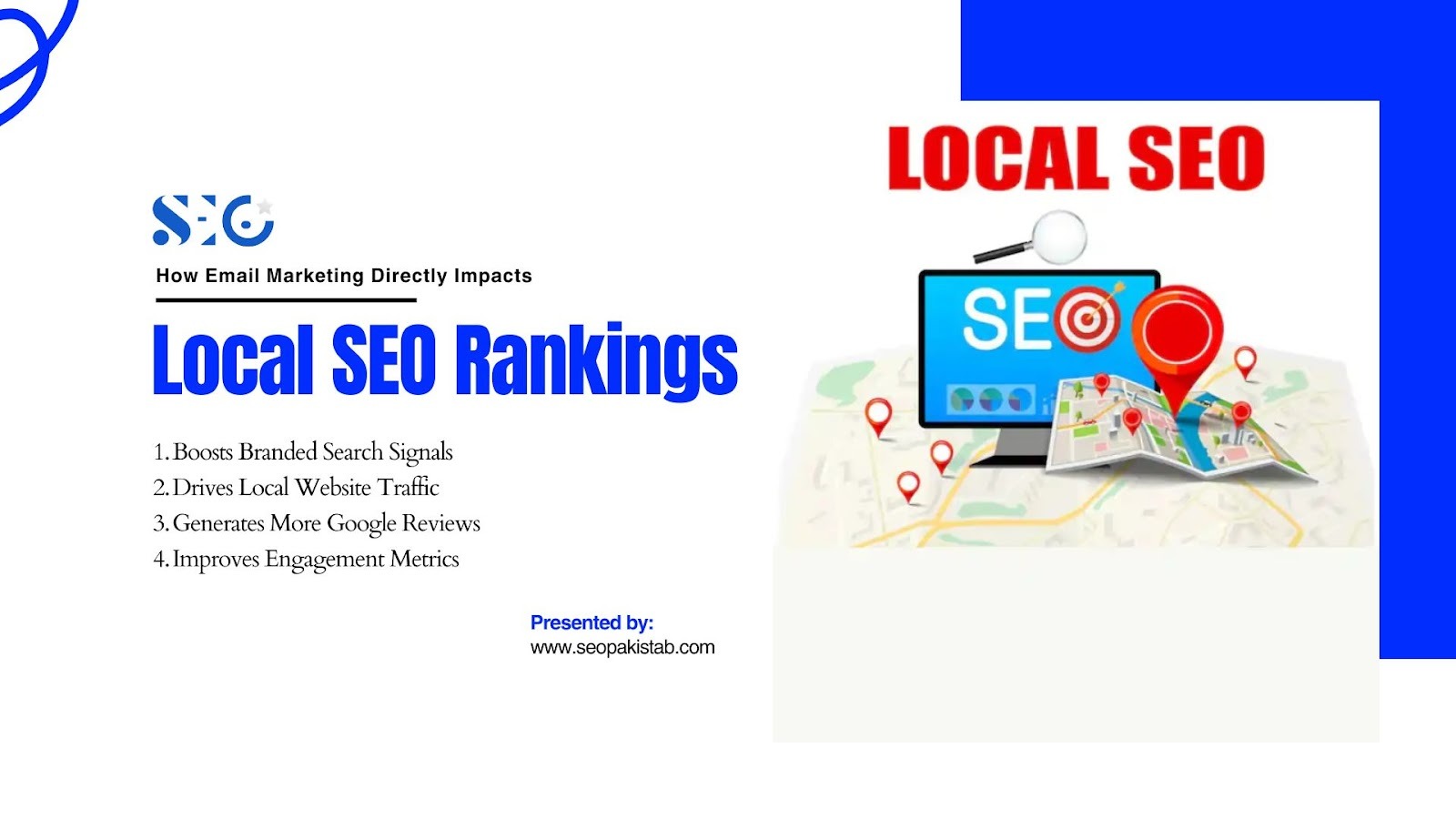
Boosts Branded Search Signals
Search engines track how often users search for your specific business name. How can you increase these important branded searches? Email campaigns provide a direct solution.
- Emails remind users to search for your brand online.
- Consistent communication increases brand and location-specific queries.
Drives Local Website Traffic
Consistent website traffic from nearby users tells search engines that your business holds local relevance. Do you want to attract more regional visitors to your site? Targeted emails deliver excellent results.
- Email campaigns bring qualified local visitors to your website.
- They generate repeat users who interact with your content.
- This consistent traffic improves behavioral SEO signals.
Generates More Google Reviews
Customer reviews heavily influence local search algorithms and consumer trust. How can you automate the review collection process? Email marketing makes this seamless.
- Email follow-ups request reviews immediately after a purchase.
- Positive feedback boosts overall consumer trust.
- Consistent reviews improve Google Business Profile rankings.
Improves Engagement Metrics
Search algorithms measure how users interact with your website. Are your visitors staying long enough to send positive signals? Email traffic usually performs exceptionally well in this area.
- Targeted emails lead to a lower website bounce rate.
- Engaged subscribers generate higher average session times.
- Relevant email content results in a better click-through rate.
Insight: Email acts as a powerful off-page SEO driver for building local domain authority.
Geographic Targeting | The Core of Email Local SEO
What Is Geographic Targeting in Email Marketing?
Sending the right message to the right location increases conversion rates. Have you considered narrowing your audience focus? Location-based segmentation provides clear advantages.
- You can segment users by their specific city.
- You can target broader region categories.
- You can filter audiences by their exact zip code.
How to Segment Local Audiences
Proper segmentation ensures your messages reach the most relevant readers. How do you divide your list effectively? You must utilize the data you already have.
- Use physical customer location data collected during checkout.
- Analyze previous purchase behavior to predict future local needs.
- Group subscribers based on known local interests.
Examples of Location-Based Campaigns
Theory requires practical application to yield results. What does a localized email look like in practice? Consider these targeted promotional examples to inspire your next send.
- Send a message highlighting a “Special offer in Lahore only”.
- Promote a “Karachi weekend deal” to subscribers in that exact radius.
Insight: Localized emails create higher relevance, which directly leads to higher user engagement.
Email Campaign Types That Boost Local SEO
Review Request Emails
Online reviews stand as one of the strongest ranking factors for local businesses. How can you collect these reviews efficiently? Automated email requests provide the best solution.
- Ask customers to leave detailed reviews about their experience.
- Provide a direct link to your Google Business Profile.
Local Event Promotion Emails
Connecting with the local community builds brand loyalty and offline engagement. Are you hosting events that nearby customers should attend? Use email to spread the word.
- Promote upcoming physical store openings.
- Share information about sponsored community events.
Offer & Discount Campaigns
Special promotions give subscribers a strong reason to visit your physical or online store. How do you motivate local buyers to act quickly? Targeted offers create urgency.
- Send location-based deals to specific audience segments.
- Promote limited-time offers to drive immediate local traffic.
Re-Engagement Emails
Subscribers often stop interacting with brands over time. How do you win back these valuable local prospects? Targeted re-engagement campaigns bring them back.
- Send special incentives to bring back inactive local users.
- Remind past customers about your nearby physical locations.
Insight: Each campaign type supports a specific local SEO signal, creating a comprehensive marketing approach.
Email Marketing vs Traditional Local SEO
| Factor | Email Marketing | Traditional Local SEO |
| Speed of Results | Fast | Slow |
| User Engagement | High | Medium |
| Traffic Control | Direct | Indirect |
| Review Generation | Easy | Hard |
| Personalization | High | Low |
| Cost Efficiency | High | Medium |
| Local Targeting | Precise | Broad |
| ROI Tracking | Clear | Limited |
Step-by-Step Strategy to Use Email for Local SEO Success
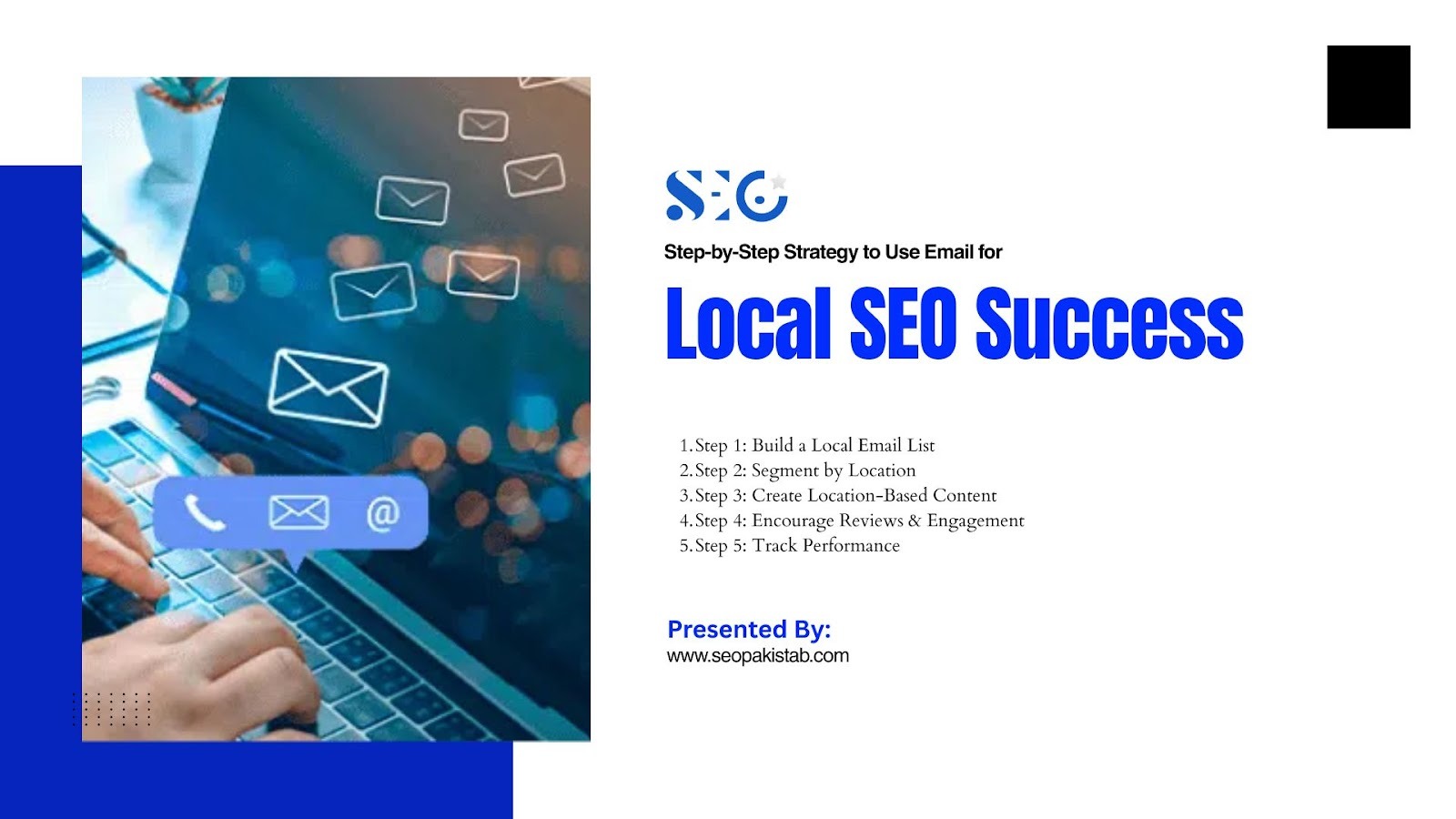
Step 1: Build a Local Email List
A successful campaign requires a high-quality list of local subscribers. Where should you look for these prospective customers? Multiple touchpoints exist for data collection.
- Collect email addresses directly from your local website traffic.
- Gather customer details during in-store visits.
- Request contact information at local events.
Step 2: Segment by Location
To maximize campaign effectiveness and ensure relevance, it’s crucial to divide your audience strategically instead of treating all subscribers the same.
- Divide your master list by specific city locations.
- Create broader segments by geographic region.
- Categorize users based on location-specific customer behavior.
Step 3: Create Location-Based Content
To excite local audiences, generic content won’t cut it. Your regional emails should feel special by including familiar local details.
- Mention specific city names in your subject lines.
- Include recognizable local references in your email body.
Step 4: Encourage Reviews & Engagement
Active subscribers provide the strongest signals for search algorithms, and clear instructions are the best way to prompt them to take action.
- Add prominent review links in your post-purchase emails.
- Include clear feedback requests for recent customer experiences.
Step 5: Track Performance
Monitoring your data allows you to refine your future campaigns. Which metrics provide the most valuable insights? Pay close attention to user behavior.
- Monitor your campaign open rates by specific regions.
- Track click rates on local promotional links.
- Analyze the resulting local traffic in Google Analytics.
Common Mistakes That Kill Email Local SEO Results
Sending Generic Emails.
Broad messages fail to connect with local audiences because they lack regional relevance.
- Generic emails contain no location personalization.
- They fail to address specific local customer needs.
Ignoring Mobile Optimization
Most users check their email on mobile devices while on the go, and poor formatting hurts performance.
- Unoptimized emails create a poor user experience.
- Mobile users will quickly delete difficult-to-read messages.
Not Linking to Local Pages
Every email should guide users to relevant website pages. Where are you sending your subscribers? General homepages waste valuable traffic.
- Failing to link locally results in a missing local SEO boost locally.
- Users bounce when they cannot find specific location details.
Over-emailing Subscribers
Sending too many messages can frustrate even your most loyal customers. Finding the right balance in your email frequency is crucial.
- Excessive emailing quickly leads to unsubscribes.
- It damages your sender’s reputation and brand trust.
Insight: Relevance combined with proper timing equals long-term success.
Advanced Strategy: Combining Email + Google Business Profile
Drive Traffic to GBP Listing
Your Google listing serves as your most important local asset. How can you push more engagement to this profile? Email provides a direct pathway.
- Add direct Maps links to your physical store locations.
- Include a prominent review CTA linking to Google.
Promote Local Posts via Email
Google allows businesses to publish updates directly on their local profiles. Are you maximizing the reach of these posts? Email amplification works perfectly.
- Share new Google profile offers with your email list.
- Send profile updates to keep local customers informed.
Encourage Check-ins & Engagement
Physical visits send the strongest possible signal to local search algorithms. How do you get online subscribers into your store? You must ask them directly.
- Ask users to visit your physical location.
- Encourage them to interact with your Google profile upon arrival.
Insight: The continuous loop of Email to GBP to Rankings creates sustained growth.
Key Takeaways
Reviewing the main concepts ensures you implement the strategy correctly. What are the most important points to remember? Keep these fundamental rules in mind.
- Email boosts local search visibility indirectly through traffic.
- Geographic targeting increases relevance and user interaction.
- Reviews stand as the biggest ranking factor for local businesses.
- Positive engagement signals matter to search engines.
- Email combined with local SEO creates a powerful combination.
Conclusion
Improving your local SEO through email marketing requires a dedicated focus on regional relevance and data-driven insights. By crafting targeted messages and fostering strong community engagement, your business can cultivate a loyal customer base right in your neighborhood.
Effective email local SEO allows you to deliver real value to local customers, directly addressing their needs and search intent. As you improve the user experience and align with local search signals, your visibility in search engine results will naturally increase.
Ready to dominate your local market? At SEOPakistan.com, we specialize in creating powerful, data-backed strategies that connect you with your community and drive growth. Let us help you unlock your full local potential. Visit us today to get started
Frequently Asked Questions
What is email local SEO?
Email local SEO is the strategy of using email marketing to improve local search visibility. It works by driving traffic, increasing engagement, and generating reviews, which are important ranking signals for local SEO.
Does email marketing help local SEO rankings?
Yes, email marketing helps indirectly by increasing user engagement, brand searches, and customer reviews. These signals improve your credibility and visibility in local search results.
How can I use email to get more local customers?
You can use location-based campaigns, personalized offers, and event promotions to attract local customers. Sending targeted emails to users in specific areas increases relevance and conversion rates.
What type of emails work best for local SEO?
Review request emails, local event promotions, and personalized offers work best. These emails encourage engagement and improve local signals like traffic and reviews.
How often should I send local marketing emails?
Sending 1 to 2 emails per week is effective for most businesses. The key is to maintain consistency without overwhelming subscribers, ensuring high engagement and low unsubscribe rates.