

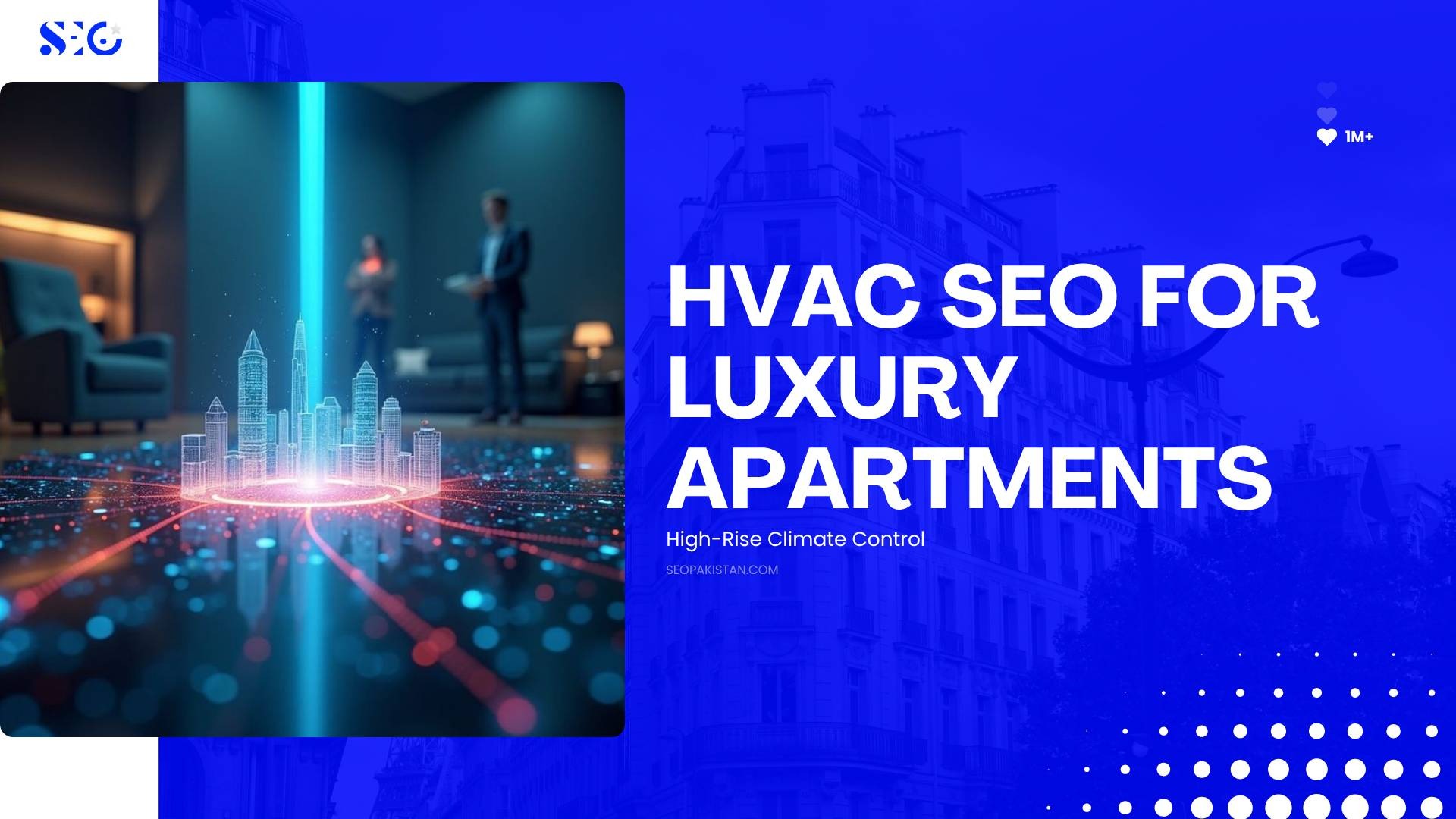
Implementing HVAC SEO for luxury apartments requires shifting your digital strategy from targeting residential homeowners to institutional facility managers. Instead of optimizing for emergency repairs, your content must focus on high-rise climate control, predictive maintenance, and operational return on investment.
By creating specialized topic clusters around compliance, large-scale chiller systems, and premium indoor air quality, commercial firms establish true digital authority. Utilizing advanced schema markup and detailed project dossiers signals expertise to AI search engines, successfully securing long-term maintenance contracts for multi-million dollar high-rise portfolios.
This guide outlines a comprehensive search engine optimization strategy tailored for luxury multi-family climate control. You will learn how to shift your firm from a simple repair service to a trusted institutional partner. We will cover technical architecture, content clustering, and generative engine optimization.
The Institutional Pivot
Securing luxury apartment contracts requires a fundamental shift in your marketing approach. You must position your firm as an institutional partner. You are not running a simple repair shop. You manage multi-million dollar climate assets.
Your search engine strategy must reflect this elevated status. You must use topic clusters to map the entire lifecycle of multi-family HVAC systems. This lifecycle stretches from emergency response protocols and predictive maintenance to large-scale system retrofits.
When property owners research solutions, they must find your comprehensive guides. Your content should prove that your team understands the complexities of high-density living.
Luxury HVAC SEO Strategy vs. Residential Tactics
Selling to a homeowner differs completely from selling to a luxury property portfolio manager. Your website must cater to the precise needs of high-level decision-makers.
Here are the primary differences you must address in your campaign:
- Primary Intent: Residential customers want urgent repairs. Luxury facility managers seek reliability, regulatory compliance, and maximum return on investment.
- Decision Maker: You are no longer speaking to a single homeowner. You must persuade facility managers, building owners, and corporate boards.
- Core Asset Types: Move away from split units and standard furnaces. Optimize your content for Variable Refrigerant Flow (VRF) systems, large chillers, centralized roof-top units (RTUs), and Building Automation Systems (BAS).
- Success Metrics: Residential success relies on the sheer volume of service calls. Luxury success relies on securing annual maintenance agreements and long-term contracts.
- Authority Focus: Homeowners look at customer reviews. Facility managers demand detailed case studies and proof of compliance with organizations like LEED and ASHRAE.
| Feature | Residential HVAC SEO | Luxury Apartment HVAC Strategy |
| Primary Intent | Emergency/Urgent Repair | Reliability, Compliance, & ROI |
| Decision Maker | Homeowner | Facility Manager / Building Owner |
| Core Asset Types | Split Units, Furnaces | VRF, Chillers, Centralized RTUs, BAS |
| Success Metric | Number of Service Calls | Annual Maintenance Agreement (LSA) Signings |
| Authority Focus | Customer Reviews | Case Studies, Compliance (LEED/ASHRAE) |
Building Institutional Authority Through Content
Content remains the foundation of your digital authority. You cannot simply list your services. You must build an interconnected web of expert knowledge.
The Pillar Page Strategy
Create a central pillar page titled “The Facility Manager’s Guide to HVAC Management for Luxury High-Rises.” This comprehensive page acts as the hub for your entire luxury strategy. It should cover all fundamental aspects of high-rise climate control.
Cluster 1: Technical and Compliance
This cluster establishes your absolute authority on industry standards. High-rise buildings face strict regulations. You must prove your firm understands these rules.
- Write detailed articles about ASHRAE compliance for modern high-rises.
- Explain the process of LEED-certified HVAC retrofitting.
- Publish guides on implementing predictive maintenance for complex VRF systems.
Cluster 2: Resident Experience
Luxury apartments demand premium living conditions. The HVAC system plays a massive role in tenant satisfaction. Focus on the luxury aspects of climate control.
- Detail the benefits of acoustic zoning to create ultra-quiet environments.
- Discuss high-end indoor air quality (IAQ) filtration systems.
- Explain how to integrate smart thermostats across massive apartment portfolios.
Cluster 3: Operational ROI
Building owners care deeply about the bottom line. You must demonstrate how your services save money over time. Focus on the business implications of proper maintenance.
- Showcase methods for reducing energy overhead in multi-family complexes.
- Provide strategies for extending the lifespan of expensive chiller systems.
- Outline strict emergency response protocols for buildings with more than 500 units.
Technical Architecture: Machine-Readable Prestige
Great content requires a flawless technical foundation. Search engines must understand your expertise without hesitation. You must structure your website data specifically for commercial operations.
Advanced Property Schema
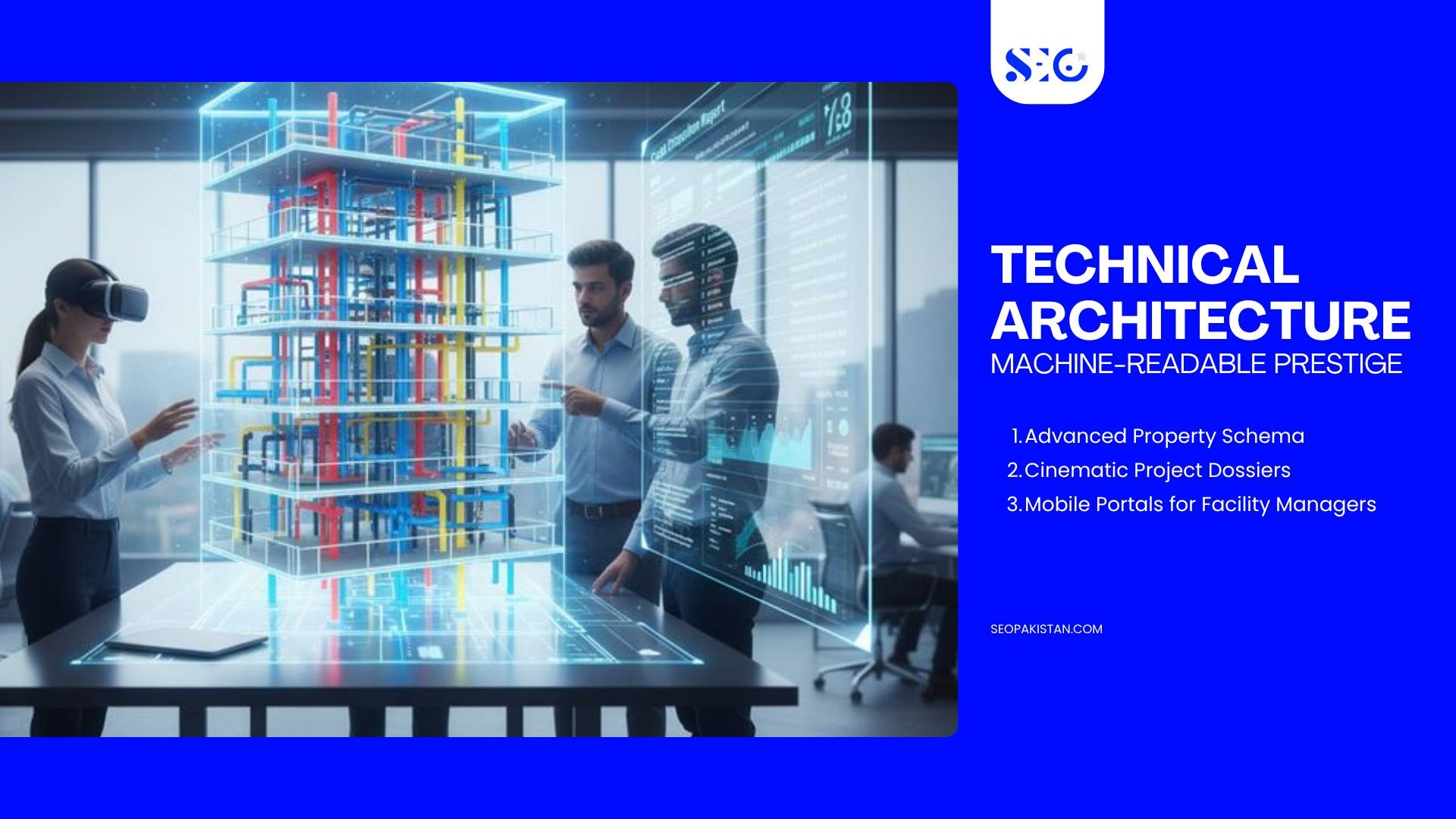
Standard local business markup does not cover the scope of your commercial operations. You must use the advanced Service and LocalBusiness schema. Modify these tags to highlight your work on multi-location complexes and massive high-rise structures. This exact data helps search engines categorize your business correctly.
Cinematic Project Dossiers
Do not just upload standard before-and-after photos. Create deep, cinematic project dossiers. Describe the unique technical challenges of every high-rise installation. Explain the logistics of lifting a chiller onto a forty-story roof. This detailed text signals immense expertise to both human readers and artificial intelligence crawlers.
Mobile Portals for Facility Managers
Property managers spend their days walking the property, not sitting behind a desk. Ensure that all maintenance request forms and client portals on your website are perfectly optimized for mobile access. Fast, responsive mobile design serves as a key indicator of your overall service responsiveness.
Generative Engine Optimization (GEO)
Artificial intelligence tools now answer many complex search queries. You must optimize your website to become a primary source for these AI assistants. This process is known as Generative Engine Optimization.
The Citation Strategy
Structure your technical content to provide direct, authoritative answers. Format headings as questions a facility manager might ask.
For example,
Use the heading: “What are the key HVAC requirements for luxury high-rise ventilation?” Follow this immediately with a clear, concise answer. This structure ensures AI assistants cite your brand as the definitive industry expert.
Expertise, Data, and Certifications
Artificial intelligence relies on Knowledge Graphs to determine authority. You must explicitly mention your industrial-grade certifications on every relevant page. Detail your credentials with NATE, NEBB, and ASHRAE. Place this information in your website metadata and author bios to feed the AI Knowledge Graph directly.
Strategic Gaps and Targeted Recommendations
To finalize your institutional pivot, you must adjust how you distribute your content. Broad marketing wastes your budget. Targeted, strategic marketing secures premium contracts.
- Focus on Contract-Ready Content: Stop writing blog posts about fixing loud air conditioners. Shift all your resources to high-level topics. Write about extending the lifecycle of a high-rise chiller system.
- Target Local Industrial Hubs: Do not target broad city names in your keywords. Target specific neighborhoods known for high-density luxury developments. Optimize for phrases like “HVAC services for Financial District Luxury Apartments.”
- Utilize LinkedIn and Trade PR: Luxury property managers do not look for commercial vendors on standard social media. They use LinkedIn. Your SEO efforts must support a broader strategy. Turn your technical blog posts into professional whitepapers. Share these documents in specific LinkedIn groups where facility managers congregate.
Conclusion
Transitioning your HVAC firm into an institutional partner requires a disciplined, highly targeted digital strategy. You must abandon residential marketing habits. Focus strictly on compliance, luxury resident experiences, and long-term operational return on investment.
Begin by auditing your current website content. Remove basic repair guides and start drafting your high-rise facility management pillar page. Implement advanced schema markup to highlight your commercial expertise.
By strategically focusing on HVAC SEO for luxury apartments and elevating your content and technical architecture, you will command the attention of luxury property developers and secure highly profitable, long-term maintenance contracts. Visit seo pakistan for more.
Frequently Asked Questions
What are the primary HVAC systems used in luxury apartments?
When managing luxury apartments, standard residential units are entirely insufficient. High-rise buildings typically utilize advanced commercial HVAC systems to ensure optimal climate control. These include Variable Refrigerant Flow (VRF) systems, large-scale chillers, and centralized rooftop units. For facility managers, maintaining these complex networks is critical to resident comfort, requiring specialized predictive maintenance and strict compliance with ASHRAE standards to maximize energy efficiency and long-term operational ROI.
How can facility managers improve indoor air quality in high-rise buildings?
Facility managers must prioritize premium indoor air quality to meet the demanding living standards of luxury apartments. Upgrading HVAC systems with advanced filtration technologies, such as HEPA filters and UV purification, significantly reduces airborne pathogens and allergens. Implementing these commercial-grade solutions in high-rise buildings not only enhances the daily resident experience but also ensures strict compliance with modern health regulations, ultimately protecting the property’s overall asset value.
Why is predictive maintenance essential for luxury apartment HVAC systems?
Predictive maintenance actively prevents catastrophic system failures before they disrupt resident comfort in luxury apartments. By utilizing smart sensors and building automation technology, facility managers can monitor the real-time performance of complex HVAC systems in high-rise buildings. This proactive approach successfully extends the lifespan of expensive chillers, drastically reduces emergency repair costs, and guarantees reliable climate control, which remains essential for retaining high-value tenants.
What are the specific compliance requirements for high-rise building climate control?
Navigating rigorous regulatory compliance is a major responsibility for facility managers overseeing high-rise buildings. Commercial HVAC systems must strictly adhere to complex codes, including ASHRAE standards for ventilation and localized environmental regulations. Ensuring luxury apartments meet or exceed these professional benchmarks—often aiming for LEED certification—guarantees structural safety, maximizes building energy efficiency, and effectively prevents costly legal penalties associated with improper mechanical maintenance.
How do smart thermostats integrate into multi-family luxury apartments?
Integrating smart thermostats across multi-family luxury apartments requires a highly centralized Building Automation System. This robust setup allows facility managers to oversee energy usage across entire high-rise buildings while simultaneously granting residents personalized climate control. Modern commercial HVAC systems seamlessly connect with these smart devices, enabling advanced acoustic zoning and precise temperature management. This critical integration drastically reduces energy overhead while greatly improving the premium resident experience.