



Luxury real estate structured data helps search engines understand premium listings, property features, locations, agents, reviews, images, pricing, and neighborhood context with more accuracy. It improves eligibility for rich results, strengthens AI search understanding, and helps high-value property pages stand out in competitive SERPs.
Strong luxury home schema, accurate premium listing JSON-LD, and advanced mansion property markup give Google clearer property signals, while luxury agent structured data supports trust, authority, and local visibility for premium real estate brands.
Why Luxury Real Estate Listings Fail to Stand Out in Search Results
Most Luxury Listings Look Identical in Google
Many luxury property pages lack structured enhancement entirely. This failure causes poor differentiation on search engine results pages. Google displays a $20 million estate exactly like a $300,000 starter home when webmasters do not use schema markup.
Search engines parse standard HTML text without understanding the context behind the words. Real estate agencies lose critical visibility when they rely solely on standard text descriptions. Competitors who implement schema automatically dominate the visual space on page one.
Why High-End Buyers Expect Rich Digital Experiences
Affluent buyers expect a premium experience before they contact an agent. They want images, location context, amenities, pricing clues, reviews, and quick answers.
Google says structured data helps it understand page content and show richer search appearances called rich results. That matters for luxury listings because rich result features can make a search result look more useful than a plain text listing.
A luxury buyer may not click every result. They usually click the result that looks trustworthy, detailed, and relevant first.
The SEO Problem with Unstructured Property Content
Unstructured listing content forces search engines to interpret property details only from visible text. This can create gaps when a page relies heavily on images, sliders, icons, and short captions.
Structured data gives search engines a cleaner map of the page. It connects the listing, agent, location, offer, property type, and amenities into a stronger semantic profile.
What Luxury Real Estate Structured Data Actually Does
Luxury real estate structured data converts visible property information into machine-readable code. It does not replace strong content, but it helps search engines understand that content with more confidence.
Google states that most Search structured data uses Schema.org vocabulary, but site owners should follow Google Search Central documentation for Google-specific Search behavior.
How Structured Data Helps Search Engines Understand Properties
Structured data defines entities and relationships. For luxury real estate, those entities may include the property, address, agent, community, listing price, offer status, amenities, images, and reviews.
This helps search engines answer key questions faster.
A strong schema setup can clarify:
- What the page represents: A listing, agent profile, community page, or property guide.
- Where the property exists: City, neighborhood, gated community, or waterfront area.
- What makes it premium: Amenities, architecture, views, finishes, and lifestyle features.
- Who represents it: Agent, agency, broker, or luxury property brand.
- How users can act: Book a tour, request details, call the agent, or view availability.
These details improve search understanding and AI retrieval.
Why Structured Data Improves Rich Results
Structured data can make pages eligible for rich results, although it does not guarantee them. Google says pages need required properties for eligibility, and complete, accurate recommended properties matter more than poorly formed or incomplete markup.
Luxury real estate websites can use supported rich result types such as Breadcrumb, FAQ, Image metadata, Local business, Organization, Product, Profile page, Review snippets, and Video, depending on the page content and Google’s current support.
How AI Search Uses Structured Data
AI Overviews and generative search rely heavily on structured entities to formulate answers. Large language models extract data from sites that organize their information logically. Luxury real estate structured data feeds these AI engines with exact facts about your properties.
When a user asks an AI about “mansions for sale with private docks,” the AI scans for marked-up entities. Contextual property understanding allows the AI to recommend your listing over others. Websites without schema remain invisible to these new search technologies.
Luxury Home Schema: The Foundation of Premium Property SEO
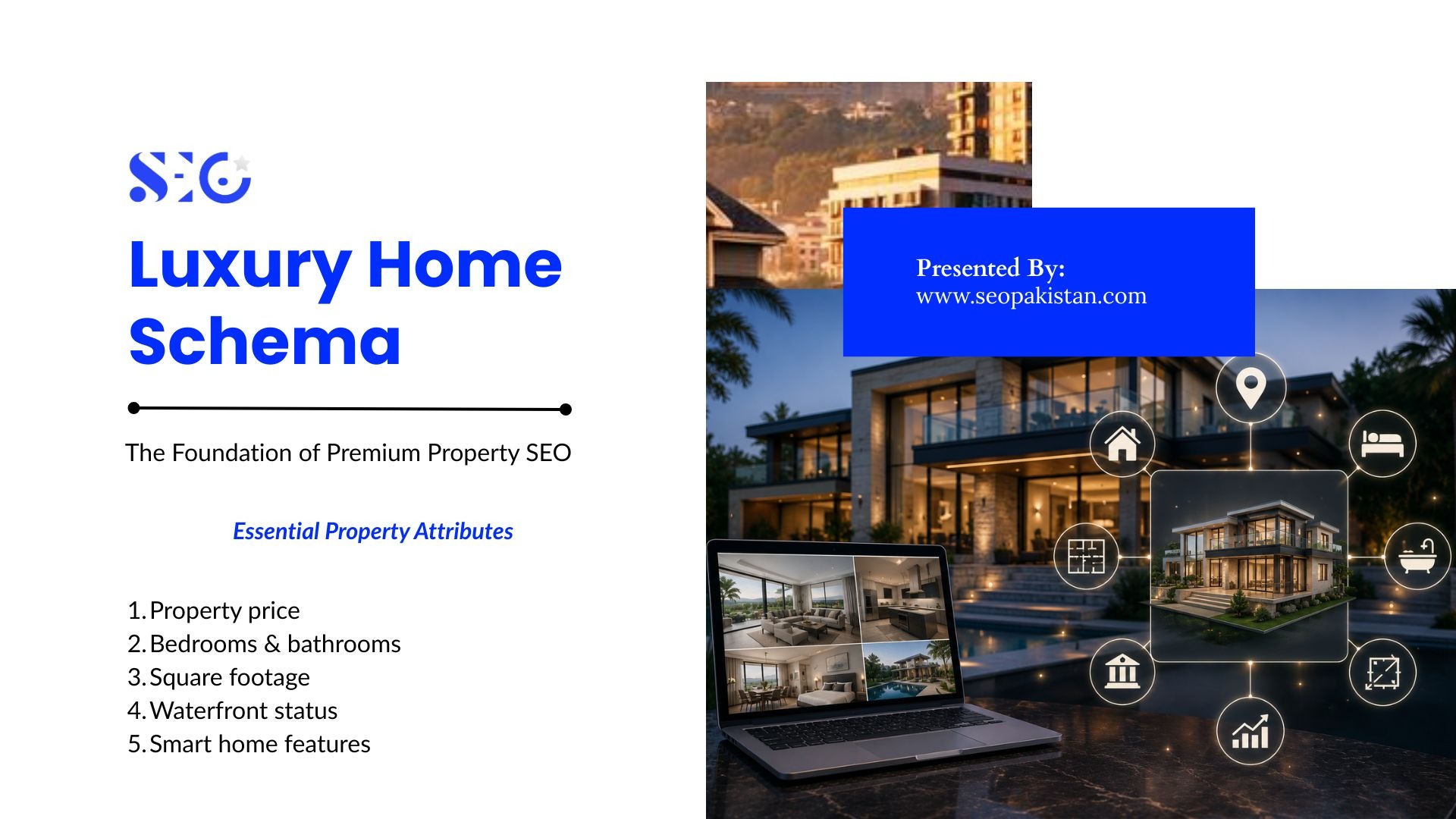
What Is Luxury Home Schema?
Luxury home schema refers to structured markup that describes premium residential properties using relevant Schema.org and Google-supported types. It can combine property, offer, place, image, video, agent, organization, and local schema elements.
Essential Property Attributes to Mark Up
Adding specific attributes to your schema ensures search engines understand the exact value of the home. You must include the granular details that luxury buyers search for. An incomplete schema often results in ignored markup.
The most useful points include:
- Property price: State the exact monetary value and currency clearly.
- Bedrooms and bathrooms: List the exact count to match specific user search filters.
- Square footage: Define the exact living space area to establish the property scale.
- Waterfront status: Mark up geographical advantages that increase property value.
- Smart home features: Highlight modern automation systems that attract tech-savvy buyers.
Why Luxury Features Need Semantic Context
A swimming pool, rooftop terrace, waterfront dock, and private spa do not carry equal value in every market. Schema helps give those features a clearer context.
For example, a private dock matters more in waterfront communities. A wine cellar may matter more in ultra-luxury estates. A smart home system may attract buyers who value privacy, automation, and security.
High-End Real Estate Rich Results That Increase Click-Through Rates
Rich Results vs Standard Listings
Enhanced search visibility commands attention on crowded results pages. High-end real estate rich results occupy more physical screen space than ordinary blue links. This larger footprint naturally draws the user’s eye and generates more clicks.
Standard listings offer only a title and a brief description. Rich results offer images, star ratings, and crucial property data. This visual superiority establishes immediate brand authority in the mind of the affluent searcher.
Rich Snippets That Matter for Luxury Real Estate
Certain rich snippets drive more engagement than others in the luxury market. You must prioritize the enhancements that provide the most visual impact. Selecting the right schema types maximizes your search engine real estate.
The most useful points include:
- Images: Display high-resolution property photos directly in the search results.
- FAQs: Answer common buyer questions to dominate screen space.
- Breadcrumbs: Show the exact site architecture to help users navigate your neighborhood pages.
- Video markup: Highlight virtual tours to engage international luxury buyers.
- Reviews: Display star ratings to build immediate trust and credibility.
Why CTR Matters More in Luxury Markets
In the luxury real estate market, a single click can be worth millions. A higher click-through rate (CTR) not only captures every possible lead from a limited, high-value audience but also signals to Google that users prefer your listings, boosting your organic rankings.
Mansion Property Markup: Advanced Schema Strategies
Mansion property markup should go beyond basic price, location, and bedrooms. Ultra-luxury properties need deeper semantic detail because buyers compare lifestyle, rarity, privacy, and architectural value.
Generic markup misses the features that make these listings valuable.
Marking Up Luxury Amenities Correctly
Luxury amenities need clear labeling. Vague phrases like “world-class finishes” do not help search engines as much as specific, visible details.
Useful amenity signals include:
- Home theater: Supports entertainment and lifestyle intent.
- Wine cellar: Adds premium home differentiation.
- Private dock: Connects the property to waterfront living.
- Smart automation: Signals security, comfort, and modern luxury.
- Wellness spaces: Highlights gyms, saunas, spas, and meditation rooms.
These details should appear visibly on the page and match the schema.
Premium Listing JSON-LD Implementation Guide
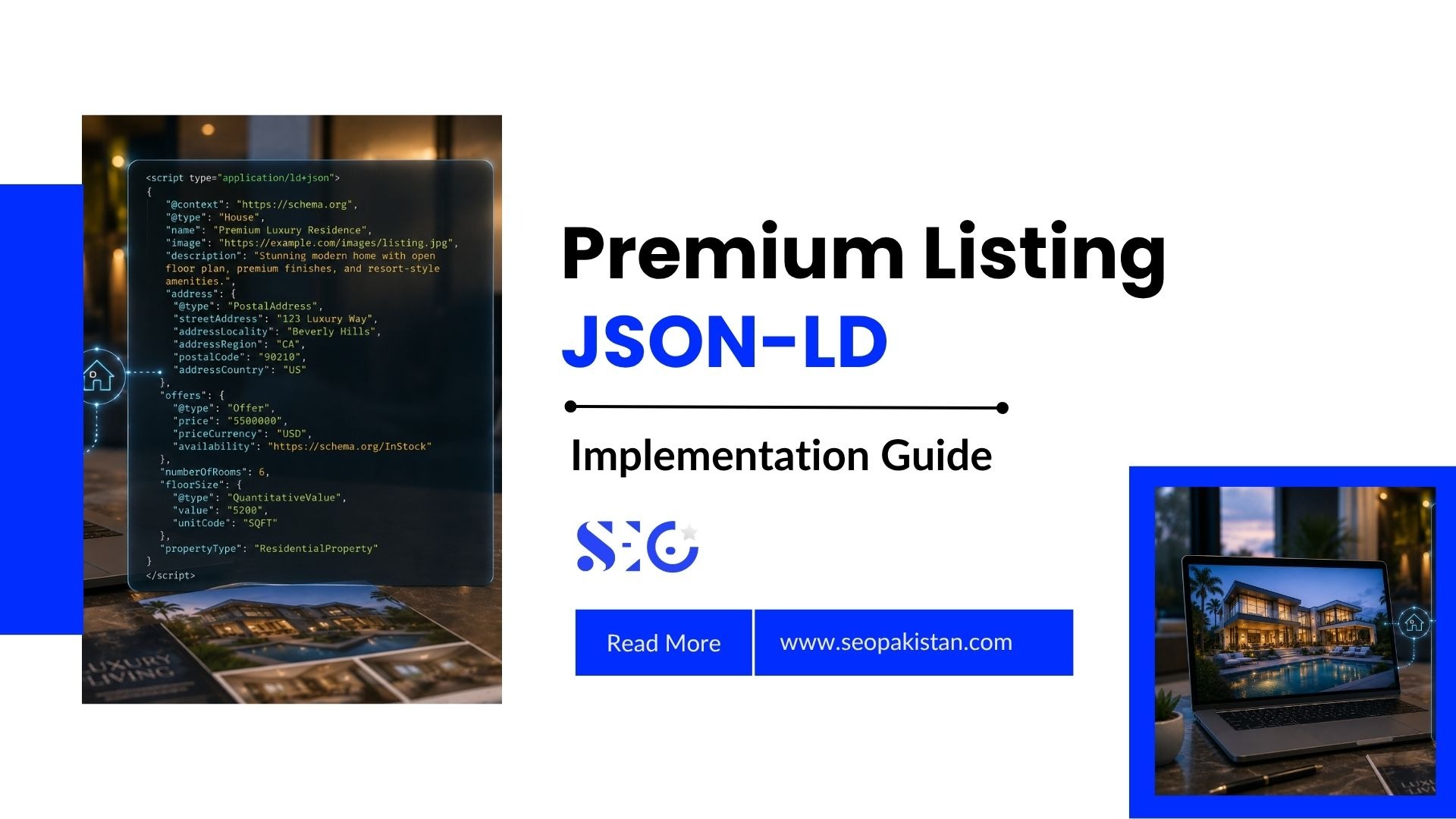
Why JSON-LD Is Google’s Preferred Format
Google explicitly recommends premium listing JSON-LD for all structured data implementations. This format uses JavaScript to inject the schema cleanly into the head of the web page. It does not interfere with the visible HTML layout of the property listing.
JSON-LD allows for easier maintenance and dynamic updating. Developers can easily script JSON-LD to pull data directly from a real estate database. This automation ensures your schema always matches the visible listing data perfectly.
Essential JSON-LD Properties for Luxury Listings
A complete JSON-LD script requires several interconnected schema types. You must combine these properties to give Google a complete picture of the transaction. Missing properties limit the effectiveness of the entire script.
The most useful points include:
- Product: Define the property as a premium item available for purchase.
- Residence: Specify the exact type of luxury dwelling.
- Offer: Detail the asking price, currency, and availability status.
- Place: Provide the exact geographical coordinates and physical address.
- RealEstateAgent: Connect the listing to the specific broker handling the sale.
Common JSON-LD Errors That Hurt SEO
Bad implementation can reduce trust and eligibility. Many real estate websites add schema once and never update it when listings change.
Common errors include:
- Incomplete required fields: Missing key properties can block eligibility.
- Mismatched pricing: Schema price does not match visible page price.
- Invalid nesting: Offer, Place, and listing entities connect incorrectly.
- Expired listings: Sold or removed properties still show active markup.
- Hidden content markup: Schema describes details users cannot see.
Search engines need consistency between visible content and structured data.
Structured Data for Luxury Communities and Neighborhood Pages
Why Community Pages Drive Luxury SEO Traffic
A buyer may search “best luxury communities in Lahore” or “waterfront mansions in Dubai” before choosing an agent. These searches show research intent and future buyer value. Community pages can answer those questions while linking to listings and agent expertise.
Schema for High-End Neighborhood Pages
Neighborhood pages require a different schema strategy than individual property listings. You must define the area as a specific geographic entity. This markup helps Google distinguish a neighborhood page from a generic blog post.
The most useful points include:
- LocalBusiness: Mark up your brokerage office if it resides within the community.
- Place: Define the exact borders and coordinates of the luxury neighborhood.
- Residence: Aggregate data about the typical types of homes in the area.
- FAQ schema: Answer common questions about local schools, taxes, and amenities.
Enhancing Community Authority with Structured Entities
Building semantic topical authority requires linking concepts together. Your neighborhood page schema should reference nearby landmarks, exclusive country clubs, and premium shopping districts. These references prove your deep knowledge of the local luxury lifestyle.
Google rewards websites that demonstrate comprehensive geographical expertise. When you structure this data correctly, your site becomes the primary digital authority for that area. This authority boosts the rankings of every individual property listing you post within that neighborhood.
Technical SEO Mistakes Luxury Real Estate Websites Commonly Make
Using Incomplete Schema Markup
A partial schema can confuse search engines. A page may include a property type but miss the offer, agent, location, or image details. Complete markup gives search engines a stronger page profile.
Mismatched Listing Information
Mismatched listing details create trust problems. If the visible page shows one price and the schema shows another, search engines may reduce confidence in the data. Luxury listings need strict data hygiene because pricing and availability change often.
Ignoring Mobile Structured Data Validation
Google uses mobile-first indexing to evaluate all websites. If your schema only loads on the desktop version of your site, Google will never see it. You must ensure your structured data scripts execute flawlessly on mobile devices.
Mobile validation requires testing your pages with Google’s Rich Results Test tool on a mobile user agent. Many real estate themes strip out background scripts on mobile to improve load times. You must configure your site to retain vital schema code on all devices.
Luxury Real Estate Schema Optimization
| Schema Element | SEO Purpose | Luxury SEO Benefit | Implementation Priority | Common Error to Avoid |
| Property Schema | Defines property understanding | Triggers rich property indexing | Critical | Missing price data |
| Review Schema | Generates trust signals | Drives higher SERP CTR | High | Faking review counts |
| FAQ Schema | Drives SERP expansion | Secures more search visibility | Medium | Repeating content |
| Agent Schema | Builds brand authority | Delivers E-E-A-T improvement | High | Missing social links |
| Local Schema | Establishes geographic relevance | Boosts local luxury rankings | Critical | Incorrect coordinates |
Conclusion
Implementing luxury real estate structured data transforms ordinary web pages into highly visible, machine-readable digital assets. Luxury home schema enables search engines to display critical property details directly in the search results, driving highly qualified traffic to your site. You must utilize mansion property markup and premium listing JSON-LD to secure high-end real estate rich results.
Agencies that master luxury agent structured data and entity optimization will dominate AI search visibility, capture affluent buyers, and command the premium digital market. Contact SEOPakistan today to rank your real estate business higher.
Frequently Asked Questions
What is luxury real estate structured data?
Luxury real estate structured data is specific backend code added to property web pages. It translates human-readable property details into machine-readable formats. This code helps Google understand exact property prices, amenities, and geographical locations.
Why does luxury home schema matter for SEO?
Luxury home schema helps search engines understand a property’s unique features, such as square footage, location, amenities, images, and offer details. It adds structure to information that may otherwise appear only in text, icons, or galleries. This improves semantic clarity and supports better visibility for high-value property searches.
Is JSON-LD the best format for real estate schema?
Google supports JSON-LD, Microdata, and RDFa for structured data, but it says JSON-LD is usually the easiest format to implement and maintain. That makes premium listing JSON-LD a strong choice for real estate sites with many listing templates, agent pages, community pages, and frequently updated property data.
Can structured data guarantee rich results?
No. Structured data can make a page eligible for rich results, but Google does not guarantee enhanced display. The page must use supported markup, include required properties, follow content guidelines, and maintain accurate visible information. Search quality, relevance, and technical validity also affect whether rich results appear.
What is mansion property markup?
Mansion property markup involves using advanced schema attributes to describe ultra-luxury estates. It highlights premium amenities like home theaters, wine cellars, and expansive acreage. This detailed markup matches high-end listings with affluent buyers searching for specific luxury lifestyles.