

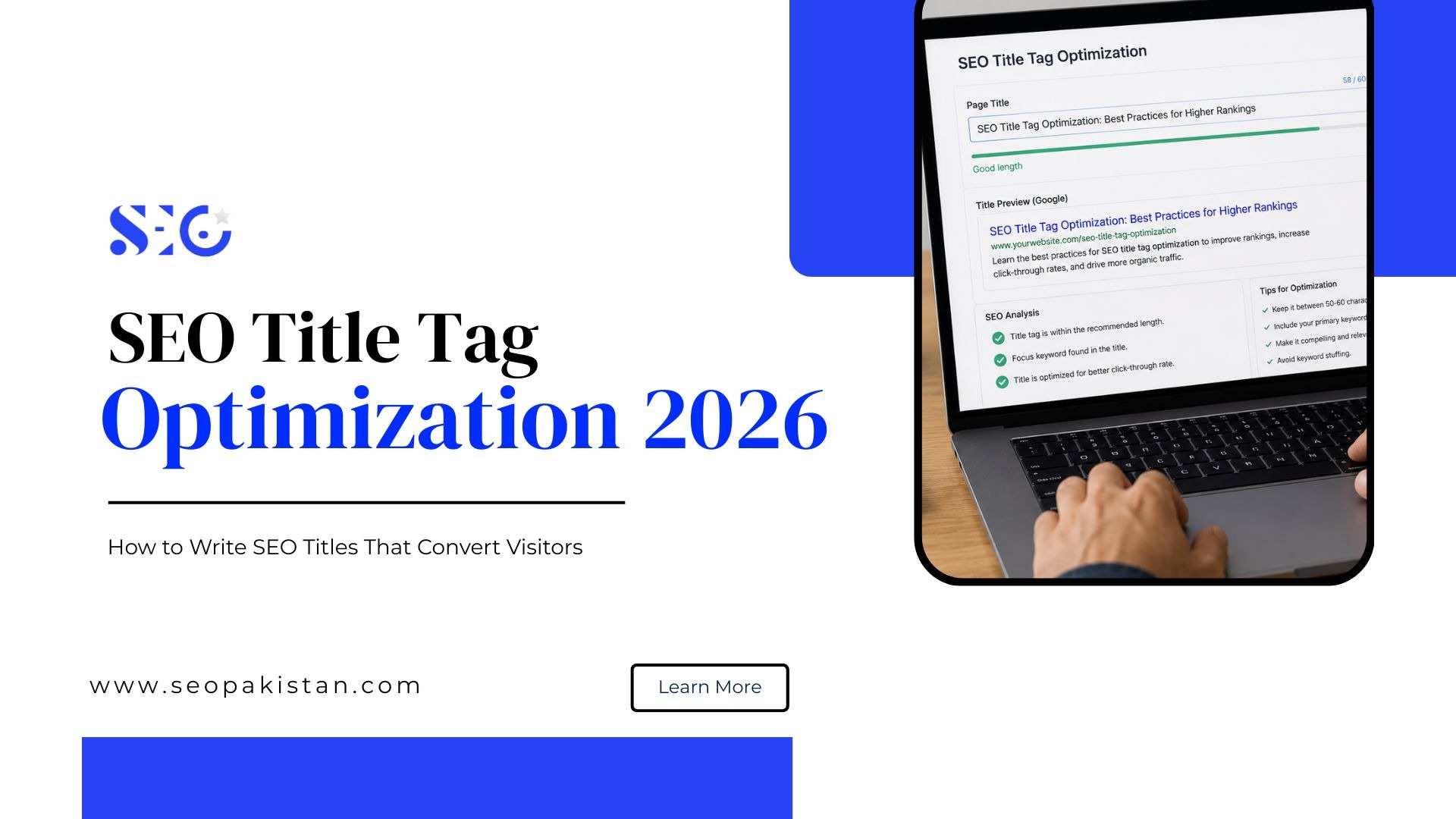
Modern SEO title tag optimization 2026 requires a strategic balance between search intent, algorithm relevance, and human psychology. Search engines no longer reward exact-match keyword stuffing. Instead, they prioritize user engagement, entity relevance, and click behavior.
To dominate the SERPs, you must optimize your keyword placement title tag strategy to align with conversational AI queries. The best-performing titles combine emotional triggers with semantic relevance while staying perfectly within the optimal title tag length 2026 guidelines. Master this, and you will capture both algorithm trust and user clicks.
Why Most SEO Title Tags Fail to Rank in Modern Search
The Old SEO Formula No Longer Works
Old title formulas focused on keyword repetition. That approach often produced robotic titles that looked weak in search results.
Google now creates title links from several page signals, including the title element, the main visible title, headings, and other prominent text. Google recommends making the main title clear and avoiding confusing title signals across the page.
Weak titles usually fail for clear reasons:
- Keyword stuffing: Repeating the same phrase makes the title look spammy.
- No search intent: The title does not show what the user will get.
- Poor clarity: The title sounds vague or incomplete.
- Weak click appeal: The title ranks but does not attract attention.
- Mismatch with H1: Google may rewrite titles when page signals conflict.
A good title does not only tell Google the topic. It also tells the searcher why the page deserves the click.
Google Now Prioritizes Click Behavior and Intent Matching
Google wants title links that help users understand the page quickly. If your title overpromises, hides the real topic, or lacks clarity, the search result may perform poorly.
Search intent now shapes title performance. A user searching “how to write SEO titles” needs a guide, while a user searching “SEO title examples” needs examples.
The same keyword can need different title angles depending on intent.
Why AI Search Is Changing Title Optimization
AI Overviews and generative search engines extract contextual relevance from your titles. They do not look for basic keyword strings anymore.
You must optimize for entity-based search systems to appear in AI citations. This means framing your titles as direct solutions or clear, authoritative answers.
What SEO Title Tag Optimization 2026 Actually Means
SEO title tag optimization 2026 means writing titles that help search engines understand relevance and help users choose your result.
A title tag now works like a ranking signal, CTR trigger, and content promise at the same time.
Ranking Optimization vs Click Optimization
You must balance search engine visibility with human click appeal. A highly optimized title fails if real users refuse to click on it.
The most effective SEO teams blend ranking signals with psychological triggers. You attract the algorithm with entities and convert the user with compelling value.
Why Search Intent Determines Title Success
Search intent controls what type of title works best. Informational keywords need clarity. Commercial keywords need value. Transactional keywords need trust.
Before writing any title, identify the user’s goal. Then choose a structure that matches that goal.
Common intent-based title styles include:
- Informational: “How to Write SEO Titles That Rank”
- Commercial: “Best SEO Title Tools for Better CTR”
- Transactional: “SEO Title Optimization Services”
- Comparison: “Short vs Long SEO Titles: Which Works Better?”
- Troubleshooting: “Why Google Rewrites Your Title Tags”
This approach keeps the title aligned with the reason behind the search.
Title Tag Length 2026: What Actually Works Today
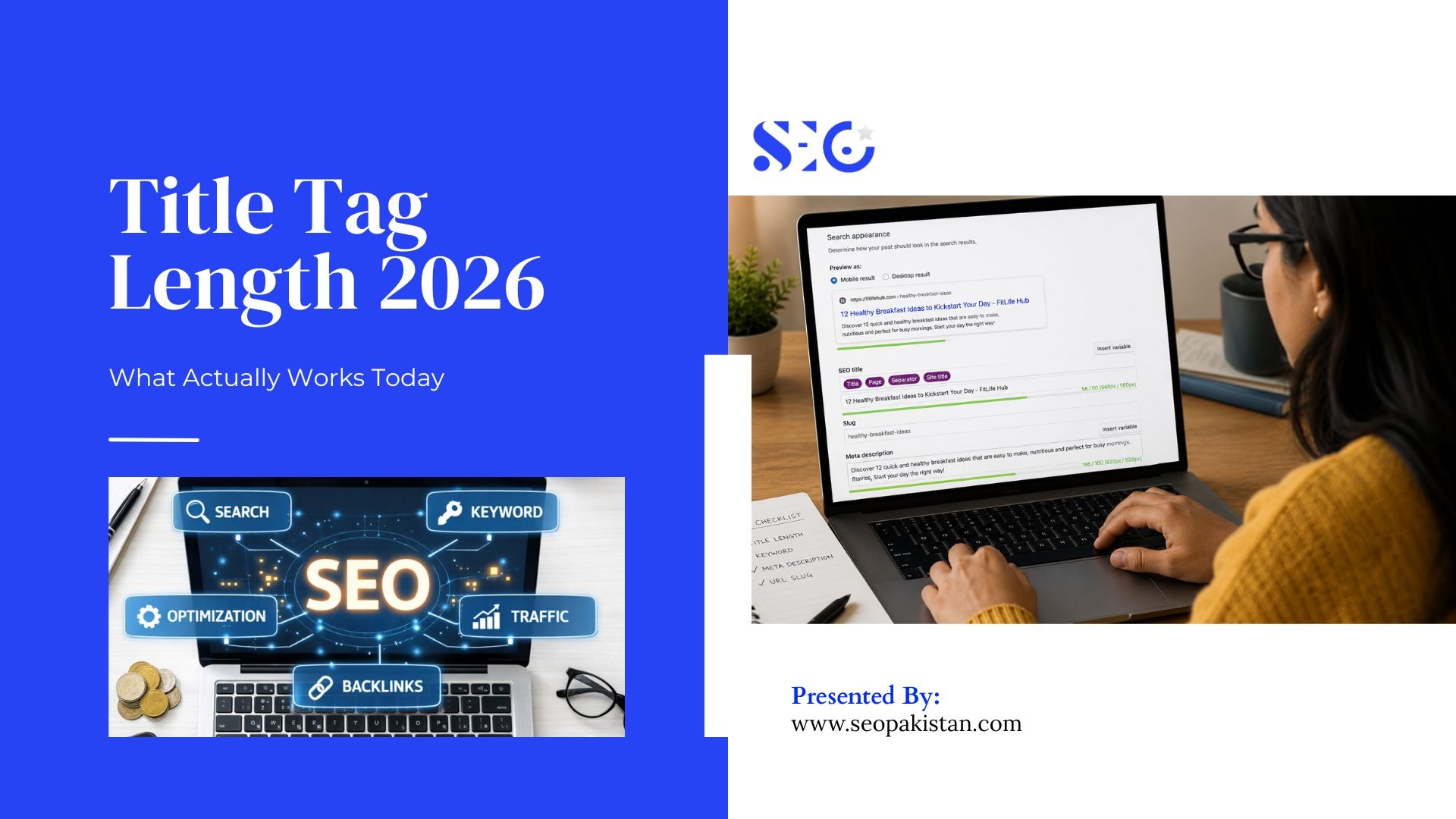
Title tag length 2026 needs more nuance than a simple character count. Google displays titles based on pixel width, not only character number.
A title with wide letters can truncate sooner than a title with narrow letters, even when both have the same character count.
Why Character Count Alone Is Outdated
SEOs previously obsessed over strict 60-character limits. Search engines actually truncate titles based on pixel width, not character counts.
Wider characters like “W” consume more pixel space than narrow characters like “i”. You must measure pixel width to guarantee your full message appears in the SERPs.
Ideal Desktop and Mobile Title Width Guidelines
Mobile and desktop interfaces display search results very differently. Mobile screens truncate titles much earlier than wide desktop monitors.
Your titles must perform perfectly across all devices to maximize traffic.
- Desktop pixel limits: Keep titles under 580 pixels to ensure full visibility.
- Mobile truncation: Front-load your core message, as mobile screens cut off text sooner.
- SERP display variations: Test your titles in a SERP simulator to verify how they look live.
Short Titles vs Long Titles: Which Performs Better?
Short titles often look clean and direct. Long titles can add more context but risk truncation and weaker readability.
The best choice depends on the query. A broad keyword may need more detail, while a specific keyword may perform better with a short title.
Why Front-Loaded Titles Perform Better
Search engine algorithms give more weight to words appearing at the beginning of a title. Users also scan the left side of search results first.
Placing your core topic early captures immediate attention and algorithmic trust. This keyword placement title tag strategy remains highly effective for rapid indexing.
Keyword Placement Title Tag Strategies That Improve Rankings
Search engines use NLP to understand meaning, but the title still gives one of the strongest page-level signals.
Why Primary Keywords Should Appear Early
Placing the primary keyword near the beginning helps users and search engines identify the page topic faster.
For example, “SEO Title Tag Optimization 2026: Write Titles That Rank” feels clearer than “Write Better Titles That Rank With SEO Title Tag Optimization 2026.”
Using Secondary Keywords Naturally
Secondary keywords can improve semantic relevance when they fit naturally. They should not make the title crowded.
A good title can include one core keyword and one supporting angle. Trying to include five keywords usually weakens CTR.
Better title writing uses one clear priority:
- Primary keyword: Shows the main topic.
- Secondary angle: Adds user benefit.
- Year or format: Adds freshness or clarity.
- Emotional trigger: Adds click appeal.
- Brand name: Adds trust when space allows.
This structure keeps the title focused.
Exact Match vs Semantic Match Titles
Modern Natural Language Processing (NLP) models understand intent beyond exact-match phrases. You no longer need to write awkward, grammatically incorrect titles just to target a specific query.
Semantic matching allows you to write conversational, engaging headlines. You rank for hundreds of variations simply by covering the core entity comprehensively.
Power Words in Titles That Increase Click-Through Rate
Why Emotional Triggers Drive More Clicks
Human beings click on search results based on emotional responses. Titles that spark curiosity, urgency, or authority grab attention instantly.
Using power words in titles separates your content from generic competitors. You command the user’s attention and force them to engage with your link.
High-Performing Power Word Categories
Different search intents require different emotional triggers to drive action. Choosing the wrong word category can alienate your specific target audience.
The most effective power words fall into four specific behavioral categories:
- Fear-based words: Use words like “Avoid,” “Mistakes,” or “Risk” to trigger loss aversion.
- Benefit-driven words: Use “Boost,” “Increase,” or “Master” for transactional searches.
- Curiosity-driven words: Use “Secret,” “Hidden,” or “Revealed” for informational blogs.
- Authority-driven words: Use “Proven,” “Expert,” or “Official” to build immediate trust.
How to Use Power Words Without Looking Clickbait
You must deliver exactly what your title promises to the reader. Clickbait titles destroy your site’s credibility and cause severe pogo-sticking.
Balance emotional triggers with strict factual accuracy. A strong click-through rate title sets a high expectation that the page content must fulfill.
Click-Through Rate Title Optimization for Modern SERPs
Why CTR Influences Long-Term Rankings
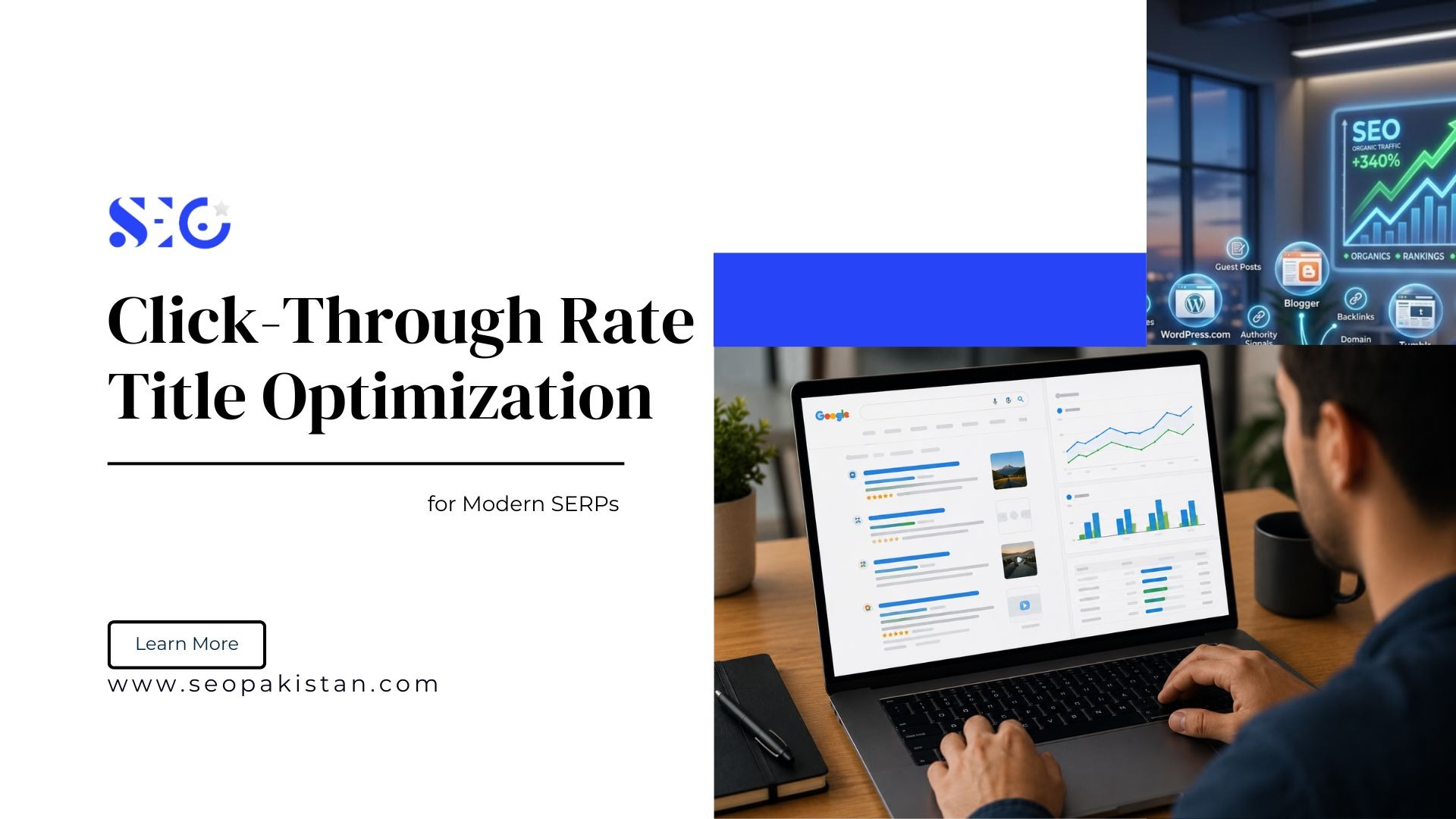
Search engines monitor behavioral engagement signals constantly. If users consistently click your result over the page ranking above you, the algorithm takes notice.
High engagement proves your page satisfies the user’s query better than competitors. This behavioral data drives long-term, stable ranking improvements.
SERP Competition Analysis Before Writing Titles
Before writing a title, look at the current SERP. Your title must stand out while matching the pattern Google already rewards.
Check whether top results use guides, lists, years, comparisons, templates, or tools.
Your SERP review should identify:
- Common title patterns: Shows what Google already ranks.
- Missing angles: Reveals ways to stand out.
- Emotional tone: Shows whether the SERP feels formal or casual.
- Search intent: Confirms what users likely expect.
- Freshness signals: Shows whether year-based titles matter.
This prevents blind title writing.
Writing Titles That Visually Stand Out
Visual differentiation stops the user from scrolling past your link. Breaking up text with specific characters draws the human eye immediately.
Incorporate visual elements strategically to boost your visibility metrics:
- Numbers: Odd numbers like 7 or 15 attract more visual attention than even numbers.
- Brackets: Enclosing text like [2026 Guide] creates a clean visual break.
- Years: Adding the current year signals fresh, updated content.
- Unique wording: Avoid copying the exact phrase structure used by your competitors.
Title Tag Formula SEO: Advanced Frameworks That Actually Work
Formula 1 — Keyword + Outcome + Year
This structure signals immediate freshness and a clear benefit. It works perfectly for competitive queries where users want updated strategies.
Example: Local SEO Strategies: Double Your Traffic in 2026
Formula 2 — Problem + Solution + Emotional Trigger
Pain-point driven SEO titles connect deeply with frustrated searchers. You acknowledge their specific problem and promise a proven resolution.
Example: Stop Losing Leads: The Proven Guide to Conversion Optimization
Formula 3 — Authority + Specificity + Benefit
Expert positioning titles build immediate trust with cautious buyers. They rely on concrete numbers and authoritative phrasing to secure the click.
Example: The Expert Blueprint to 10x Your Email Marketing ROI
Formula 4 — Search Intent + Curiosity Gap
You use this title tag formula SEO to dominate informational searches. It captures attention by promising hidden knowledge or advanced tactics.
Example: Why Your SEO Strategy Fails (And How to Fix It Today)
High-Performing SEO Title Structures
| Title Structure | SEO Benefit | CTR Impact | Best For Search Intent | Example Use Case |
| Keyword + Year | Freshness signal | High | Informational / Navigational | Best SEO Tools for 2026 |
| Number-Based Titles | Visual differentiation | High | Informational | 7 Ways to Boost Website Speed |
| Problem-Solution | Intent alignment | Medium-High | Transactional / Commercial | Fix Broken Links Fast Today |
| Curiosity-Based | Engagement boost | High | Informational | The SEO Mistake Killing Traffic |
| Authority-Led | Trust building | Medium | Commercial / B2B | Expert Guide to Lead Generation |
Advanced SEO Title Optimization Workflow for 2026–27
Analyze SERP Intent Before Writing
Before you write a single word, manually search your target query. For any successful SEO title tag optimization in 2026, you must first look closely at the patterns Google currently rewards on page one.
If Google ranks ten beginner guides, do not write a product sales page. You must align your content format with the established search intent.
Map Primary and Secondary Keywords Strategically
Group your semantic keywords into logical clusters before drafting the title. Decide which entity acts as the primary focus for the algorithm.
Draft a title that incorporates the main entity naturally alongside a supporting benefit. This approach maximizes your reach across related long-tail variations.
Write Multiple CTR Variations
Never settle for the first title you write. Professional copywriters draft dozens of variations before selecting the final headline.
Apply A/B testing methodology to your SEO titles. Write options focusing on fear, curiosity, and benefits to see which sounds most compelling.
Monitor Performance and Rewrite Weak Titles
Optimization does not end when you publish the post. You must monitor your click-through rates in Google Search Console closely.
If a page ranks on page one but receives low clicks, rewrite the title immediately. Continuous iteration ensures you maximize the traffic potential of your current rankings.
Conclusion
SEO title tag optimization 2026 now requires more than adding a keyword to the front of a page title. Strong titles combine search intent, semantic relevance, human psychology, AI-readable structure, and CTR appeal. They also stay clear enough for Google to understand and attractive enough for users to click.
The best SEO teams use smart keyword placement title tag planning, honest power words in titles, clear click-through rate title engineering, practical title tag length 2026 control, and tested title tag formula SEO frameworks.
When your title matches the query, page content, and user need, it can support better rankings, stronger CTR, and long-term search visibility.
Frequently Asked Questions
What is SEO title tag optimization 2026?
SEO title tag optimization 2026 means writing titles that match search intent, include the primary keyword naturally, attract clicks, and support AI search understanding. It goes beyond keyword placement because modern titles must also communicate value, relevance, and clarity. A strong title helps both Google and users understand the page quickly.
How long should a title tag be in 2026?
The safest title length often sits around 40 to 60 characters, but pixel width matters more than character count. SISTRIX explains that Google truncates based on pixel width, with around 580 pixels on desktop and 920 pixels on mobile. Keep the main keyword and benefit near the front.
Where should I place the main keyword in a title tag?
Place the main keyword near the beginning when it sounds natural. Early placement improves topical clarity and helps users confirm relevance quickly. A good keyword placement title tag strategy should avoid stuffing. Use one main keyword, then add a benefit, year, format, or emotional trigger if space allows.
Do power words in titles improve CTR?
Power words in titles can improve CTR when they support the topic honestly. Words like advanced, proven, practical, hidden, or costly can create interest. They become harmful when they sound exaggerated or clickbait. Use power words to sharpen the promise, not to mislead searchers.
Why does Google rewrite title tags?
Google rewrites title links when it finds another page signal more useful for the result. It may use the title element, H1, prominent text, or anchor text from links. Google recommends making the main page title clear and avoiding confusing or repetitive title signals.
What title tag formula works best for SEO?
The best title tag formula SEO depends on search intent. Informational pages often perform well with Keyword + Outcome + Year. Troubleshooting pages may work better with Problem + Solution. B2B pages often need Authority + Specificity + Benefit. Always review the SERP before choosing a formula.