

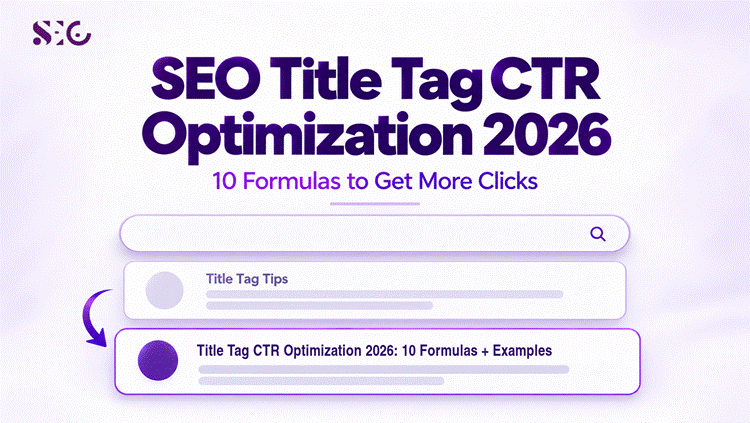
Title tag CTR optimization means writing a search title that matches intent, places the main keyword early, and gives people an honest reason to click. Ten formulas can help, including emotional trigger titles, numbered list titles, and the bracket title tag formula.
This guide shows each one with before-and-after examples for blogs, local services, and online stores, then explains how to test changes in Google Search Console. Results depend on ranking position, brand strength, and the rest of the results page, so treat every formula as a test.
What Is Title Tag CTR Optimization?
Title tag CTR optimization is the process of improving SEO titles so they earn more clicks from search results while staying accurate and relevant. The title tag, also called the meta title, is an HTML element that defines the page title and appears as the clickable headline in search results. CTR, or click-through rate, equals clicks divided by impressions. For example, a 25% CTR means 2,500 clicks from 10,000 impressions.
A strong title does five jobs at once. It matches search intent, includes the main keyword, shows a clear benefit, sparks interest, and reflects the real page. When all five line up, users click with more confidence.
Title Tag vs H1: What Is the Difference?
The title tag sells the click, while the H1 confirms the topic once the visitor lands.
• Title tag: appears in search results and browser tabs, so it needs to attract the click.
• H1: appears on the page, so it needs to confirm what the reader will get.
The two can match closely, but they do not need to be identical. Write the title tag for the results page and the H1 for the person already reading.
Why Does Google Rewrite Title Tags?
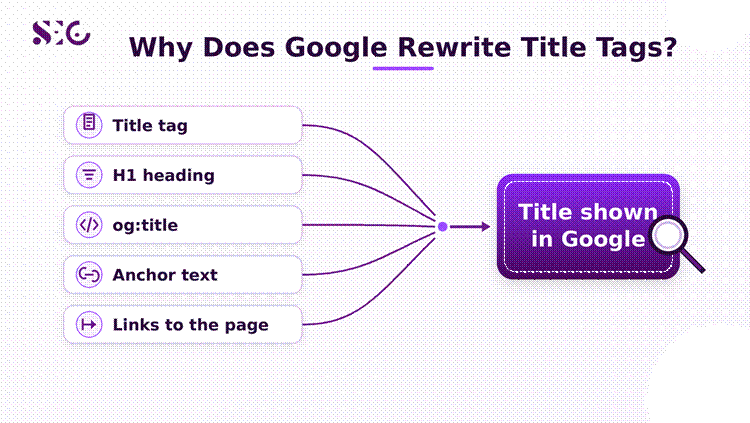
Google does not always show the title you write. It may rewrite title tags when the original title is ineffective, unclear, stuffed, duplicated, too long, or mismatched with the page. Google’s documentation says title links can draw on the title element, the main visible title, headings such as the H1, og: title, anchor text, and other prominent text, which is why pages can end up with rewritten titles in search results.
Ahrefs reports that 68.54% of sites it studied had pages where the title tag and the displayed result title did not match. A clear title that agrees with your H1 and page content lowers that risk, although it cannot remove it.
Why Title Tags Still Matter for Organic CTR in 2026
Even with AI Overviews, ads, and featured snippets on the page, people still scan titles before they choose a source. A title shapes the first impression, signals relevance, and separates your result from similar pages.
A clearer title can lift clicks from the rankings you already have, which brings more traffic without a change in position.
Titles also affect the quality of your organic traffic. A title that sets the right expectation tends to attract visitors who want what the page offers, which can reduce quick exits.
CTR Is Not Only About the Title
A title cannot fix every CTR problem. Backlinko’s analysis of 4 million results found that the first position earned a 27.6% CTR, roughly ten times the clicks of position ten. A known brand may also beat a new site with a better title.
Your snippet matters too, so pair every title test with a review of your meta description. Write it as a short, specific promise with a clear call to action, usually within about 150 characters.
Search Console reports clicks, impressions, CTR, and average position, which lets you check whether a change helped.
How Long Should a Title Tag Be?
Google sets no fixed limit. It truncates titles to fit the device width, so Ahrefs recommends keeping titles to about 50 to 60 characters, or roughly 600 pixels, and placing important keywords early.
Treat 60 characters as a working limit for the entire title tag, not a rule, because Google truncates by pixel width rather than character count alone.
Preview long titles in a SERP tool, because wide letters such as W and M use more pixels than narrow ones. Note that many sites also append a brand name, which counts toward the visible length. For the full basics, read our guide to title tag optimization.
Before and After: Title Tag Examples by Niche
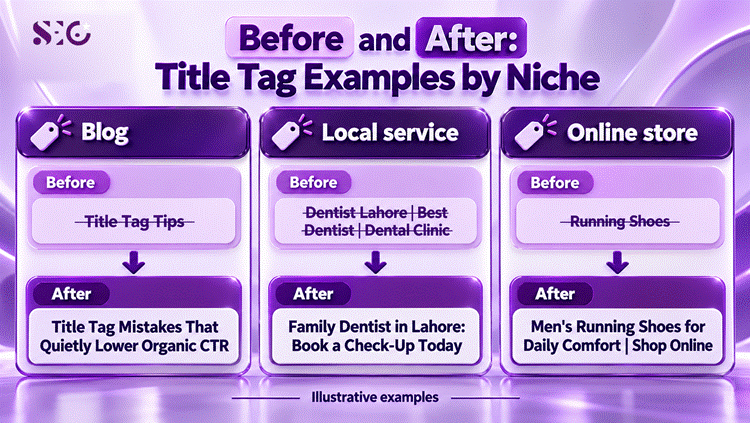
These examples are illustrative, not client results. Use offers and claims only when your page can support them. On e-commerce sites, give every product page its own title instead of repeating a category template.
| Niche | Before | After | Why the change helps |
| Blog | Title Tag Tips | Title Tag Mistakes That Quietly Lower Organic CTR | Names a real problem and keeps the keyword first |
| Local service | Dentist Lahore | Best Dentist | Dental Clinic | Family Dentist in Lahore: Book a Check-Up Today | Removes keyword stuffing and adds a clear next step |
| Online store | Running Shoes | Men’s Running Shoes for Daily Comfort | Shop Online | Names the audience, the benefit, and the shopping intent |
Title Tag Audit: What to Check Before You Rewrite
Rewriting without a diagnosis wastes effort. Start with pages that already earn impressions, because they show real demand and leave the most room to gain.
1. List pages with high impressions and low CTR in Search Console, then note the top query for each page.
2. Search that query on mobile and read the competing titles, snippets, and dates.
3. Run a site crawl to find duplicate titles, since one template can repeat the same title across hundreds of pages.
4. Check length in a SERP preview tool, because pixel width, not character count, decides truncation.
5. Compare the title with the H1 and the opening paragraph so the promise matches the page.
Use keyword research to confirm one main keyword and one long-tail variation for the page. A long-tail phrase often shows more about the searcher’s intent than a short head term does.
Judge each page by its own intent. A product page needs a different title from a how-to guide, even when both target the same topic, so match search intent and avoid keyword stuffing to protect readability and relevance.
10 Title Tag Formulas to Improve CTR
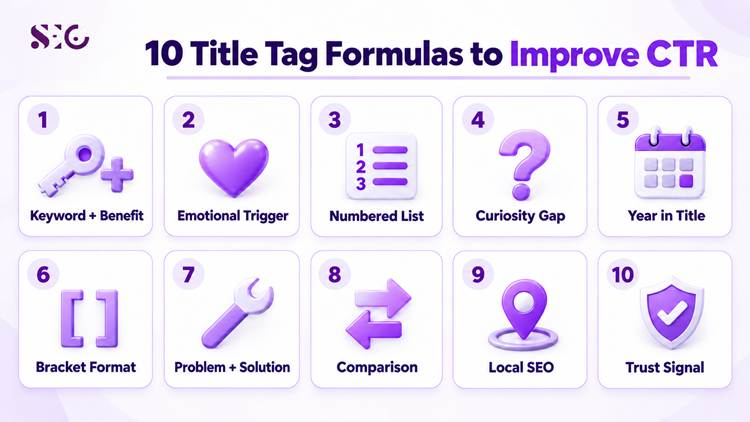
Each formula follows the same title tag best practices: a clear target keyword near the front, a clear value proposition, an honest promise, and a length that fits the results page. That value proposition matters most when competing results look similar.
Formula 1: Keyword + Benefit Title Tag
This dependable starting formula combines your primary keyword with a benefit users actually want. Formula: Primary Keyword + Clear Benefit.
| Page type | Example |
| Blog post | Title Tag CTR Optimization 2026: Get More Organic Clicks |
| Service page | SEO Services in Pakistan That Drive Qualified Leads |
| Local page | Local SEO Services in Lahore for More Calls |
Keep the promise realistic, and keep the keyword near the front.
Formula 2: Emotional Trigger Titles
Emotional trigger titles work when they connect with a real pain, goal, or desire. They should never exaggerate results, because emotion only works when it stays credible. Formula: Primary Keyword + Emotional Benefit or Pain Point.
| Weak title | Stronger emotional title |
| Title Tag Tips | Title Tag Errors That Cost You Organic Clicks |
| SEO Audit Guide | SEO Audit Checklist That Finds Hidden Ranking Issues |
| Local SEO Tips | Local SEO Fixes That Help Small Businesses Get More Calls |
Useful words include hidden, costly, simple, practical, and faster. Emotional hooks and power words should support relevance rather than overshadow the keyword. Use proven only when you can show the evidence. For more wording ideas, see our list of power words for SEO meta tags.
Backlinko’s analysis found that positive titles had a 4.1% higher absolute CTR than negative titles. Emotion helps most when it stays relevant and credible.
Formula 3: Numbered List Titles
Numbers tell users exactly what to expect. Formula: Number + Topic + Benefit.
| Blog topic | Numbered title example |
| Title tags | 10 Title Tag Formulas That Increase Organic CTR |
| Local SEO | 11 Local SEO Tips for Pakistani Businesses |
| Ecommerce SEO | 7 Product Page SEO Fixes That Increase Clicks |
Numbers fit lists, checklists, mistakes, tools, and steps. Use one only when the article really delivers that many points.
Formula 4: Curiosity Gap Title Tags
A curiosity gap makes users want the answer, but it fails when the title hides the topic. Formula: Topic + Curiosity Hook + Clear Value.
| Weak title | Better curiosity gap title |
| SEO Title Tags | The Title Tag Formula Most Blogs Still Miss |
| Content SEO | Why Your Blog Ranks but Still Gets No Clicks |
| Local SEO | The Local SEO Mistake That Keeps Calls Low |
Keep the subject visible, skip fake secrets, and make sure the article answers the question you raise.
Formula 5: Year in Title Tag
A year can improve click appeal when freshness matters, as with SEO trends, tools, algorithms, pricing, and statistics. Formula: Primary Keyword + Year + Benefit.
| Topic | Year-based example |
| SEO titles | Title Tag CTR Optimization 2026: Best Formulas |
| SEO trends | SEO Trends 2026: What Pakistani Businesses Should Know |
| Content strategy | SEO Content Strategy 2026: Practical Planning Guide |
Review the page each year so the date in the title stays accurate.
Formula 6: Bracket Title Tag Formula
Brackets preview the content format, such as a checklist, template, or data study. Formula: Primary Topic + Benefit + [Content Format].
| Format | Bracket example |
| Checklist | Title Tag CTR Optimization 2026 [Checklist] |
| Examples | 10 Title Tag Formulas That Increase CTR [Examples] |
| Template | Local SEO Title Tags for Service Pages [Templates] |
In a HubSpot and Outbrain study of 3.3 million paid link headlines, headlines with a bracketed clarification performed 38% better than headlines without one. That data came from paid links, so treat it as a test idea for organic titles, not a promise.
Formula 7: Problem + Solution Title Tag
This formula names a pain point and points to a fix, which suits service pages and educational blogs. Formula: Problem + Solution + Outcome.
| Problem | Title example |
| Low CTR | Low Organic CTR? Use These Title Tag Fixes |
| Poor local leads | Not Getting Calls? Local SEO Title Fixes That Help |
| Duplicate titles | Duplicate Title Tags: How to Find and Fix Them |
The title should describe a problem your page really solves.
Formula 8: Comparison Title Tags
Comparison titles help people who are choosing between options. Formula: Option A vs Option B + Decision Benefit.
| Topic | Comparison example |
| Title vs H1 | Title Tag vs H1: What Matters for SEO? |
| SEO vs PPC | SEO vs PPC in Pakistan: Which Gets Better ROI? |
| Tools | Ahrefs vs Semrush: Which SEO Tool Is Better? |
Comparisons suit commercial research queries, as long as the page gives a fair answer.
Formula 9: Local SEO Title Tag Formula
Local titles connect a service to a place, which matters for businesses serving a specific area. Formula: Service + Location + Benefit.
| Business type | Local title example |
| SEO agency | SEO Services in Pakistan for More Organic Leads |
| Dentist | Dentist in Lahore for Family Dental Care |
| Real estate | Real Estate Agency in Karachi for Verified Listings |
| Salon | Beauty Salon in Islamabad for Bridal Makeup |
Add a location only when it serves the searcher, and use one city per title. The page itself must serve that area, and the title should still read naturally.
When you write for Pakistani searchers, check your Search Console queries first. If real visitors use city names, Roman Urdu phrases, or common spelling variants, reflect the popular ones only where the page content matches them. Many searchers use phones, so preview the title on a narrow screen before you publish.
Formula 10: Authority or Trust Signal Title
Trust signals can lift clicks when they reflect real proof. Formula: Topic + Trust Signal + Benefit.
| Trust angle | Example |
| Expert | Title Tag CTR Optimization by SEO Experts |
| Data | Title Tag Formulas Based on CTR Data |
| Case study | Local SEO Title Fixes From Real Campaigns |
Do not claim expert, proven, data-backed, or case study unless the page truly supports it. A trust signal that the content cannot back up damages credibility.
Which Title Tag Formula Should You Use?
Match the formula to the page type, your target audience, and the searcher’s intent, not to whatever looks most exciting. A good title still clearly describes the page.
| Page type | Formulas that usually fit | Watch out for |
| Blog guide | Numbered list, bracket, curiosity gap | A promise the article cannot deliver |
| Service page | Keyword + benefit, trust signal | Unsupported words such as expert or proven |
| Local page | Service + location + benefit | Several cities in one title |
| Product page | Keyword + benefit, comparison | Stuffing every product attribute into the title; keep the brand name at the end |
| Troubleshooting post | Problem + solution | Vague fixes with no clear outcome |
Common Title Tag Mistakes That Hurt CTR
Most weak titles share a handful of avoidable problems.
• Keyword stuffing: repeating a phrase or city makes a title look spammy and may invite a rewrite.
• Duplicate titles: pages with the same title compete for attention, so every URL needs its own.
• Generic labels: words such as Home or Services give nobody a reason to click.
• Overpromising: a title the page cannot back up raises bounce rates and erodes trust.
• Ignoring intent: a sales title on an informational query attracts the wrong click.
• Brand first: a long brand name at the front pushes the keyword out of view.
• Template titles: most content management systems build titles from a default pattern, so check that it does not create duplicate titles or push the keyword past the visible length.
• Set and forget: old years and outdated claims quickly lose credibility.
How to Test Title Tag CTR in Google Search Console
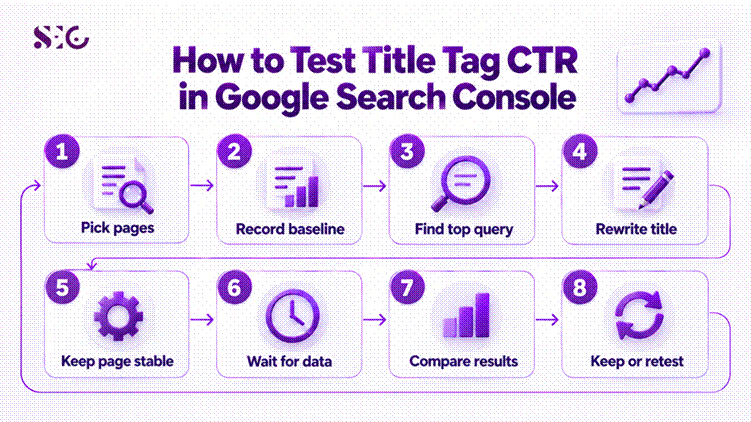
Title optimization should not rely on guessing. Search Console lets you compare impressions, clicks, CTR, and average position before and after a change. Judge a test only after enough impressions have built up, not after a day or two.
1. Pick pages with high impressions and low CTR.
2. Record current clicks, impressions, CTR, and average position.
3. Find the top query driving impressions.
4. Rewrite the title to match what that query needs.
5. Keep the URL and content stable during the test.
6. Wait for enough data to collect.
7. Compare results with the baseline, and check that average position did not change much; if CTR rises while position stays similar, the new title is working.
8. Keep the winner or test a second version.
Change one thing per page at a time so you can trace the result. Seasonal demand and ranking shifts can move CTR on their own, so compare equal date ranges before you call a winner.
How SEO Pakistan Can Help Improve Organic CTR
Many businesses focus on rankings and forget that a result still has to earn the click. A CTR audit can find pages with high impressions but weak clicks, then review title tags, meta descriptions, headings, keyword targeting, and internal links together so stronger titles and snippets can attract more traffic from pages that already have visibility.
Our SEO services team can audit your titles and technical setup while refining your wider SEO strategy, and our SEO content writing team can rewrite pages so titles, content quality, and search intent support the same goal. Contact SEO Pakistan for a title tag review of your highest-impression pages.
Summary: How to Improve Title Tag CTR
Strong titles match search intent, read naturally, and give users a clear reason to choose your result. Keep emotional titles honest, use numbers only when the article delivers them, and keep curiosity hooks tied to a real answer. Add a year or bracket only when it is true and useful. Better titles can bring more organic traffic from rankings you already hold, but they work best alongside strong content and sound technical SEO, so test changes in Search Console before scaling them across your site.
Frequently Asked Questions
What is title tag CTR optimization?
It means improving your SEO title so more people click your result. A strong title includes the main keyword, matches search intent, states a clear benefit, and reflects the page accurately, without clickbait or keyword stuffing.
How long should a title tag be?
Google has no fixed limit, but long titles get truncated. Ahrefs recommends about 50 to 60 characters, or roughly 600 pixels, so keep the main keyword at the front.
Do emotional trigger titles improve organic CTR?
They can, when the emotion matches the reader’s real problem or goal. Words such as simple, costly, or hidden add weight, but the page must deliver the promise or visitors may leave quickly.
Are numbered list titles good for SEO?
They work well for tips, formulas, tools, and mistakes because they set clear expectations. Use a number only when the article actually provides that many points.
Should I use the year in a title tag?
Use a year when freshness affects the topic, such as SEO updates, tools, or statistics. Update the content regularly so the year in the title stays accurate.
What is a bracket title tag formula?
It adds a content format in brackets, such as [Checklist], [Guide], or [Template]. The bracket should match the page, because brackets used only as decoration can mislead readers.