

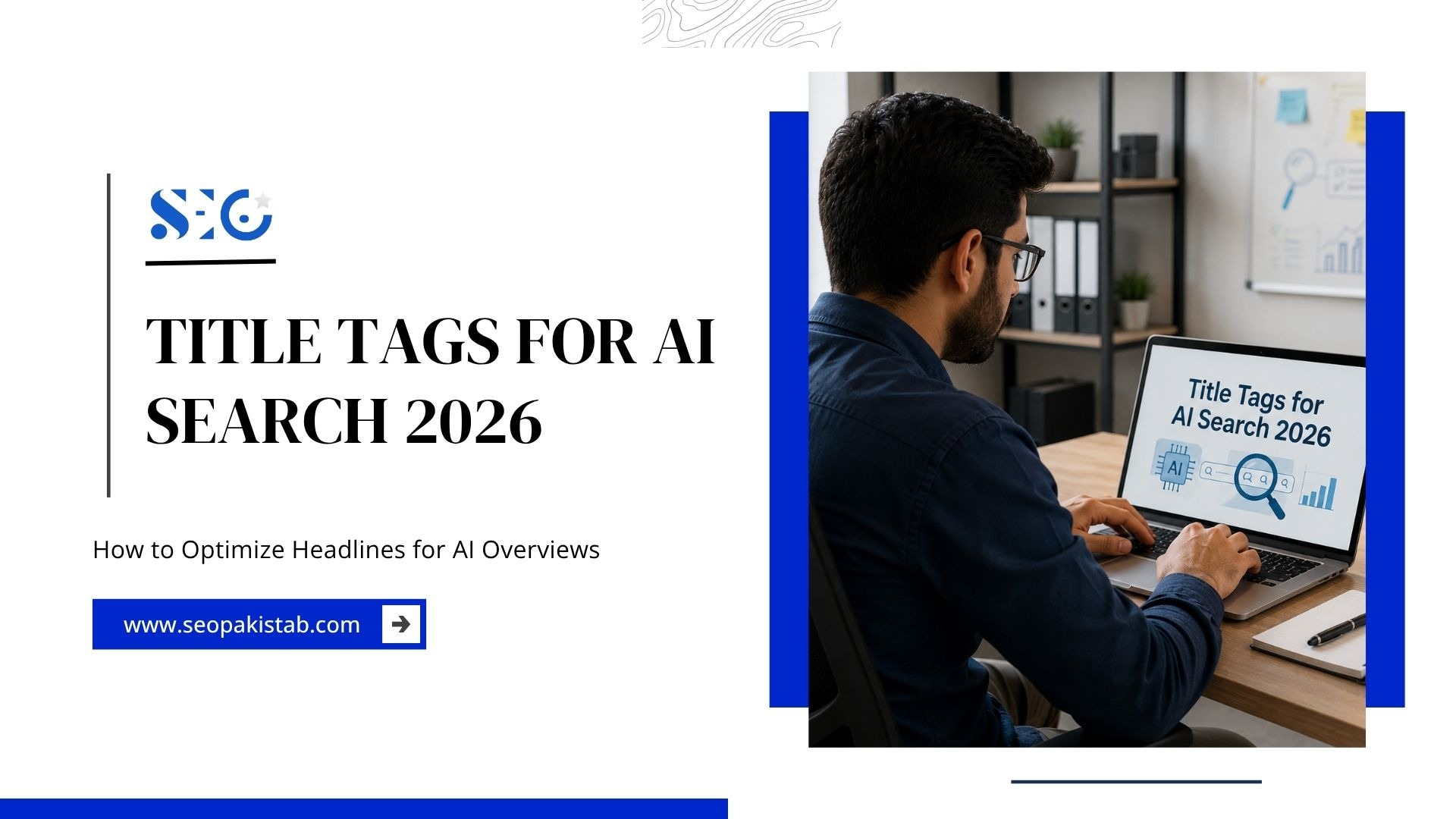
Modern title tags for AI search 2026 require a different optimization strategy than traditional SEO headlines. Search engines now evaluate topic clarity, semantic meaning, and intent alignment before choosing titles for AI-generated results.
Strong headlines must support AI overview title optimization, improve readability using a conversational title format, and align with SGE-friendly title tags standards. The best headlines combine natural language, exact search intent, and semantic context to help AI systems instantly understand the specific value of your content.
Why Google AI Is Ignoring Most Traditional SEO Titles in 2026
AI Search Engines No Longer Read Titles Like Old Google
AI search engines analyze meaning, not just keyword placement. They try to understand the page topic, user problem, content depth, and answer quality.
A title that says “SEO Title Tags 2026” may show the topic, but it does not fully show the user benefit or search intent. A title like “How to Write SEO Title Tags for AI Overviews in 2026” gives stronger context.
AI systems prefer titles that help them identify:
- Main topic: The core subject of the page.
- Search intent: What the reader wants to solve or learn.
- Content format: Guide, checklist, comparison, examples, or tutorial.
- Topical relationship: How the page connects to related entities.
- User value: Why the page deserves attention.
This clarity helps both AI systems and human searchers understand the content faster.
Keyword-Stuffed Headlines Are Quietly Killing Visibility
Cramming multiple keywords into a headline damages your credibility with modern algorithms. Robotic optimization reduces readability and destroys the trust signals AI systems need to verify quality. Search engines filter out unnatural phrases to protect users from spammy content. You must write for human readability first to satisfy AI filters.
AI Search Systems Now Predict User Intent Before Ranking Content
AI search rewards content that answers real questions clearly. Clever but vague titles may look creative, but they do not always help AI systems understand the page.
For example, “The Future of Clicks Is Here” sounds catchy but unclear. “How to Write Title Tags for AI Search Results in 2026” gives a direct promise. Clarity builds stronger relevance.
The Biggest AI Search Changes That Completely Rewrote SEO Title Optimization
Google AI Overviews Are Stealing Attention From Traditional Blue Links
AI Overviews can answer broad or complex queries directly on the SERP. This reduces the attention users give to traditional listings.
Pew Research found that users who encountered an AI summary clicked a traditional search result in 8% of visits, compared with 15% when no AI summary appeared.
That shift makes title clarity more important. Your title needs to show why the user should still click for deeper guidance, examples, proof, or tools.
Search Queries Are Becoming Longer and More Conversational
Users now ask Google questions the way they ask AI assistants. They use longer prompts, natural phrasing, and specific context.
Google’s AI Overviews page also encourages users to ask questions “in any way” and says AI Overviews can handle more complex questions.
This means titles should sound more natural, not like compressed keyword strings.
AI Search Engines Now Understand Topics Instead of Just Keywords
AI systems connect terms across a topic. They understand that terms like AI Overviews, search intent, featured snippets, semantic SEO, and CTR all belong to the same content cluster. When it comes to optimizing title tags for AI search 2026 will be all about understanding these connections.
This makes entity relevance more important than exact keyword repetition.
Human-Sounding Headlines Are Winning More AI Visibility
Crafting readable headlines in natural, human-sounding language directly boosts your search rankings. Balancing semantic relevance with a casual, professional tone in your title tags for AI search 2026 is crucial for earning higher trust from search algorithms.
Adapting to these AI shifts requires a clear understanding of what engines look for. The most useful adjustments include:
- Conversational tone: Write titles as complete, natural thoughts.
- Entity inclusion: Use known terms that AI databases already recognize.
- Direct phrasing: Remove complex vocabulary that confuses natural language processors.
SGE-Friendly Title Tags That Increase AI Search Visibility
SGE-friendly title tags support AI-generated search experiences by making the page topic, format, and value easy to understand. They balance SEO relevance with human readability.
Google has moved beyond the old Search Generative Experience name in many public contexts, but the idea remains important: AI-powered SERPs need clear, structured, helpful content.
What Makes a Title SGE-Friendly
A good AI-friendly title gives fast topic recognition. It also avoids misleading hooks and over-optimized phrasing.
The best titles feel natural and useful.
Strong SGE-friendly title tags usually include:
- Clear intent: The title matches what the user wants.
- Natural wording: The headline reads like a real sentence.
- Semantic depth: The wording connects to the full topic cluster.
- Specific scope: The title shows the angle or use case.
- Honest promise: The content can deliver what the title says.
This structure supports AI understanding and human clicks.
Why Natural Language Improves AI Understanding
Optimizing for conversational language helps algorithms process your text faster. When crafting title tags for AI search 2026, remember that natural language models train on real human dialogue. By writing headlines that match this training data, you help the AI seamlessly map your content to user queries.
Balancing SEO Keywords With Human Readability
You must find the modern optimization balance between targeting search terms and sounding human. Place your primary entity near the front of the headline, but connect it with natural verbs and prepositions. Do not sacrifice grammatical correctness just to fit a keyword.
Common SEO Title Mistakes That Hurt AI Visibility
AI visibility drops when titles confuse meaning or promise the wrong content.
Common mistakes include:
- Over-optimization: Too many keywords weaken readability.
- Clickbait: Exaggerated claims reduce trust.
- Vague wording: AI systems cannot infer the exact value quickly.
- Misleading intent: The title promises one thing while the page delivers another.
- No entity clarity: The title misses important topic context.
Fixing these mistakes improves both AI interpretation and CTR.
Conversational Title Format: The Future of Search Optimization
A conversational title format makes titles sound closer to how users actually search. It helps pages match longer, question-like queries in AI search.
This approach does not mean writing long, messy titles. It means using natural phrasing with clear intent, especially when optimizing title tags for AI search 2026 and beyond.
Why Search Queries Now Sound Like Real Conversations
Voice search, AI chatbots, and AI Overviews have trained users to ask full questions. Instead of typing “title tags AI,” they may ask, “How do I write title tags that appear in AI Overviews?”
Your title should reflect that shift.
Writing Titles That Match Conversational Search Intent
A conversational title should answer the user’s real question. It should also show a benefit or outcome.
Good title writing now starts with the sentence the user might say.
Useful patterns include:
- How to + outcome: “How to Write Title Tags for AI Search”
- What is + concept: “What Are SGE-Friendly Title Tags?”
- Why + problem: “Why Google Rewrites SEO Titles”
- Best way to + action: “Best Way to Optimize Titles for AI Overviews”
- Question + year: “How Should SEO Titles Change in 2026?”
These patterns align with natural query behavior.
Examples of AI-Friendly Conversational Headlines
Practical examples help you model your own strategy effectively. Instead of writing “Best CRM Software 2026,” write “What is the best CRM software for small businesses in 2026?” This direct approach captures long-tail conversational traffic.
Creating a strong conversational title format requires focusing on the user’s internal monologue. The most useful formats include:
- Problem phrasing: “How do I fix [Specific Problem] without [Pain Point]?”
- Comparison phrasing: “Which [Product A] is better for [Specific Use Case] than [Product B]?”
- Process phrasing: “What are the exact steps to achieve [Specific Goal]?”
AI Chatbot Title Structure: How Machines Actually Understand Headlines
AI Systems Break Headlines Into Meaning Clusters
Algorithms use entity extraction and semantic grouping to digest your headlines, breaking them into nodes of meaning to identify the subject, action, and context. As we optimize title tags for AI search 2026 and beyond, you must structure your titles so these meaning clusters remain intact and obvious.
Why Topic Hierarchy Matters More Than Ever
Topic hierarchy means you organize the title around the most important idea first. The supporting angle comes next.
A strong structure looks like this:
Main topic + AI context + user outcome.
This keeps the title easy to parse.
Emotional Triggers Still Influence AI Search Visibility
Curiosity, authority, urgency, and trust signals still impact performance. While AI does not feel emotion, it measures user engagement signals like click-through rates and dwell time. High engagement metrics teach the AI that your content satisfies users.
The Difference Between Human CTR and AI Readability
Balancing clickability with machine understanding is the ultimate modern SEO challenge. A title must entice a human to click while remaining literal enough for a machine to categorize. You must avoid mystery and focus on clear, benefit-driven language.
An effective AI chatbot title structure requires precision and logic. The most useful elements include:
- Front-loading: Place the core entity in the first three words.
- Context markers: Add specific use cases or audience identifiers.
- Value signals: State the exact benefit of reading the content.
Featured Snippet Titles and AI Search Dominance
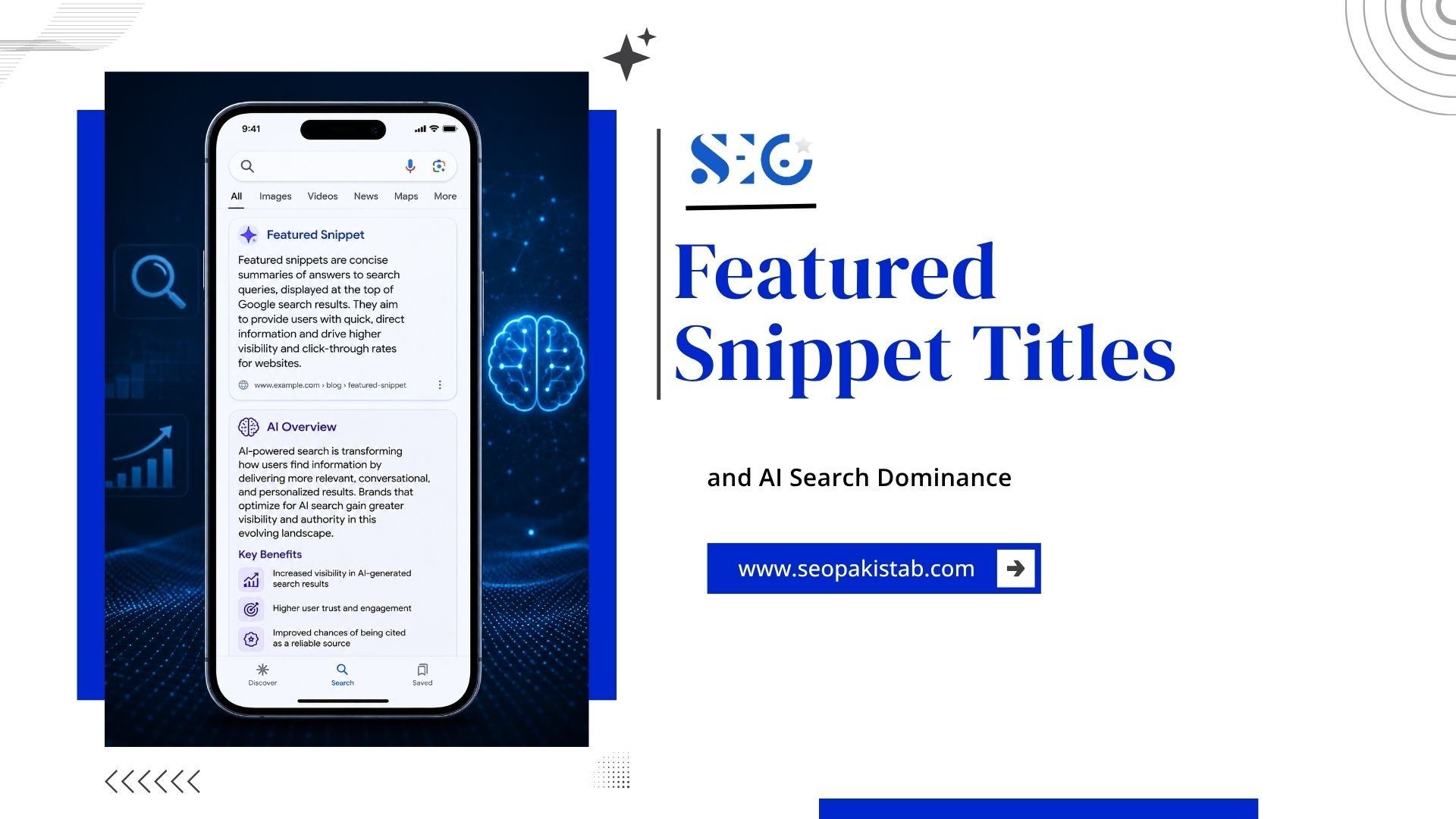
Why Featured Snippets Still Matter in AI Search
Featured snippets show that Google can extract a clear answer from a page. AI Overviews also depend on content that answers questions clearly and provides useful context.
Google says AI Overviews include links for users to dig deeper, which means source selection and page clarity still matter.
Headlines That Improve Featured Snippet Eligibility
Titles that match a clear question often help structure the answer. The page should then answer that question immediately.
A title like “What Is a Good Title Tag Length in 2026?” pairs well with a short, direct definition.
Why Question-Based Titles Perform Better in AI Search
Question-based titles reflect user behavior. They also help the page align with featured snippet and People Also Ask formats.
Use question titles when the user clearly asks for an answer.
Structuring Titles for Faster Information Retrieval
Clarity and topical precision help search bots process your site more quickly. Make your subheadings extremely descriptive. Do not use clever single-word headings. State the exact subtopic clearly.
Optimizing featured snippet titles requires strict formatting discipline. The most useful structural rules include:
- Direct matching: Use the exact search query as your H2.
- Immediate answering: Place the concise answer immediately under the heading.
- Format alignment: Match the title to the format (e.g., use “Steps to” for lists).
Psychological Headline Triggers That Improve Clicks and AI Visibility
Curiosity Without Misleading Clickbait
Ethical engagement techniques encourage clicks without disappointing the reader. Promise a specific, valuable insight that the user genuinely wants to learn. Do not exaggerate the outcome or hide the core topic behind vague language.
Specific Numbers Increase Trust and Visibility
Numbers make titles easier to scan. They also suggest structure and completeness.
For example, “7 Title Tag Mistakes That Hurt AI Visibility” feels more specific than “Title Tag Mistakes to Avoid.”
Authority-Based Headlines Build Stronger Engagement
Expertise-focused wording signals high EEAT (Experience, Expertise, Authoritativeness, Trustworthiness). Titles that imply deep industry knowledge attract highly motivated users. AI systems recognize authority signals and prioritize citing expert sources.
Traditional SEO Titles vs AI Search Headlines
To understand the shift in search behavior and create effective title tags for AI search 2026, we must compare old tactics with modern requirements. This table breaks down the critical differences between traditional and AI-focused headlines.
| Feature | Traditional SEO Titles | AI Search Headlines | Optimization Focus | Primary Goal |
| Keyword Usage | Exact-match focus | Semantic relevance focus | Entity mapping | High keyword density |
| Language Style | Robotic phrasing | Natural conversational language | Readability | Search engine crawling |
| User Engagement | CTR-only optimization | Context + intent optimization | Task completion | Generating cheap clicks |
| Length & Detail | Short keyword-heavy wording | Topic clarity and readability | Conversational matching | Fitting visual pixel limits |
| System Priority | Ranking-focused | AI retrieval-focused | Answer extraction | Winning the blue link |
Conclusion
Title tags for AI search 2026 now depend on semantic clarity, conversational readability, and search intent alignment instead of outdated keyword stuffing. AI-powered search systems need titles that explain the topic quickly, connect to related entities, and match natural user questions.
The best SEO teams use strong AI overview title optimization, natural conversational title format strategies, and clear SGE-friendly title tags that support both AI interpretation and human engagement. Future SEO success will belong to websites that write titles for machine understanding and real human behavior at the same time.
Frequently Asked Questions
What are the best title tags for AI search 2026?
The best titles use natural language, target specific user intent, and include clear entities. They answer questions directly and avoid robotic keyword stuffing. Focusing on semantic relevance helps AI systems easily understand and cite your content.
How does AI overview title optimization actually work?
This process involves structuring your headline to instantly explain the page’s core topic. You must use conversational phrasing and match the exact intent of the user. Clear, descriptive titles make it easier for algorithms to pull your data into AI summaries.
Why do I need a conversational title format?
Search behavior has shifted heavily toward voice search and natural language queries. A conversational format matches how real people speak to digital assistants. This natural alignment increases the chances of an AI engine selecting your page as a source.
What are SGE-friendly title tags?
These are headlines optimized specifically for the Search Generative Experience. They prioritize extreme readability, direct problem-solving, and entity clarity. They avoid clickbait and focus entirely on providing accurate, context-rich information.
How does AI chatbot title structure differ from old SEO?
Old SEO relied on short, exact-match keyword phrases to rank on static pages. Modern AI structures require full, semantically rich sentences that explain context. AI chatbots process these complete thoughts faster and use them to generate conversational answers.