

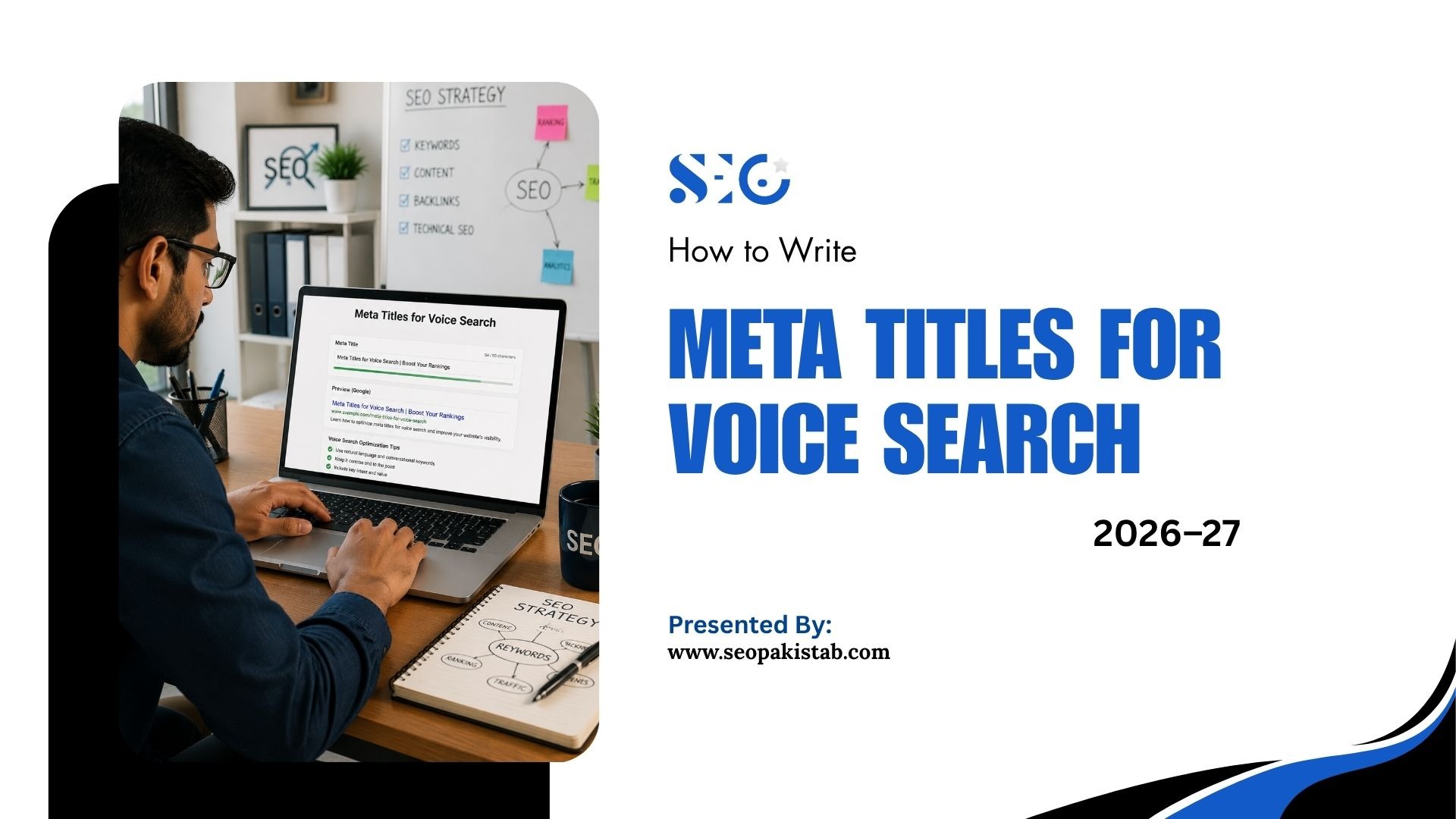
Meta titles for voice search 2026 should match how people speak, ask questions, and search on mobile. Strong conversational title tags use clear wording, natural phrases, and direct intent instead of robotic keyword stuffing.
Use question-based titles SEO when the page answers a real spoken query, and apply natural language title optimization to improve voice query title match. A good spoken search title format sounds useful, specific, and easy to understand before the user clicks.
What Are Meta Titles for Voice Search?
Meta titles for voice search 2026 are SEO title tags written to match conversational, question-based, and natural-language queries while staying concise enough for Google search results.
A voice-friendly title should sound clear when read aloud. It should include the topic, match user intent, and give a reason to click. It should not sound like a keyword list.
For example:
Weak: Voice Search Meta Title SEO
Better: How to Write Meta Titles for Voice Search
The better title sounds natural. It also tells the user exactly what the page will explain.
What Is the Difference Between a Meta Title, Title Tag, and H1?
People mix these terms often, so a quick breakdown helps you write each one with purpose. Each element serves a separate role, even when the words look similar.
The key differences are simple to remember:
- Meta title and title tag: Both usually refer to the SEO title inside the <title> element of your page code.
- Title link in search: The title tag can appear as the clickable headline in Google search results.
- H1 heading: The H1 sits on the page itself and confirms the topic to the reader.
- Job of the title tag: It must attract clicks from the search results.
- Job of the H1: It should confirm the page topic once the user arrives.
- Overlap is fine: The title tag and H1 can be similar, but they do not need to match word for word.
Conversational Title Tags: How to Make Titles Sound Natural
Conversational title tags sound like something a real person would ask, say, or understand. They drop stiff keyword strings and repeated exact-match phrases in favor of natural wording.
A conversational title still includes your main topic. It simply uses words people actually speak. Compare these examples:
- Weak: SEO Services Pakistan Best Agency
Better: How to Choose SEO Services in Pakistan - Weak: Meta Title Voice Search SEO
Better: How to Write Meta Titles for Voice Search - Weak: Local SEO Lahore Ranking Tips
Better: How Can Lahore Businesses Improve Local SEO?
Rules for Conversational Title Tags
Conversational does not mean casual or vague. Your title should still feel professional and specific, while reading like natural speech. These rules keep that balance.
Follow these guidelines before you publish:
- Use natural wording: Write the title the way you would say it aloud.
- Keep the main topic clear: The reader should grasp the subject instantly.
- Avoid repeated keywords: Do not stack the same phrase twice.
- Match spoken intent: Reflect the question or need behind the search.
- Use simple language: Plain words beat jargon every time.
- Stay specific: Vague titles like “Best Guide” earn fewer clicks.
- Do not write a paragraph: Avoid turning every title into a long sentence.
- Read it aloud: If it sounds awkward, rewrite it.
Question-Based Titles SEO: When to Use Questions
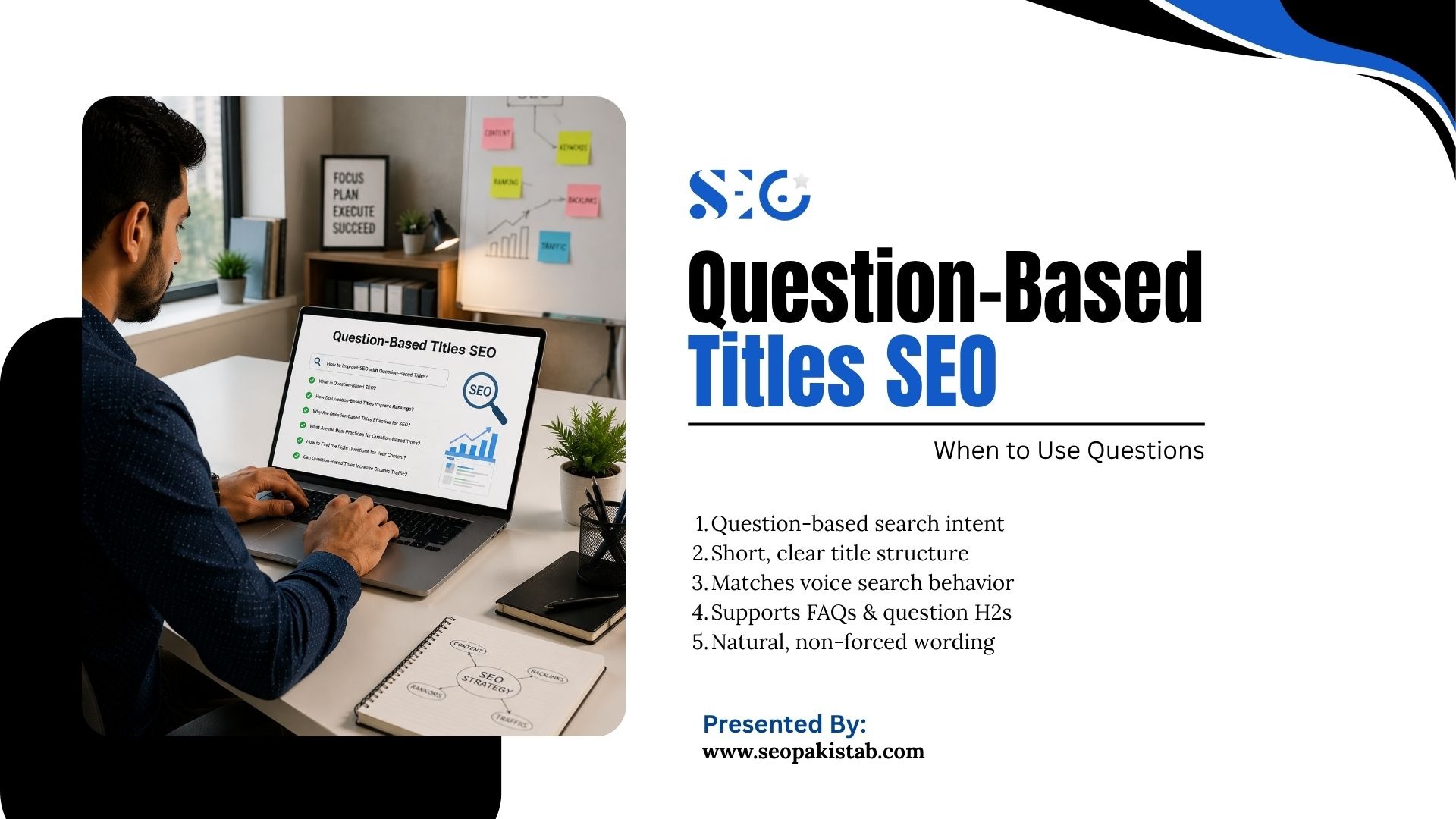
Question-based titles SEO works well when the page answers a specific spoken query. These titles match how users ask questions through mobile search and AI tools.
Use a question title when your page gives a clear answer to a real query, such as:
- How do I write meta titles for voice search?
- What should a meta title include?
- How can local businesses improve SEO?
- What is the best title format for SEO?
When Question-Based Titles Work Best
A question title shines when the search intent is itself a question. The format breaks down when you force it onto every page.
Use question titles in these cases:
- The query is a question: The user naturally asks something.
- The title stays short: It does not stretch into a long phrase.
- The topic fits voice behavior: It matches how people speak.
- The page uses question H2s and FAQs: Your structure supports the title.
- The wording feels natural: It does not sound forced.
When Question-Based Titles Do Not Work
Some pages need a different approach. A homepage or a service page often performs better with a benefit-driven title than a question.
Avoid question titles when:
- The title grows too long: It risks getting cut off in results.
- The page is broad or brand-focused: Homepages rarely answer one question.
- Users want a service, not an answer: Service pages need clear offers.
- The question sounds unnatural: Forced phrasing hurts trust.
- A benefit title wins more clicks: Lead with value instead.
- Every title looks the same: Variety keeps your site readable.
Natural Language Title Optimization
Natural language title optimization means writing titles in human wording instead of keyword strings. The goal is to match meaning and search intent, not to force exact-match phrases everywhere.
Formula
A reliable structure keeps your titles clear and intent-driven:
User intent + main topic + clear benefit
These examples show the formula in action:
- How to Write Meta Titles for Voice Search
- What Are Meta Titles for Voice Search?
- SEO Services in Pakistan for More Organic Leads
- Write Better Meta Titles That Get More Clicks
- Low CTR? Fix Your Meta Titles First
How to Add Keywords Naturally
The keyword should support the title, not damage readability. Google’s title guidance warns against repeated keyword phrases because they can make results look spammy.
Use these rules:
- Use the main keyword once.
- Place the main topic near the front when possible.
- Use natural variations.
- Avoid repeating the same phrase.
- Match the page content.
- Keep the title readable on mobile.
- Avoid keyword stuffing.
A natural title gives users clarity and gives search engines a clean topic signal.
Voice Query Title Match: How to Match Spoken Search Intent
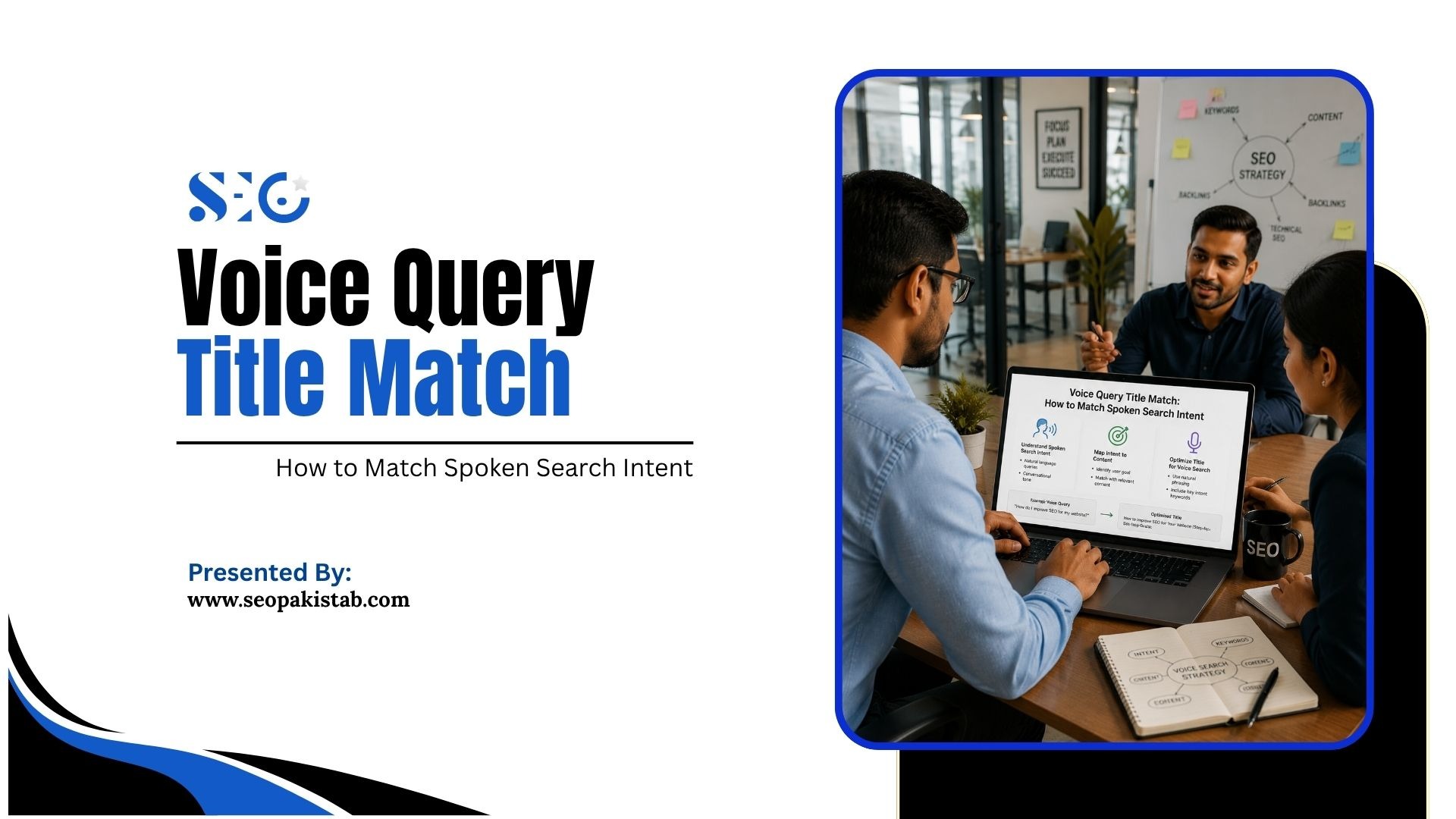
Voice query title match means your title should match the real intent behind the spoken query. The title does not need to copy every word from a long voice search. It should make the page value obvious.
These examples show how to capture intent without copying the full question:
- Spoken query: How do I write meta titles for voice search?
Better title: How to Write Meta Titles for Voice Search - Spoken query: What is the best title tag format for SEO?
Better title: Best Title Tag Format for SEO 2026 - Spoken query: How can I improve local SEO in Pakistan?
Better title: Local SEO in Pakistan: How to Get More Leads
Match Intent, Not Every Word
A spoken query may run 10 to 15 words. A title should not become messy just to copy it.
Use the title for the main topic. Use headings, the opening answer, and FAQs to answer the full query.
The title, H1, and page content should stay aligned. If the title promises voice-search title formulas, the page should give formulas, examples, and testing steps.
Voice Query Types to Target
Different spoken queries call for different title angles. Knowing the type helps you choose the right format.
Target these common voice query types:
- How-to queries: “How do I fix my meta titles?”
- What-is queries: “What is a title tag?”
- Best queries: “Best SEO agency in Karachi.”
- Near-me queries: “SEO expert near me.”
- Comparison queries: “Title tag vs H1.”
- Problem-solving queries: “Why is my CTR low?”
- Cost and pricing queries: “How much does local SEO cost?”
- Local service queries: “SEO services in Islamabad.”
Spoken Search Title Format
Spoken search title format means your title should be clear enough to understand when read aloud. If it sounds awkward, repetitive, or stuffed, rewrite it.
A simple side-by-side view makes the difference obvious. The table below compares weak formats with stronger voice-friendly versions, so you can match each title type to the right page and apply the expert tip.
| Title Type | Weak Format | Strong Voice-Friendly Format | Best For | Expert Recommendation |
| Conversational title tags | Voice Search Meta Title SEO | How to Write Meta Titles for Voice Search | How-to blogs | Use natural wording |
| Question-based titles SEO | Meta Title Rules | What Should a Meta Title Include? | FAQ-style content | Match real user questions |
| Natural language title optimization | SEO Pakistan Services Best | SEO Services in Pakistan for More Leads | Service pages | Write like users speak |
| Voice query title match | Local SEO Ranking Lahore | How Can Lahore Businesses Improve Local SEO? | Local SEO blogs | Match intent, not every word |
| Spoken search title format | Best Meta Title 2026 CTR SEO | Meta Titles for Voice Search 2026: Guide | Updated SEO guides | Keep it clear when read aloud |
Title Tag Formulas for Voice Search 2026–27
Formulas give you a fast, repeatable way to write strong titles. Each one fits a specific page type, so pick the formula that matches your intent.
Formula 1: How-To Title
Use this for guides and tutorials.
Formula: How to + Action + Main Topic
Example: How to Write Meta Titles for Voice Search
Formula 2: Question Title
Use this when the page answers a direct spoken query.
Formula: What/Why/How + Topic + Benefit
Example: How Do Meta Titles Help Voice Search?
Formula 3: Local Voice Title
Use this for service pages and local SEO pages.
Formula: Service + Location + Natural Benefit
Example: SEO Services in Pakistan for More Organic Leads
Formula 4: Problem-Solution Title
Use this when the reader has a clear pain point.
Formula: Problem + Fix + Main Topic
Example: Low CTR? Fix Your Meta Titles for Voice Search
Formula 5: Year-Based Voice Title
Use this when freshness matters.
Formula: Topic + Year + Practical Guide
Example: Meta Titles for Voice Search 2026: Practical Guide
How to Test Meta Titles for Voice Search in Google Search Console
Title optimization works best when you test it with real data, not guesses. Google Search Console reports clicks, impressions, CTR, and average position, which let you measure the impact of every change. Google for Developers (2024) confirms these metrics help site owners analyze search performance.
A simple testing routine turns title writing into a measurable process. Follow this workflow to judge each change fairly:
- Pick the right pages: Choose pages with high impressions and low CTR.
- Find conversational queries: Check for question-based or spoken-style searches.
- Rewrite with natural language: Apply natural language title optimization to the title.
- Keep content stable: Do not change the page body during the test.
- Collect enough data: Wait until you have a meaningful sample.
- Compare the metrics: Review CTR, clicks, impressions, and average position.
- Keep or retest: Hold the winning title, or test another version.
Queries to Look For
Certain query words signal voice and conversational intent. Spotting them helps you choose which titles to rewrite first.
Look for these query patterns in your data:
- how to
- what is
- where to
- best
- near me
- cost
- which
- can I
- should I
How SEO Pakistan Can Help With Voice Search SEO
Voice search rewards clear strategy, clean structure, and titles that match real intent. SEO Pakistan helps businesses across Pakistan and the USA build that foundation without guesswork.
The team supports voice and AI-driven search in practical ways:
- SEO audits: Find pages with weak titles and low CTR.
- On-page SEO: Align titles, H1s, and content for spoken intent.
- Meta title optimization: Rewrite titles for conversational and question-based queries.
- Local SEO: Match service-and-location queries for nearby customers.
- Content writing: Build pages that answer real spoken questions.
- Technical SEO: Keep your site fast and crawlable.
- Search Console analysis: Test title changes with real performance data.
- AI Overview optimization: Structure pages for AI answers and citations.
- Voice search content strategy: Plan content around natural-language queries.
Summary
Meta titles for voice search 2026 should sound natural and match spoken intent. Conversational title tags work better than robotic keyword strings. Question-based titles SEO helps when the page answers a real spoken question.
Natural language title optimization improves clarity and click appeal. Voice query title match means matching user intent, not copying every spoken word. A strong spoken search title format should be easy to understand when read aloud.
Google recommends clear, descriptive, concise titles and warns against keyword stuffing. Test title changes in Google Search Console before applying them across many pages.
Frequently Asked Questions
What are meta titles for voice search 2026?
Meta titles for voice search 2026 are SEO titles written for conversational, question-based, and natural-language search behavior. They help match how users speak into mobile search, assistants, maps, and AI search tools. A strong voice-friendly title stays clear, matches search intent, supports the title tag, and sounds natural when read aloud.
How do conversational title tags help SEO?
Conversational title tags help SEO by matching how people speak and search. They improve readability, support search intent, and make titles easier to understand on mobile. They also reduce the risk of robotic keyword stuffing. For local SEO, conversational titles can make service and location pages feel more natural and click-worthy.
Are question-based titles good for voice search SEO?
Yes, question-based titles SEO can work well when the page answers a real spoken query. They fit searches that begin with how, what, where, best, near me, why, can I, or should I. Use them when the title stays clear and the article gives a direct answer. Avoid forcing questions on every page.
What is natural language title optimization?
Natural language title optimization means writing titles in human wording instead of keyword strings. It focuses on semantic meaning, user intent, title clarity, and readable phrasing. The title should still include the main topic, but it should not repeat keywords unnaturally. Google prefers descriptive, concise titles that clearly represent the page.
What is the best spoken search title format?
The best spoken search title format sounds clear when read aloud. Strong formats include how-to titles, what-is titles, service plus location titles, problem-solution titles, and year-based guide titles. Choose the format that matches the page intent. Keep the title simple, specific, and useful instead of overloading it with keywords.