



Header tags SEO determines whether a web page reads as an organized resource or a wall of unstructured text, and it directly affects how well search engines understand industrial content. On industrial B2B websites — product pages, spec sheets, service pages, and technical guides — a clean heading hierarchy coded correctly in the underlying HTML code helps engineers, procurement teams, and search crawlers find the right information fast.
A good heading system works like chapter titles in a technical manual: it tells the reader what’s ahead before they commit to reading further. Understanding why header tags are important, as a piece of search engine optimization, is a foundational part of improving a website’s SEO.
This complete guide covers correct H1 to H6 usage, keyword placement inside HTML headings, semantic structure, and the mistakes that most often break heading hierarchy on B2B sites — along with a few tips on adding headings correctly inside a content management system.
Table of Contents
Introduction
What Header Tags SEO Means for Industrial Websites
Why Heading Hierarchy Matters More on Technical Pages
Correct H1–H3 Hierarchy for B2B Pages
Keyword Usage in H2 and H3 Tags
Semantic Heading Structure and Topical Depth
Weak vs Strong Semantic Structure for Header Tags SEO
Why a Strong Semantic Structure Matters
Question-Based Headings for Technical Pages
Common Heading Mistakes on Industrial B2B Pages
How to Add Header Tags Correctly in Your CMS
Heading Structure Checklist for B2B Pages
Conclusion
Frequently Asked Short Questions
What Header Tags SEO Means for Industrial Websites
Header tags SEO is the practice of using H1 through H6 HTML tags to reflect the actual structure of a page’s content, not just to make text look bold or large. In practice, seo header tags are simply HTML elements — the HTML tags browsers and crawlers read to identify a page’s logical structure.
Correctly nested HTML header tags are what separate a page that users and search engines can both navigate quickly from one that reads as a wall of text. Note that the H1 is not the same as the title tag: the title tag lives in the page’s metadata, while the H1 is the main heading visible in the page content itself — both matter, but they serve different roles.
On an industrial site, this usually means:
- One H1 stating the core subject — a product line, service, or process. This is the page’s main title, and it should appear only once.
- H2 tags for major sections — specifications, applications, installation, maintenance, compliance.
- H3 tags, or subheadings, for sub-details under each H2 — individual specs, steps, or use cases.
Getting proper header tags in place is one of the more overlooked pieces of on-page work. Search engines use this header hierarchy to determine the page’s topics and the central theme of the content, and how its sections relate to each other. Buyers and engineers use it to scan and locate the section relevant to their decision — which is exactly what good content structure is meant to support.
Why Heading Hierarchy Matters More on Technical Pages
Industrial B2B content is often dense — specifications, tolerances, certifications, and multi-step processes. Without a clear hierarchy, this density becomes a barrier instead of an asset.
A correct heading structure:
- Speeds up scanning for engineers comparing specs across vendors, since headings support the way users scan content rather than read it line by line.
- Signals topical depth to search engines evaluating page authority.
- Supports accessibility, since screen readers rely on heading order, not font size.
- Improves AI Overview and snippet eligibility, since well-scoped sections are easier for AI systems to extract and summarize.
- Helps capture more traffic from search engine results pages by improving eligibility for expanded listings and rich results.
A large, bold line of text is not a heading unless it’s coded as one. Crawlers and screen readers read HTML tags, not visual styling — a distinction that matters most in content management systems, where modern HTML block editors can visually style any paragraph to look like a heading without applying the underlying tag, and on template-heavy B2B sites where design and code can drift apart.
Correct H1–H3 Hierarchy for B2B Pages
The hierarchy should follow a strict, logical hierarchy of parent-child relationships:
- H1 tag → the page’s single core topic (e.g., a product category or service).
- H2 → major sections under that topic.
- H3 → supporting details under each H2.
Two rules matter most:
- Never skip heading levels. Going from H2 and H3 straight to H4 breaks the logical map crawlers use to interpret the page.
- Never use a heading with no real content beneath it. Empty or purely decorative headings weaken hierarchy clarity.
A product or service page that jumps between heading levels without logic reads as unstructured to both users and search engines, even when the underlying content is technically accurate.
Keyword Usage in H2 and H3 Tags
Effective header tags SEO — learning to use header tags effectively — places keywords where they genuinely describe the section, not in every heading available. This is a core part of keyword usage on any technical page.
Recommended approach:
- Use the primary keyword, identified through solid keyword research, in the H1 and in one or two closely related H2s.
- Use semantic variations (related technical terms, applications, or use cases) across other H2s, without cramming multiple keywords into a single heading.
- Use long-tail, specific phrasing in H3s, since these often match narrower technical searches and surface relevant answers directly in search results.
A heading like “Maintenance Requirements and Inspection Intervals” reads naturally and matches real search intent. A heading like “Maintenance Maintenance Requirements SEO Guide” is a clear case of keyword stuffing — the kind of pattern industry resources like Search Engine Journal regularly flag as damaging to rankings — and it damages trust with a technical audience that expects precision.
Semantic Heading Structure and Topical Depth
Semantic heading structure organizes a page by meaning rather than by keyword repetition, and it’s a core part of building a proper heading structure across a technical page. On an industrial page, this typically means moving from definition, to specification, to application, to maintenance, to compliance — the order an engineer or buyer would naturally need the information.
This ordering does two things at once:
- It demonstrates subject-matter depth to search engines, which supports topical authority.
- It matches the buyer’s actual research sequence, which supports conversion.
Each H3 should stay clearly subordinate to its parent H2. Mixing unrelated details under the wrong H2, or repeating the same heading wording across sections, breaks the relational logic that both readers and crawlers depend on.
Weak vs Strong Semantic Structure for Header Tags SEO
| Content Area | Weak Structure | Strong Semantic Structure | Why It Works Better | SEO Benefit |
| Page Title (H1) | SEO Tips | Header Tags SEO: Complete Guide to Heading Structure | Clearly defines the page topic and includes the primary keyword naturally. | Improves topical relevance and keyword targeting. |
| Introduction | General discussion without context | Explains what header tags SEO is and why it matters | Immediately satisfies search intent and improves user engagement. | Better user experience and AI Overview eligibility. |
| Definition | What are headings? | What Is Header Tags SEO? | Provides a direct answer using the target keyword. | Higher chance of ranking for informational queries. |
| Importance | SEO Benefits | Why Header Tags SEO Matters for Rankings and User Experience | Connects headings with SEO, accessibility, and readability. | Strengthens topical authority. |
| Heading Hierarchy | H1 H2 H3 | How to Structure H1, H2, and H3 Header Tags Correctly | Explains hierarchy with practical guidance. | Improves crawlability and content organization. |
| Keyword Optimization | Keywords | How to Use Keywords Naturally in Header Tags | Focuses on natural keyword placement instead of stuffing. | Supports semantic SEO and better readability. |
| Semantic SEO | Semantic SEO | Creating a Semantic Heading Structure for Better Content Understanding | Demonstrates topical relationships between headings. | Improves topic relevance and search engine understanding. |
| AI Search | AI SEO | How Header Tags SEO Improves Google AI Overviews | Aligns content with modern AI-powered search experiences. | Increases visibility in AI-generated search results. |
| Best Practices | Tips | Header Tags SEO Best Practices | Presents actionable recommendations users can implement. | Enhances user satisfaction and on-page optimization. |
| Common Mistakes | Mistakes | Common Header Tag SEO Mistakes to Avoid | Highlights issues that negatively impact rankings and usability. | Prevents technical and on-page SEO errors. |
| Conclusion | Summary | Optimize Your Header Tags for Long-Term SEO Success | Reinforces key takeaways and encourages action. | Improves content completeness and conversions. |
Why a Strong Semantic Structure Matters
A strong semantic heading structure organizes content in a logical hierarchy, making it easier for users, search engines, and AI systems to understand your page. Instead of relying on generic headings, descriptive and keyword-focused headings create clear topical relationships, improve readability, strengthen topical authority, and increase your chances of appearing in Google AI Overviews, featured snippets, and organic search results. This structured approach enhances both user experience and overall header tags SEO performance.
Question-Based Headings for Technical Pages
Question-based headings work well where a section answers a specific, common query — for example, “What Certifications Does This Equipment Meet?” or “How Often Should This System Be Inspected?”
These headings are useful for capturing featured snippet placements and AI Overview citations, since they map directly onto how procurement teams and engineers phrase searches.
They should be used selectively. A page where every heading is phrased as a question starts to feel repetitive rather than authoritative — the opposite of the tone industrial buyers expect.
Common Heading Mistakes on Industrial B2B Pages
The most frequent issues on technical sites include:
- Multiple H1 tags on a single page.
- Skipping from H2 directly to H4.
- Using H3 tags before any H2 exists.
- Repeating the same keyword across every heading, or reusing the same heading text on the same page.
- Headings that describe design intent (“Section 3”) instead of content — the opposite of clear headings.
- Placing an important heading inside an image instead of real header tags, hiding it from screen readers and crawlers alike.
Each of these weakens crawl clarity and makes the page harder for both search engines and time-constrained technical readers to use.
How to Add Header Tags Correctly in Your CMS
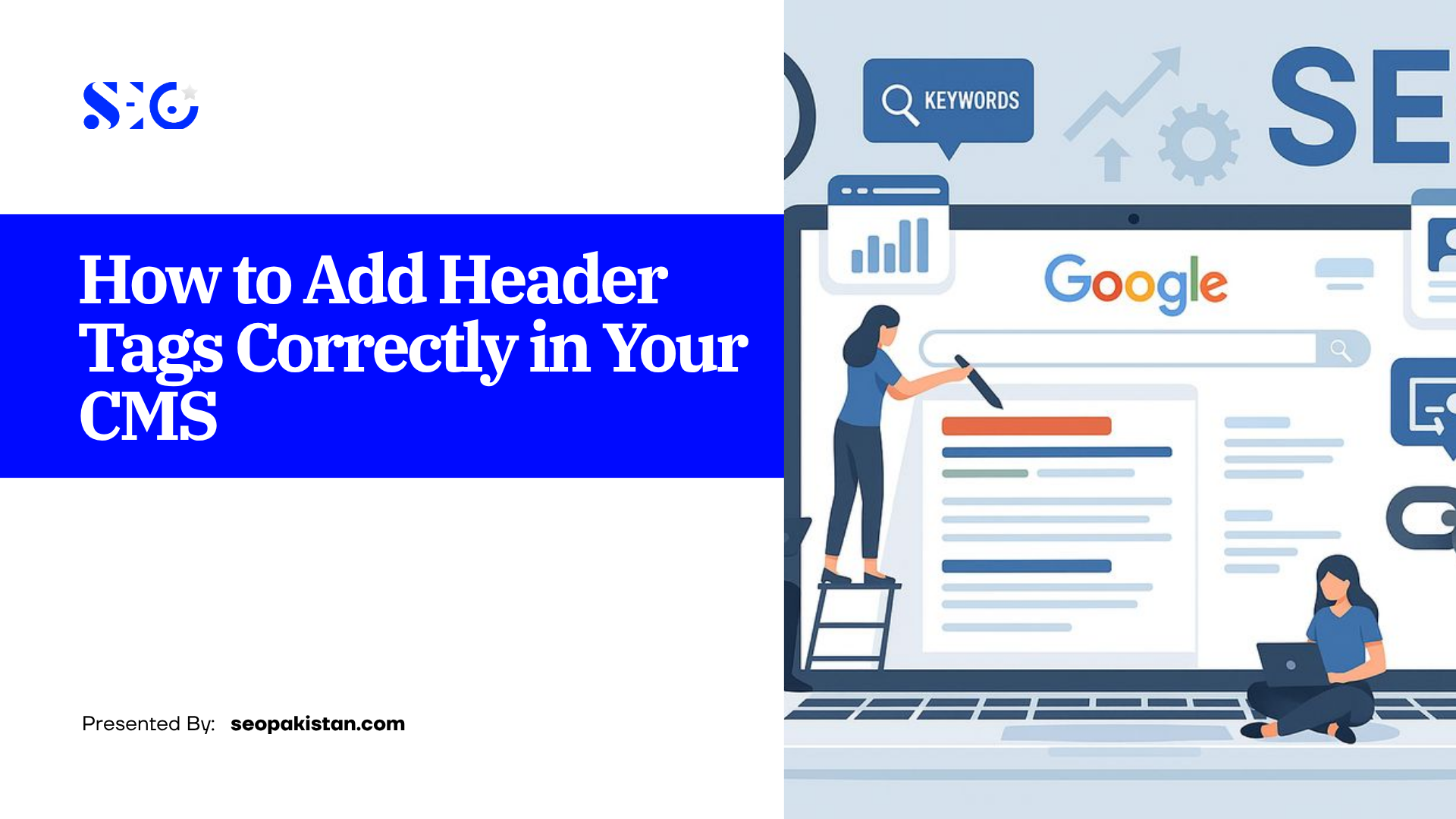
Most content management systems make it simple to add headings without touching raw code. In the WordPress block editor, for example, selecting a paragraph block and opening the dropdown menu in the block toolbar lets you convert it to an H2, H3, or H4 directly from the visual tab, no manual coding required. If a heading needs adjusting afterward, the three vertical dots menu on the block gives quick access to duplicate, convert, or remove it.
A few tips apply across CMS platforms, whether you’re publishing a blog post, a landing page, or a product page:
- Assign a clear relative importance to each level — H1 for the main heading, H2 for major sections, H3 for supporting detail.
- Keep descriptive headings that match the page content beneath them, rather than generic labels like “Section 2.”
- Avoid duplicating the exact heading text across other headings on the same page — each one should serve a distinct purpose.
- Preview the page to confirm it lets users scan content the way you intended before publishing.
Getting this right supports both technical SEO and on-page clarity, and it works alongside — not instead of — link building and keyword targeting as part of a site’s overall SEO best practices. Whether you create content for a blog post, service page, or spec sheet, the goal stays the same: organize content in a way that serves your target audience first and search engines second.
Heading Structure Checklist for B2B Pages
- One H1 per page, stating the core topic clearly.
- H2 tags for each major section, in logical order.
- H3 tags only where an H2 needs further breakdown.
- No skipped heading levels.
- Primary keyword in the H1 and one or two H2s; semantic variants elsewhere.
- No heading left without substantive content beneath it.
- Question-based headings used only where they map to real search queries.
Conclusion
Header tags SEO is more than just organizing content—it creates a clear structure that helps users, search engines, and AI systems understand your pages more effectively. By using a single H1, organizing topics with descriptive H2s, and supporting them with relevant H3s, you improve readability, accessibility, crawlability, and topical authority.
A well-planned heading hierarchy also enhances your chances of ranking in featured snippets and Google AI Overviews while delivering a better user experience. Whether you’re publishing blog posts, service pages, or landing pages, optimizing your header tags is a simple yet powerful way to strengthen your on-page SEO.
Ready to improve your website’s search performance? Start optimizing your header tags today, or partner with SEO Pakistan to build SEO-friendly content that ranks higher, engages readers, and drives sustainable organic growth.
Frequently Asked Short Questions.
What is header tags SEO?
Header tags SEO is the structured use of H1–H6 HTML tags so that heading hierarchy accurately reflects a page’s content, helping search engines, screen readers, and users understand section relationships.
How many H2 tags should a technical B2B page have?
There’s no fixed number — the count should match the page’s real content depth. A page with several major topics (specifications, applications, installation, maintenance) typically needs a matching H2 for each.
Does heading hierarchy affect crawlability?
Yes. A clean, unskipped hierarchy helps search engines map a page’s structure accurately, which supports both indexing and AI-driven answer extraction.
Should keywords appear in every heading?
No. Keywords should appear naturally in the H1 and a small number of H2s, with semantic variations elsewhere. Repeating the same keyword across every heading reads as manipulative rather than informative.