

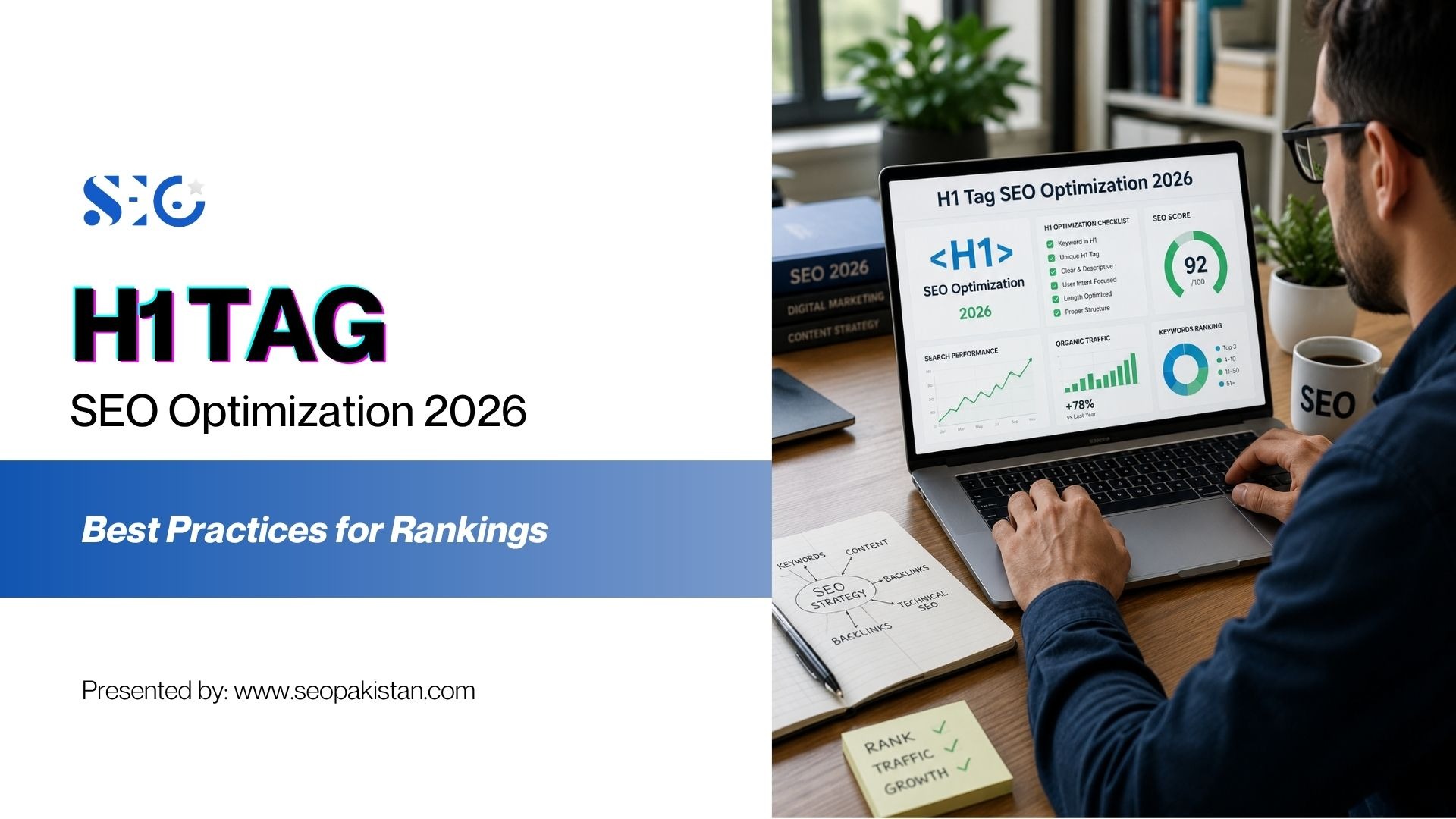
H1 tag SEO optimization 2026 requires more than placing a target term inside a page heading. Search engines use these tags to determine page intent, topical relevance, and semantic connections. A properly optimized heading improves user experience and strengthens AI search visibility.
SEO professionals must understand the heading structure impact to connect content with user queries effectively. Implementing the single H1 best practice provides clarity, but success also demands strategic architecture.
Why Google Still Pays Attention to H1 Tags in the AI Search Era
Many SEOs say H1 tags no longer matter because Google can understand content through many signals. That idea contains some truth, but it misses the real role of headings.
Google can process imperfect HTML, but clear headings still help users and search systems understand page structure. Google also uses several sources to create title links, including the title element, main visual title, heading elements, and other prominent page text.
H1 Tags Help Search Engines Understand Primary Intent
Search algorithms analyze the main heading first to determine the core focus of the page. This initial scan helps the system match your content with specific user queries. Understanding intent ensures your page surfaces for the right searchers.
A strong heading sets the context for the entire document and guides the crawler. The most useful points include:
- Topic identification: Headings provide the strongest signal about the primary subject matter of the page.
- Search intent alignment: Clear text helps algorithms verify if the page offers informational or transactional value.
- Context building: The phrasing establishes a foundation that makes the following paragraphs easier to process.
H1 Tags Improve Content Classification
Search engines classify content by entities, topics, relationships, and page structure. The H1 helps create that first layer of classification.
For example, “H1 Tag Optimization Guide for SEO 2026–27” clearly connects the page with H1 tag SEO optimization 2026, heading structure, on-page SEO, and AI search.
A generic H1 like “Complete Guide” gives much weaker context.
H1 Tags Support AI Search Understanding
AI search systems need clear topic signals because they summarize, retrieve, and compare content across many sources. A specific H1 helps the system understand what the page answers.
Google says AI Overviews help users understand complicated topics faster and explore links for deeper information. Clear headings support that extraction process because they make the page easier to scan and interpret.
The Biggest H1 Optimization Mistakes Costing Rankings Today
Website owners routinely lose traffic because they implement headings incorrectly. Basic errors confuse search engine crawlers and frustrate human readers. Fixing these common mistakes provides an immediate boost to your search visibility.
Missing H1 Tags Entirely
A missing H1 removes the main visible heading from the page. Search engines can still understand the page through other signals, but the structure becomes weaker.
Users also lose a clear confirmation that the page matches their query.
Generic Headings With No Context
Generic headings fail because they do not describe the topic. “Welcome,” “Services,” or “Blog Guide” gives little SEO value.
A better H1 uses clear topic wording. It should tell the reader what they will learn, compare, buy, or solve.
Keyword-Stuffed H1 Tags
Keyword stuffing makes H1s hard to read. It also creates a poor user experience.
A bad H1 might say: “H1 Tag SEO Optimization 2026 H1 SEO Heading Tag Best Practices.”
A better H1 says: “H1 Tag Optimization Guide for SEO 2026–27.”
Single H1 Best Practice: Does It Still Matter in 2026?
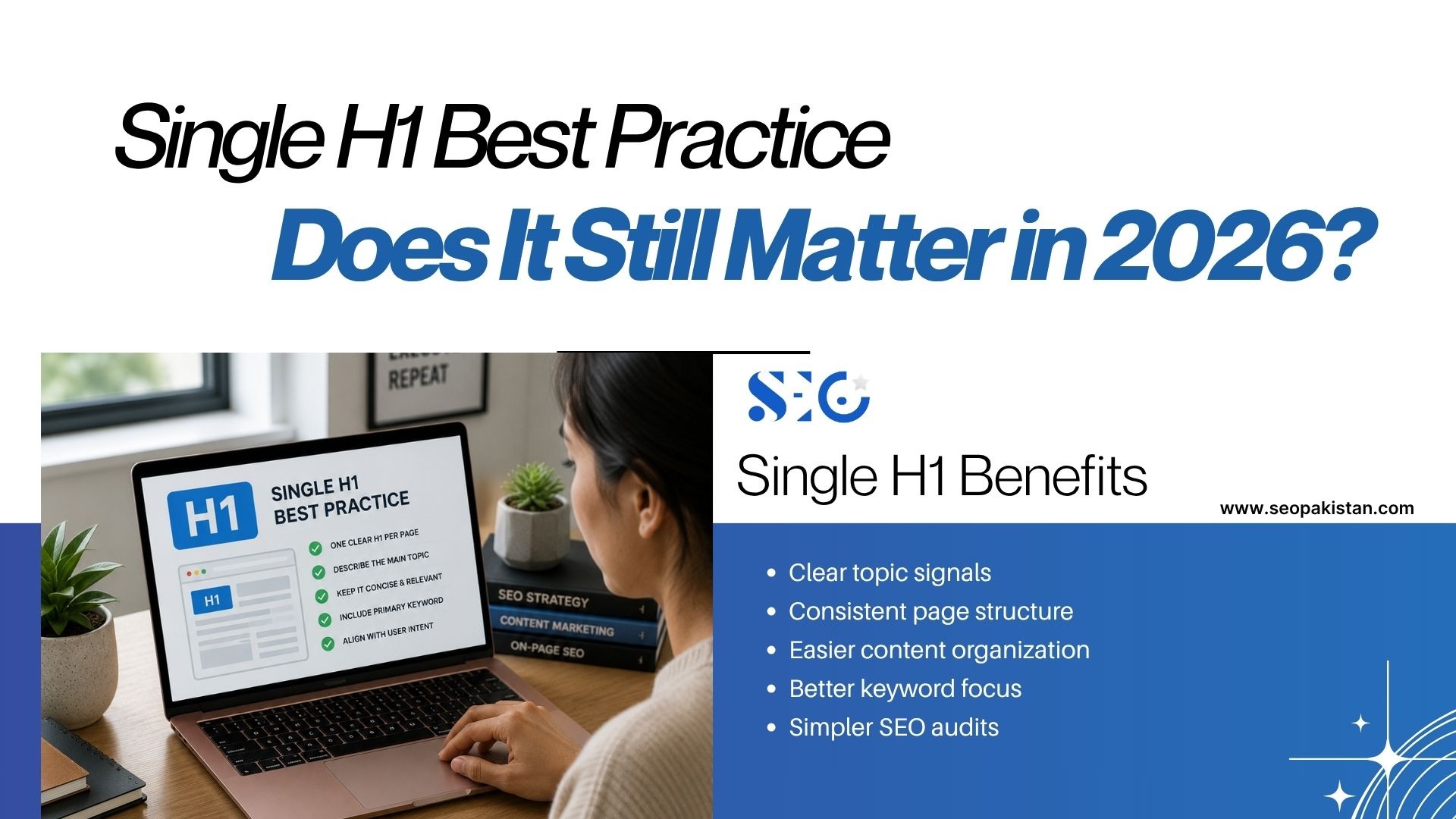
Many developers argue that modern HTML5 allows multiple primary headings per page. However, the single H1 best practice remains the safest and most effective approach for search visibility. Focusing on one main title eliminates ambiguity for both crawlers and users.
What Google Says About Multiple H1 Tags
Google representatives state their systems can process pages with multiple primary headings. The algorithm attempts to understand the structure regardless of the exact HTML setup. However, they also confirm that a clear structure makes their job much easier.
Following standard HTML conventions reduces the risk of algorithmic misunderstandings. The most useful points include:
- HTML5 evolution: Modern web standards technically permit multiple tags for distinct article sections.
- Google’s interpretation: The search engine adapts to poor coding but prefers clean, standardized formatting.
- Processing limits: Complex structures force crawlers to work harder to determine the core page intent.
Why Most SEO Professionals Still Prefer One H1
SEO experts prefer the single H1 best practice because it provides maximum topical clarity. One primary heading clearly defines the overarching theme of the page. This approach prevents any dilution of your main keyword target.
Consistency in structure yields better long-term ranking stability. The most useful points include:
- Clarity: A single tag clearly announces the exact topic to search engines without any confusion.
- Consistency: Standardizing one tag per page makes site-wide audits and updates much easier.
- Easier content structure: A single top-level tag forces writers to logically organize the remaining subheadings.
When Multiple H1s May Not Hurt SEO
Certain complex web applications use multiple primary tags without suffering ranking drops. Single-page applications often load distinct sections that act as individual pages. In these rare cases, multiple tags serve a functional user experience purpose.
Most standard websites do not fall into this exception category. The most useful points include:
- Modern frameworks: JavaScript-heavy sites sometimes render multiple tags as the user scrolls.
- Edge-case scenarios: Extremely long aggregator pages might use multiple tags to separate distinct documents.
- Syndicated content: News platforms occasionally retain multiple tags when compiling several stories onto one feed.
H1 Keyword Placement Strategies That Actually Work
Placing your target phrase properly requires strategic thinking. H1 keyword placement must balance search engine requirements with natural human language. The best headings seamlessly integrate target phrases while maintaining a compelling hook.
Place Primary Keywords Naturally
Forcing a keyword into a sentence always hurts readability. You must write headings that sound natural when spoken aloud. Natural phrasing builds trust with readers while satisfying search engine requirements.
Search algorithms easily detect and reward conversational, user-first language. The most useful points include:
- User-first wording: Write the sentence for the human reader before adjusting it for the search bot.
- Search intent matching: Ensure the phrasing exactly matches what the searcher expects to find.
- Grammar compliance: Never break basic grammar rules just to insert a target phrase.
Front-Loaded vs Natural Keyword Placement
Front-loading can help when the keyword reads well at the start. It gives fast relevance.
However, natural wording matters more than mechanical placement. A front-loaded H1 should not sound robotic.
Compare these examples:
- Front-loaded: “H1 Tag SEO Optimization 2026: Best Practices for Rankings”
- Natural: “How to Optimize H1 Tags for SEO in 2026”
- Weak: “Best Guide for Rankings With H1 Tag SEO Optimization 2026”
The first two work. The third feels forced.
Semantic Variations Around Primary Keywords
Semantic variations strengthen topic coverage without stuffing. Use related phrases in H2s and H3s instead of forcing everything into the H1.
For this topic, useful semantic terms include single H1 best practice, H1 keyword placement, H1 vs title tag, H1 hierarchy SEO 2026, and heading structure impact.
H1 vs Title Tag: Why They Should Not Always Be Identical
Website builders often generate identical title tags and main headings automatically. However, the H1 vs title tag debate reveals that varying these elements often improves performance. Each tag serves a different purpose in the user journey.The Different Jobs of H1 and Title Tags
The title tag mainly works in search results and browser tabs. It needs to earn clicks and fit SERP display limits.
The H1 works on the page. It needs to confirm relevance, guide the reader, and introduce the content clearly.
Comparing these two tags helps clarify their unique roles in your SEO strategy. Review the table below to understand the core differences and optimization rules for each element.
| Feature | Title Tag | H1 Tag | Primary Audience | Character Limit |
| Location | Search results page | On the actual web page | Searchers scanning Google | 50-60 characters |
| Main Goal | Maximize click-through rate | Confirm topic and engage | Potential visitors | Strict display limits |
| Keyword Focus | Primary target keyword | Primary keyword + context | Search engine crawlers | Flexible length |
| Formatting | Plain text only | Styled with CSS fonts/colors | Website readers | Depends on design |
| Branding | Includes brand name at end | Rarely includes brand name | Current page users | Visual dominance |
When Matching Both Elements Makes Sense
Keeping both elements identical works well for highly specific, technical topics. Users searching for exact product manuals want to see identical text to confirm they clicked correctly. Strong brand recognition also justifies matching these elements.
Simplicity often converts well for purely transactional queries. The most useful points include:
- Branding: Matching tags create a seamless, predictable experience for returning customers.
- Highly targeted pages: Exact match terms perform best for specific local service pages.
- Short queries: Simple topics do not require complex variations between the two tags.
Heading Structure Impact on Rankings and User Experience

The way you format your page directly influences how people interact with it. The heading structure impact goes far beyond search engine bots. Good formatting keeps users on the page longer, which sends positive engagement signals back to Google.
Better Headings Improve Content Scannability
Most website visitors do not read every word on a page. They scroll quickly to find the specific information they need. Clear, descriptive headings act as signposts that guide them to the right paragraph.
Scannable content significantly reduces your website bounce rate. The most useful points include:
- Reader behavior: Users scan down the left side of the screen looking for bold, formatted text.
- Engagement improvements: Visitors stay longer when they can easily find the exact answer they want.
- Visual breaks: Large heading fonts give the reader’s eyes a necessary break from dense paragraph blocks.
Structured Content Supports Featured Snippets
Google frequently pulls well-formatted lists and paragraphs directly into the search results. They use your headings to formulate the title of these featured snippets. A clean hierarchy dramatically increases your chances of securing this prime real estate.
Winning a snippet often doubles the traffic to that specific page. The most useful points include:
- Information extraction: Clear formatting tells Google exactly which sentences to pull for the snippet.
- Direct answer visibility: Structured H3 questions easily trigger paragraph snippets for voice search.
- List generation: Google uses sequential H2s to automatically build numbered list snippets in the SERP.
Clear Hierarchies Improve Topical Authority
Covering a topic logically proves your expertise to search quality raters. A structured page demonstrates that you understand all facets of a specific industry. High topical authority makes ranking for future keywords much easier.
Authority pages naturally attract more organic backlinks from other creators. The most useful points include:
- Entity coverage: A structured layout ensures you mention all necessary related entities naturally.
- Knowledge graph relevance: Clear connections help Google add your data to their overarching knowledge graph.
- Trust signals: Professionally formatted content simply looks more trustworthy to human visitors and reviewers.
H1 Optimization Checklist for 2026–27
Executing these strategies requires a systematic approach. Use this checklist to verify your headings before publishing any new content. Consistent execution leads to predictable search ranking improvements.
Technical Checklist
Your HTML must be flawless for crawlers to process your page efficiently. Technical errors often prevent perfectly written headings from working correctly. Always verify the source code before pushing a page live.
Clean code ensures maximum visibility across all devices. The most useful points include:
- One primary H1: Verify that your CMS only generates a single top-level tag per URL.
- Proper HTML implementation: Ensure the tag uses standard HTML brackets without broken code syntax.
- Mobile testing: Check that large heading fonts display correctly on small mobile screens without overlapping.
SEO Checklist
Your heading must send the strongest possible relevance signal to the search algorithm. You must balance keyword targets with natural readability. Proper optimization directly influences your initial ranking position.
Strategic wording captures more organic traffic over time. The most useful points include:
- Keyword relevance: Confirm the primary target keyword appears naturally within the heading text.
- Intent alignment: Ensure the phrasing matches the specific informational or commercial goal of the searcher.
- Semantic coverage: Check that your subheadings include related synonyms to build a complete topical map.
AI Search Checklist
You must prepare your content for generative engines and conversational assistants. AI optimization focuses heavily on clarity and direct answers. Your headings must facilitate easy data extraction.
Preparing for AI ensures your site remains relevant in the future. The most useful points include:
- Context clarity: Ensure the main heading makes perfect sense even if read completely out of context.
- Entity inclusion: Verify that you included specific industry nouns rather than vague pronouns.
- Retrieval optimization: Structure the heading to act as a definitive answer to a specific user prompt.
Conclusion
Mastering H1 tag SEO optimization 2026 is essential for maintaining visibility in modern search engines. Adhering to the single H1 best practice ensures that crawlers accurately understand your primary page intent. You must carefully balance H1 keyword placement with natural language to engage both AI systems and human readers.
Understanding the nuances of H1 vs title tag optimization allows you to capture broader search traffic while maximizing click-through rates. Ultimately, implementing a logical H1 hierarchy SEO 2026 structure creates a profound heading structure impact, driving better engagement, higher rankings, and sustained topical authority across all digital platforms.
Frequently Asked Questions
What is the most important rule for H1 tag SEO optimization 2026?
The most important rule for H1 tag SEO optimization 2026 is ensuring the heading clearly defines the primary intent of the page. You must include your target keyword naturally while maintaining a conversational tone. Clear formatting helps AI generative models and traditional search engines extract your content accurately.
Does the single H1 best practice still apply today?
Yes, the single H1 best practice remains the safest approach for SEO. While modern HTML allows multiple primary tags, using just one eliminates structural confusion for search engine crawlers. One clear tag focuses your ranking power and clearly establishes the core topic of your specific document.
How does H1 keyword placement affect my rankings?
Proper H1 keyword placement strongly signals page relevance to search algorithms. Placing the keyword naturally near the front of the heading often yields the best results. However, you must prioritize human readability over keyword stuffing to avoid algorithmic penalties and high bounce rates.
What is the main difference between an H1 vs title tag?
The main difference in the H1 vs title tag debate is their location and primary audience. The title tag appears in search results to drive clicks, while the H1 appears on the actual page to engage the reader. Varying these tags helps capture a broader range of semantic search terms.
How does H1 hierarchy SEO 2026 impact user experience?
Strong H1 hierarchy SEO 2026 directly improves user experience by making long content scannable. When you nest H2 and H3 tags properly, readers can quickly find the exact information they need. This positive heading structure impact reduces bounce rates and signals high content quality back to search engines.