


Industrial cooling for chemical plants requires engineered systems that operate safely under flammable, corrosive, and high-temperature conditions. Search visibility depends on how accurately you represent explosion-proof cooling keywords and industrial refrigeration SEO in real operational contexts.
High-performing content connects safety requirements with thermal control performance. This approach allows procurement teams and engineers to evaluate compliance, reliability, and cooling efficiency directly from your digital assets. You must communicate technical accuracy to capture local search intent and secure high-value contracts.
Where Cooling Failure Actually Starts in Chemical Plants (Not Where You Think)
Engineers often misdiagnose failures in industrial cooling for chemical plants by looking at the wrong systems. True failures often begin deep within the localized zones of the chemical process, long before system-wide alerts are triggered.
Hidden Heat Accumulation in Reactor Zones
Heat spikes rarely happen across the entire system at once. They localize within specific reactor jackets before alarms ever trigger. You must understand this hidden threat to build effective content. Read these specific points to understand localized heat accumulation:
- Thermal lag creates delayed failure conditions within the batch.
- Reactor jackets often underperform while operators assume normal function.
- Chemical reactions generate exponential heat that outpaces standard flow rates.
Why Ambient HVAC Misleads System Design
Facilities management teams often confuse ambient air temperature with actual process control. Ambient cooling does not remove process heat from the chemical reaction. Air systems cannot stabilize reaction temperatures during critical production phases. Overreliance on ambient HVAC leads to unsafe assumptions about overall plant safety.
Early Warning Signals Engineers Ignore
Operators miss subtle changes that indicate imminent cooling system failure. These small deviations signal massive inefficiencies within the thermal loop. Watch for these exact indicators to prevent catastrophic shutdowns:
- Operators notice a slight approach temperature rise during routine checks.
- Batch processes experience increasing cycle times without chemical formulation changes.
- System fan loads increase without any visible cause or external temperature spike.
The Real Cooling Architecture Inside a Chemical Plant
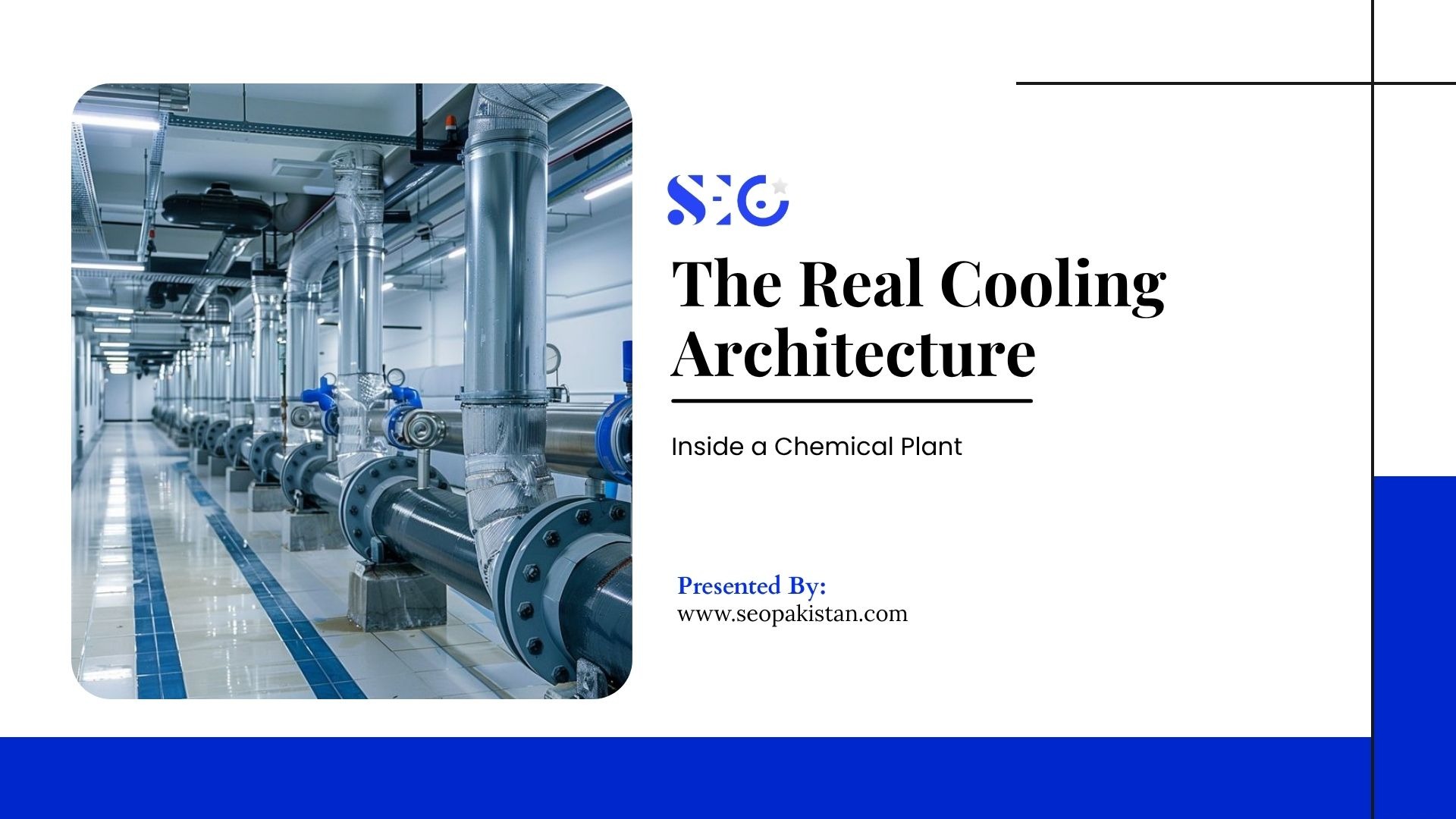
Chemical facilities rely on multiple interconnected thermal layers. Understanding the industrial cooling for chemical plants means separating these layers in your content to capture engineering search intent.
Separation of Cooling Layers (Critical Concept)
A single cooling unit cannot support a full chemical facility safely. Engineers divide the thermal architecture into specific, isolated loops. Look at how facilities structure their thermal management:
- The process loop directly handles chemical reactor cooling duties.
- The secondary loop uses process chillers and heat exchangers to isolate fluids.
- The heat rejection loop relies on cooling towers to disperse energy outdoors.
Why Single-System Thinking Fails
No chemical plant runs safely on a single cooling system. Each architectural layer operates under completely different control logic. Failures propagate rapidly across loops when engineers treat them as a single unit.
Where Most Designs Break Down
System breakdowns happen at the intersection of these architectural loops. Contractors often misunderstand how fluid dynamics change between different temperature zones. You will find that these exact failure points drive emergency search queries:
- Poor integration between loops causes extreme temperature fluctuations.
- Flow imbalance between systems leads to localized freezing or boiling.
- Facilities lack redundancy planning for primary heat exchanger failures.
Hazard Zones Change Everything (Cooling Design Is Not Universal)
Safety regulations dictate exactly what equipment a facility can install. When it comes to industrial cooling for chemical plants, you must align your content with these rigid compliance frameworks.
How Hazard Classification Impacts Cooling Equipment
Zone 1 and Zone 2 classifications define allowable equipment in hazardous areas. Electrical systems must eliminate all potential ignition sources completely. Material selection changes dramatically in the presence of corrosive chemical vapors.
Why Standard Cooling Equipment Becomes a Risk
Commercial equipment introduces severe fire and explosion hazards into chemical plants. Procurement teams search actively for compliance because standard gear fails catastrophically. Standard equipment poses these specific dangers in hazardous zones:
- Open motors spark during standard operation and ignite flammable gases.
- Improper sealing allows toxic gas ingress into electrical control panels.
- Hot temperature surfaces trigger the spontaneous ignition of airborne chemicals.
What Buyers Actually Look for in Hazard Environments
High-intent buyers do not search for basic cooling specs. They search for documentation that proves the system meets strict safety codes. You must highlight these specific trust signals to win procurement contracts:
- Explosion-Proof Certification: Provide valid certifications for all system components.
- Local Compliance: Offer documentation showing the system meets local jurisdictional standards.
- Proven Case Studies: Share installation examples from similar chemical plants.
What Engineers Mean by “Process Cooling” (And Why SEO Gets It Wrong)
General marketing agencies fail to distinguish between comfort cooling and process cooling. You must eliminate this terminology confusion to rank for high-value engineering queries.
Reactor Cooling Is Not HVAC
Chemical reactor cooling requires precision control within a tight ±1–2°C window. This precise temperature directly affects reaction stability and product yield. The system must respond instantly to load changes as the chemical reaction progresses.
Role of Process Chillers in Temperature Control
Process chillers handle the heavy lifting for dynamic thermal loads. They maintain consistent fluid temperatures regardless of outdoor weather conditions. You must optimize for process chiller optimization to capture this specific buyer intent. Chillers enable facilities to run continuous production lines rather than inefficient batch operations.
Why Cooling Towers Alone Cannot Solve the Problem
Cooling towers serve a vital but limited role in the thermal architecture. They depend entirely on ambient wet-bulb conditions to function. Facilities limit cooling towers strictly to bulk heat rejection duties. Towers cannot control internal process temperatures precisely enough for sensitive chemical reactions.
Translating Cooling Systems Into Searchable Engineering Data
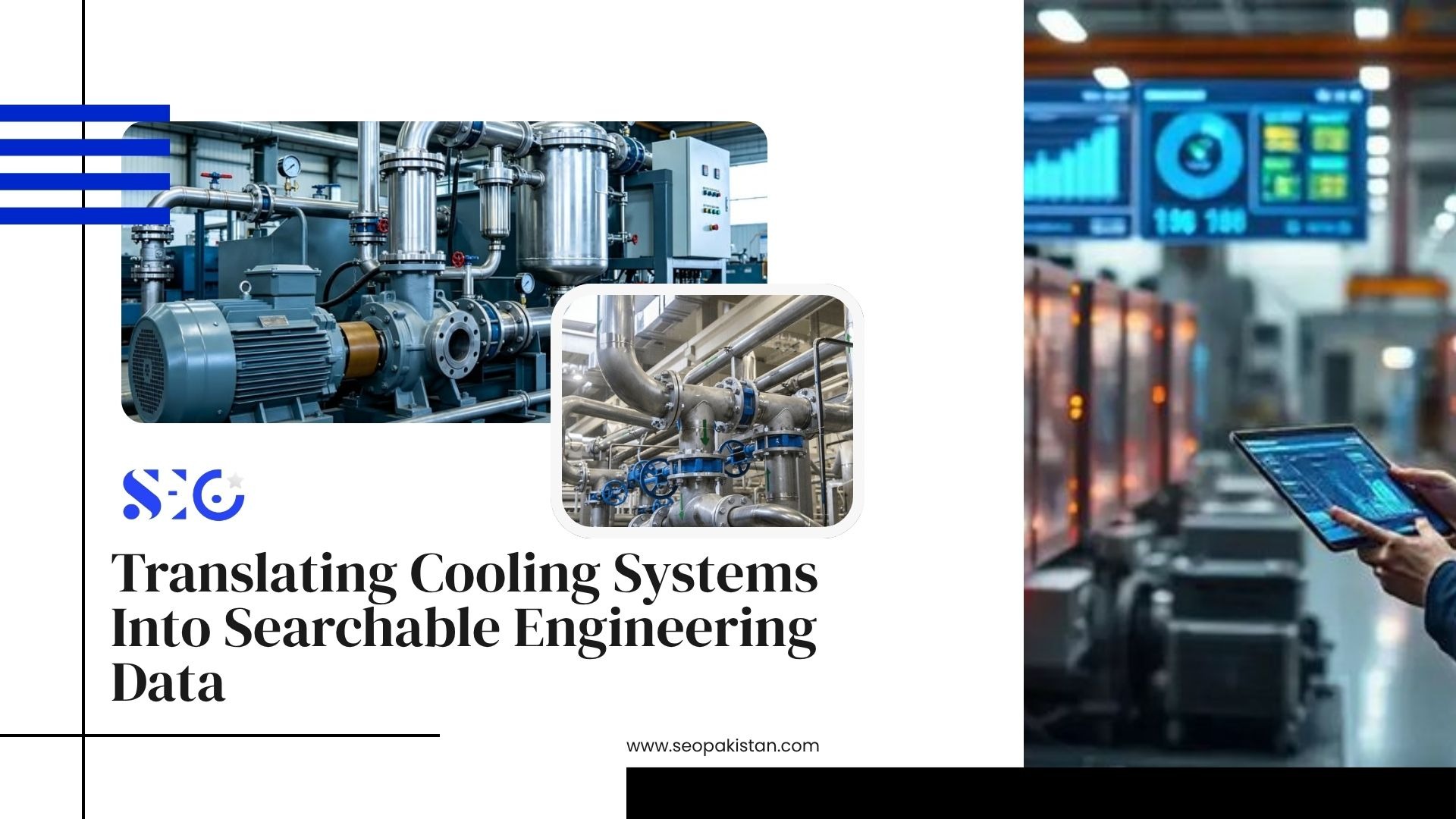
Engineers search using precise data points and performance metrics. You must translate generic marketing claims into hard engineering facts.
Why “High Efficiency Cooling” Does Not Rank
Generic phrases like “high efficiency” carry zero weight with technical buyers. This phrase provides no measurable parameter for the engineer to evaluate. It lacks engineering validation and holds no relevance to the buyer’s query intent.
What High-Intent Content Actually Includes
Technical content must answer the exact parameters the engineer needs to solve their problem. You must embed specific performance data into your landing pages. Provide these data points to satisfy the technical search intent immediately:
- Specify the exact temperature control range the unit can sustain.
- List the precise cooling capacity using TR or kW measurements.
- Detail the hazard classification compliance codes the equipment meets.
- State the fluid compatibility parameters for aggressive process chemicals.
Example Transformation (Critical Section)
You must transform generic marketing copy into technical engineering proof. Change “we offer great chillers” to “we supply Class 1 Div 2 process chillers offering ±1°C precision.” This marketing-to-engineering translation captures the exact long-tail search terms that generate revenue.
Cooling Technology Selection Under Risk and Load Conditions
Buyers use search engines to make critical equipment selection decisions. Your content must guide them toward the correct technology for their specific risk profile.
When to Use Process Chillers
Process chillers serve specific applications where precision dictates success. Engineers select chillers for closed-loop systems handling volatile substances. They demand chillers when sensitive chemical reactions require absolute temperature stability.
When Cooling Towers Are Sufficient
Cooling towers work perfectly for non-critical thermal management tasks. Engineers use towers when the facility requires massive bulk heat rejection. Towers handle stable process loads that do not require exact temperature precision.
When Hybrid Systems Become Necessary
Large-scale plants combine chillers and towers to balance cost and performance. Hybrid systems handle variable heat loads across different seasonal extremes. Facilities mandate hybrid designs when they have strict redundancy requirements.
| Condition | Best System | Limitation | Risk Factor | Engineering Decision |
| High precision reactor | Process chiller | High cost | Low tolerance failure | Must use |
| Large heat rejection | Cooling tower | No precision control | Efficiency loss | Combine with chiller |
| Hazardous zone | Explosion-proof HVAC | Expensive | Safety failure risk | Non-negotiable |
| Variable load plant | Hybrid system | Complex integration | Control instability | Best long-term |
What Actually Limits Cooling Performance in Chemical Plants
Your target audience constantly searches for solutions to underperforming equipment. You must address their operational constraints directly in your content.
Thermal Load Miscalculations
Engineers sometimes undersize systems during the initial facility design phase. They ignore peak loads that occur during extreme summer weather. Process scaling issues create unexpected thermal burdens that overwhelm the existing infrastructure.
Fouling and Heat Transfer Loss
Water quality issues destroy heat transfer efficiency over time. You must explain how maintenance impacts operational capacity. Watch how fouling degrades the system output:
- Mineral deposits reduce efficiency across the entire heat exchanger surface.
- Chemical residues block flow pathways and increase pump energy consumption.
- Routine maintenance delays worsen performance and accelerate equipment failure.
Control System Limitations
Mechanical equipment means nothing without an intelligent control system. Slow response times cause temperature overshoots during critical reaction phases. Poor sensor calibration forces the system to chase incorrect temperature setpoints. A lack of automation requires manual intervention that introduces dangerous human error.
How High-Intent Buyers Search for Cooling Solutions (REAL SEO INSIGHT)
Understanding query intent separates profitable SEO from useless traffic generation. You must align your keywords with the specific job role of the searcher.
Engineers Search by Problem
Engineers use search engines as diagnostic tools for immediate problems. They type “reactor temperature instability solution” into the search bar. They look specifically for a “process chiller for chemical plant” to fix thermal lag.
Procurement Searches by Risk
Procurement officers search for compliance and risk mitigation keywords. They type “explosion-proof HVAC supplier” to find vetted manufacturers. They search for “ATEX certified cooling system” to satisfy safety auditors.
Why Generic Keywords Fail
Broad keywords attract students and researchers, not chemical plant buyers. Generic keywords lack the intent alignment necessary to drive high-value sales. They result in extremely low conversion rates because they do not solve an immediate engineering problem.
Securing Your Plant’s Operational Future
The landscape of industrial cooling for chemical plants demands rigorous technical understanding. Facilities require a multi-layered, risk-driven thermal architecture to operate safely. SEO success in this sector depends entirely on technical accuracy. You must clearly explain hazard compliance, plant safety HVAC, and process chiller optimization.
The companies that translate deep engineering logic into searchable clarity will dominate rankings. Align your content with these principles to secure your market position. To learn how we can help you rank your cooling website, visit seopakistan.com.
Frequently Asked Questions
What is industrial cooling for chemical plants?
Industrial cooling for chemical plants involves engineered systems that remove excess heat from chemical processes. These systems maintain exact temperatures to ensure product quality and prevent dangerous thermal runaways. Engineers rely on precise chillers and cooling towers to manage these massive heat loads safely.
Why is explosion-proof HVAC critical in hazardous environments?
Hazardous environments contain volatile gases that ignite easily. Standard HVAC equipment produces electrical sparks and high surface temperatures during normal operation. Explosion-proof HVAC eliminates these ignition sources, keeping the chemical facility safe from catastrophic fires.
How does process chiller optimization improve plant stability?
Process chiller optimization ensures the cooling system responds instantly to shifting thermal loads. This optimization prevents temperature fluctuations that ruin sensitive chemical batches. Efficient chillers reduce energy consumption while maintaining the precise control required for continuous production.
What is the difference between reactor cooling and HVAC?
Reactor cooling manages the extreme heat generated directly by chemical reactions. It requires highly precise fluid temperature control within a closed loop. HVAC manages ambient air comfort and basic ventilation for the building occupants.
How do engineers select the right cooling system?
Engineers evaluate the specific thermal load, hazard classification, and precision requirements of the process. They choose process chillers for strict temperature control and cooling towers for bulk heat rejection. They always specify explosion-proof components when operating within designated hazardous zones.