

An on page seo checklist covers every element you control directly on a webpage to improve search engine rankings: page titles, headers, page content, alt text, site speed, and internal linking structure. For Pakistani websites, it also means bilingual keyword targeting, mobile-first performance, and local trust signals.
Following this checklist in order helps search engines understand your pages faster and improves search visibility across both traditional and AI-driven search results.
What Is On-Page SEO and Why It Affects Search Engine Rankings
On-page SEO means everything you optimize directly on your web pages to help both readers and search engine bots understand what the page offers. It sits apart from off site seo, which covers backlinks and external signals you do not fully control.
Google’s Helpful Content System and E-E-A-T standards now weigh page quality alongside technical correctness. A checklist approach keeps you from missing a factor that quietly caps your search engine rankings even when your content itself is strong.
For Pakistani websites specifically, two factors change the checklist: bilingual search behavior across Urdu and English, and a mobile-first audience that expects fast, lightweight web pages.
How Search Intent Shapes Your Keyword Strategy
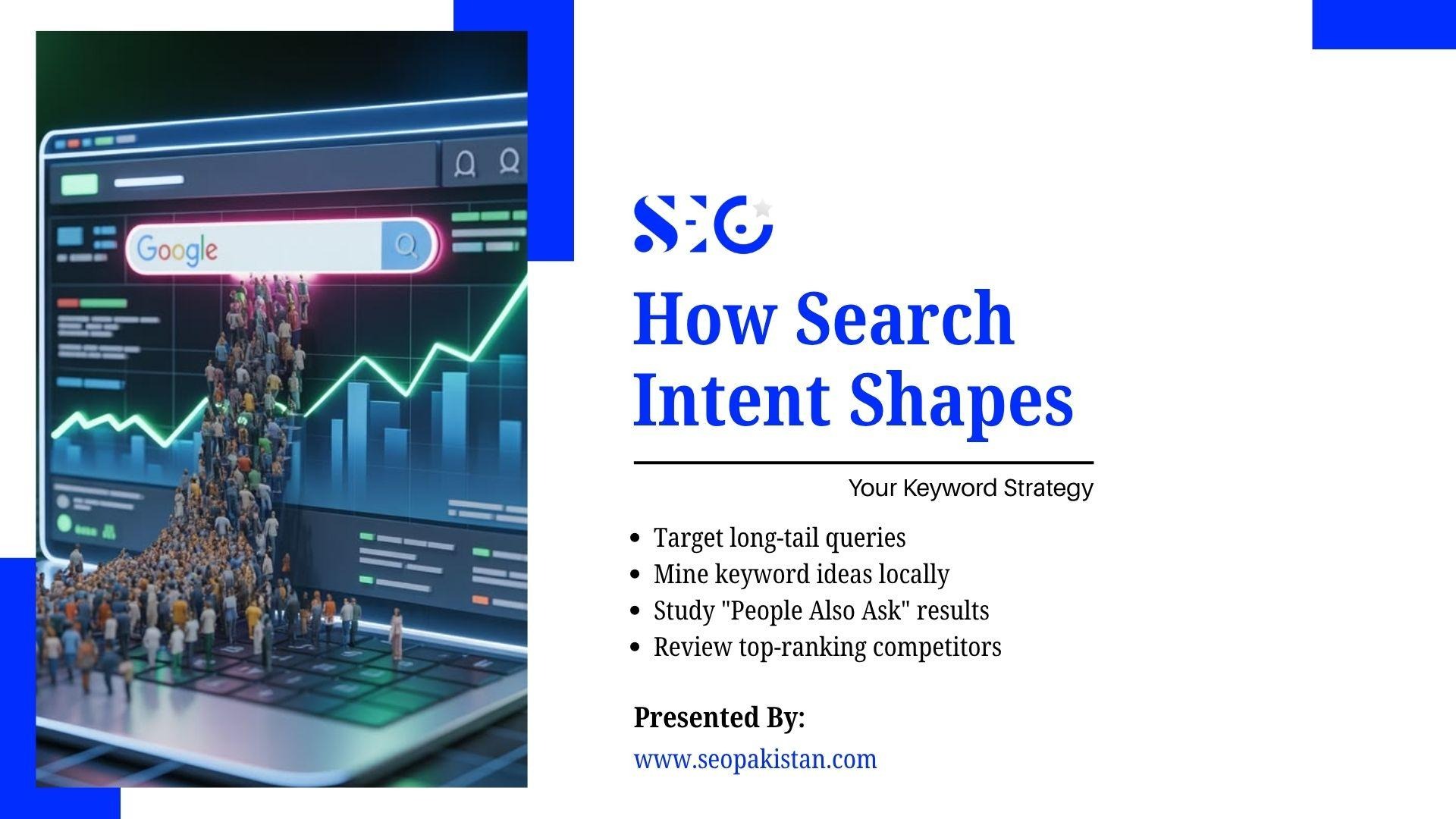
Chasing high-volume terms without understanding search intent wastes content effort. In 2026, matching what a searcher actually wants matters more than matching a raw search volume number.
- Target long-tail queries: “Best chai places in Karachi 2026” attracts more qualified web traffic than a generic term like “Karachi cafes.”
- Mine keyword ideas locally: Pakistani forums, social groups, and e-commerce platforms surface keyword variations that global tools miss.
- Study “People Also Ask” results: These reveal the real questions behind a search and suggest keyword-rich anchor text opportunities for internal links.
- Review top-ranking competitors: Note their format and depth, not to copy them, but to understand what traditional search engines are rewarding for that query.
Page Titles and Compelling Meta Descriptions
Your page title and description are the first signals both users and search engine crawlers see. Getting them right affects click-through rate as much as ranking position.
Keep your page title under roughly 60 characters with the primary keyword near the front. A compelling meta description under 155 characters should include the target keyword and give the reader a clear reason to click through from Google search results.
- Avoid duplicate meta descriptions: Every page needs a unique description, or search engines will rewrite it themselves.
- Add local modifiers: “Best Food Spots in Karachi 2026” outperforms a generic title for local intent queries.
- Match the page title to page content: A mismatch increases bounce rate and can hurt search rankings over time.
Header Tags and Page Headings for Structure
Clean header tags help both readers scan the page and help search engines understand the hierarchy of your content. A page without clear page headings forces search bots to guess what matters most.
- Use one H1 per page: Reserve it for the main title and primary keyword.
- Structure H2s around subtopics: Each H2 should answer a distinct part of the reader’s question.
- Write question-based H3s: Phrasing headings as questions increases your odds of winning featured snippet optimization for related “People Also Ask” queries.
Fixing Broken Links and Duplicate Content
Two of the most overlooked items on any on-page checklist are broken links and duplicate content, both of which actively confuse search engines about which version of a page to rank.
- Audit for broken links quarterly: A dead link on a high-traffic page wastes crawl budget and frustrates users.
- Check for duplicate content across site pages: Near-identical pages split ranking signals instead of concentrating them on one strong page.
- Use canonical tags where duplication is unavoidable: This tells search engines which version to treat as authoritative.
- Fix redirect chains: Multiple hops between old and new URLs slow crawling and dilute link equity.
URL Optimization for Search Engines and Users
Clean page URLs act as signposts for both visitors and search engine bots. A messy URL structure makes site structure harder to understand at a glance.
- Keep URLs short and descriptive: Avoid underscores, spaces, or unnecessary parameters.
- Include the target keyword once: Stuffing the URL with keyword variations looks manipulative and rarely helps.
- Consider a .pk domain: It is not a universal ranking factor, but it builds local relevance and trust with Pakistani audiences.
Internal Linking Structure and Anchor Text
A strong internal linking structure distributes authority across your site and helps search engine crawlers discover new pages faster. It also keeps visitors moving through related content instead of leaving after one page.
- Use descriptive anchor text: Tell the reader exactly what they will find, rather than generic phrases like “click here.”
- Build topic clusters: Link a comprehensive pillar page to focused cluster articles that cover specific sub-topics in depth.
- Prioritize high-value site pages: Point internal links toward the pages that drive conversions or target your most competitive keywords.
Image Optimization and Alt Text
Images affect both page speed and image search visibility, so they deserve their own line item on the checklist. Poorly optimized images slow every other fix you make.
- Optimize images before upload: Compress file size without visibly sacrificing quality.
- Write descriptive alt text: Image alt text should describe the image accurately and include a keyword only where it fits naturally.
- Rename image files: Use “lahore-badshahi-mosque.jpg” instead of a generic camera filename to support Google image search visibility.
- Size images for Discover: High-resolution images over 1200px wide perform better in Google Discover feeds.
Mobile-First Optimization and Core Web Vitals
Pakistan’s audience is heavily mobile-dependent, so optimizing the mobile version of your site is not a suggestion — it is essential for both search engine rankings and conversions.
Focus on the three Core Web Vitals Google treats as ranking signals:
- Largest Contentful Paint (LCP): Compress heavy images and enable lazy loading so the main content loads faster.
- Interaction to Next Paint (INP): Minimize JavaScript execution and optimize third-party scripts so clicks and inputs register instantly.
- Cumulative Layout Shift (CLS): Set explicit width and height on every image and video so elements do not jump around after load.
Site speed compounds across every page a visitor views. Do not rely on a one-time automated score — test regularly with Google PageSpeed Insights and the Mobile Usability report in Search Console.
Structured Data and Featured Snippet Optimization
Structured data helps search engines display your pages as rich results — star ratings, FAQ dropdowns, or how-to steps — directly in google search results.
- Add Article schema: Useful for blog posts and news content.
- Add Local Business schema: Displays address, hours, and phone number for Pakistani brick-and-mortar businesses.
- Add FAQ schema: Increases the chance of appearing with expandable answers on the results page.
- Link Person schema to Article schema: Connecting an author profile to a professional profile (LinkedIn, academic page, portfolio) builds credibility signals search bots can verify.
XML Sitemap and Crawlability
An accurate XML sitemap tells search bots which pages exist and how often they change, which speeds up indexing for new content.
- Submit your sitemap in Search Console: Confirm it lists only canonical, indexable pages.
- Keep site structure shallow: Important pages should sit no more than three clicks from the homepage.
- Remove low-value pages from the sitemap: Thin or outdated pages waste crawl budget that could go toward your priority content.
On-Page SEO Checklist Priority Table
Not every item on this checklist carries equal weight for search engine rankings. Use the table below to decide what to fix first when time or budget is limited.
| Checklist Item | What to Check | Tool to Use | Priority | Common Mistake |
| Page Title & Meta | Length, keyword, uniqueness | Search Console | High | Duplicate meta descriptions across pages |
| Site Speed / CLS | Core Web Vitals scores | PageSpeed Insights | High | Ignoring mobile version performance |
| Header Tags | One H1, logical H2/H3 order | Manual audit | High | Multiple H1s per page |
| Internal Links | Anchor text, broken links | Screaming Frog | Medium | Generic anchor text like “click here” |
| Image Alt Text | Descriptive, keyword-relevant | Manual audit | Medium | Missing or keyword-stuffed alt text |
| Structured Data | Schema type matches content | Rich Results Test | Medium | No FAQ or Article schema at all |
Off-Site SEO Considerations
On-page fixes work alongside, not instead of, off site seo. Backlinks and brand mentions still influence ranking, but a technically weak page wastes the authority those links pass along. Treat both as complementary priorities rather than competing budget lines.
User-Focused Content and Google Discover
Google increasingly favors user-focused content over content built purely to satisfy an algorithm. This matters even more with AI-assisted writing tools now common in content production.
Google Discover is especially important for the Pakistani audience given the region’s mobile-first content habits. Unlike traditional search engines, Discover does not require a query; it delivers personalized content based on user interests and past behavior.
- Add real experience, not just information: Local photos, testimonials, or original data outperform generic explanations.
- Optimize for Discover with strong visuals: Compelling, high-resolution images at least 1200px wide, paired with genuinely useful high-quality content, earn placement outside traditional search results entirely.
- Track performance in Google Analytics: Monitor which pages drive web traffic and engagement, then apply fixes from this checklist to underperforming pages first.
Local SEO On-Page Elements (Crucial for Pakistan)
For any business serving a physical location in Pakistan, local SEO on-page elements are paramount.
- Localize content by city or neighborhood: Build dedicated landing pages for each area you serve, referencing local landmarks, cultural events, or regional phrasing to demonstrate genuine relevance.
- Embed Google Maps: Include your precise business location directly on your contact page or location-specific pages.
- Encourage and respond to reviews: Active engagement on your Google Business Profile is a strong trust signal for local searchers in Pakistan.
Conclusion
A complete on page seo checklist covers far more than keywords in a title tag. Page titles, header tags, technical seo, image optimization, and internal linking structure all work together to shape search engine rankings.
For Pakistani websites, layering in bilingual keyword targeting, mobile-first performance, and local trust signals turns a generic checklist into one built for how Pakistani audiences actually search. Work through each section methodically, and revisit the checklist quarterly as your site and Google’s standards both keep evolving.
Frequently Asked Questions
What is included in an on-page SEO checklist?
An on page seo checklist covers page titles, meta descriptions, header tags, URL structure, internal linking, image alt text, site speed, and structured data. For Pakistani websites, it also includes mobile optimization and local trust signals like address and phone visibility on every relevant page.
How do broken links affect search engine rankings?
Broken links waste crawl budget and create a poor user experience, both of which can lower search rankings over time. Search engines may deprioritize crawling a site with frequent broken links, so quarterly audits should be part of any ongoing checklist.
Why does site speed matter for Pakistani websites specifically?
Pakistan’s audience is heavily mobile, so slow site speed directly affects both rankings and conversions. Core Web Vitals like Cumulative Layout Shift and Interaction to Next Paint measure real mobile experience, not just theoretical desktop scores.
How does internal linking structure improve SEO?
A strong internal linking structure distributes authority across a site and helps search engine crawlers find new content faster. Descriptive anchor text also helps both users and search engines understand what the linked page covers before they click.
What is the difference between on-page and off-site SEO?
On-page SEO covers everything you control directly on a page, such as titles, headers, and content quality. Off site seo covers external signals like backlinks and brand mentions. Both need attention, since strong backlinks cannot fully offset weak on-page fundamentals.
How can structured data improve search visibility?
Structured data helps search engines display rich results like star ratings, FAQ dropdowns, or how-to steps directly in search results. This supports featured snippet optimization and can increase click-through rate even without a change in ranking position.