

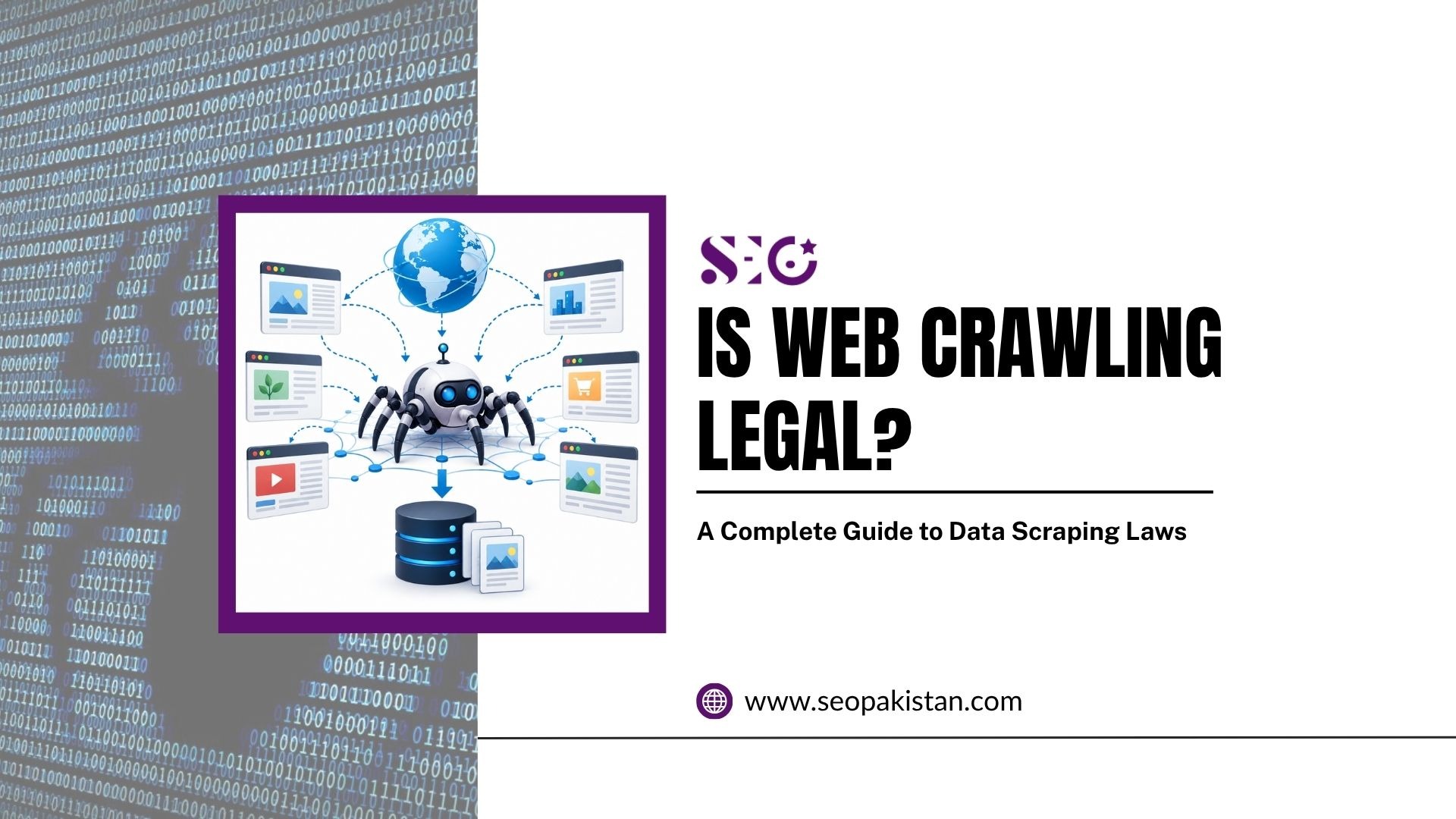
Is Web Crawling Legal? Yes, web crawling is generally legal when it collects publicly available data without bypassing authentication, violating privacy laws, or exceeding authorized access.
The legality depends on the type of data collected, the purpose of the crawling, and compliance with regulations such as the Computer Fraud and Abuse Act (CFAA) and the General Data Protection Regulation (GDPR). Businesses should also respect website terms, avoid scraping personal data without legal grounds, and follow ethical crawling practices like honoring robots.txt and maintaining reasonable crawl rates.
For the deep legal history on data extraction specifically, including the most current 2023 to 2024 court rulings, see our full guide to web scraping legality.
The Foundation of Legality: Public Data vs. Private Data
What Counts as Public Data
- Content available to any user without authentication barriers, no passwords, logins, or paywalls required
- Courts have consistently ruled that crawling public data generally falls within legal boundaries
- Publicly accessible doesn’t mean free to use without restrictions. A website owner can still impose conditions through their terms of service that govern data access, commercial use, or automated requests
What Counts as Private Data
- Content requiring authentication or explicitly marked as non-public
- Anything behind login walls or password-protected areas
- Personal data or biometric data, which carries extra legal risk under modern privacy laws regardless of how it’s accessed
Why the Distinction Matters Legally
- Unauthorized automated access can lead to civil lawsuits and even criminal liability
- Bypassing authentication counts as exceeding authorized access to a protected computer system
- Crawling that touches personal or biometric data faces significantly more legal exposure than crawling purely public content
Legal Precedents & Frameworks That Govern Crawling
Legal frameworks and court decisions play a crucial role in determining whether web crawling is legal. Understanding these regulations helps businesses and developers conduct web scraping responsibly while minimizing legal risk and ensuring compliance with privacy and data protection laws.
Legal Frameworks That Govern Crawling
Several laws shape what’s legal, depending on your jurisdiction and what your crawler actually does with what it finds.
| Law or Regulation | Region | Impact on Web Crawling |
| Computer Fraud and Abuse Act (CFAA) | United States | Prohibits unauthorized access to protected computer systems |
| General Data Protection Regulation (GDPR) | European Union | Restricts collection and processing of personal data |
| California Consumer Privacy Act (CCPA) | California, USA | Regulates consumer personal information and privacy rights |
| Computer Misuse Act | United Kingdom | Criminalizes unauthorized computer access |
| Digital Millennium Copyright Act (DMCA) | United States | Protects copyrighted digital content from unauthorized use |
| Database Directive | European Union | Provides legal protection for certain databases |
The Computer Fraud and Abuse Act (CFAA)
The Computer Fraud and Abuse Act, often called the fraud and abuse act or simply the abuse act, serves as the foundation of U.S. laws focused on preventing unauthorized access to a protected computer.
- Governs unauthorized computer access and situations involving authorized access.
- Vague definitions have led to varied court interpretations.
- Generally supports the legality of crawling publicly available data.
- Helps balance cybersecurity concerns with innovation.
For how that precedent has evolved through 2024, including newer rulings that go both directions, see the case-law breakdown on our scraping legality guide.
GDPR (General Data Protection Regulation)
The General Data Protection Regulation (GDPR) is one of the world’s most influential global privacy laws.
- Allows web crawling but restricts organizations from collecting personal data or personally identifiable information without a lawful basis.
- Regulates data flows involving EU data subjects.
- Requires organizations to justify data collection and processing.
- Imposes substantial penalties for violations.
Additional Regulations
Beyond the CFAA and GDPR, additional regulations may apply depending on jurisdiction.
- California Consumer Privacy Act (CCPA)
- Data Protection Act
- Computer Misuse Act
- Digital Millennium Copyright Act
- Digital Single Market Directive
- Database Directive
- California Penal Code
Organizations operating internationally should understand these regulations before conducting large-scale text and data mining, data mining, or commercial web scraping.
The Golden Rules of Ethical and Legal Crawling
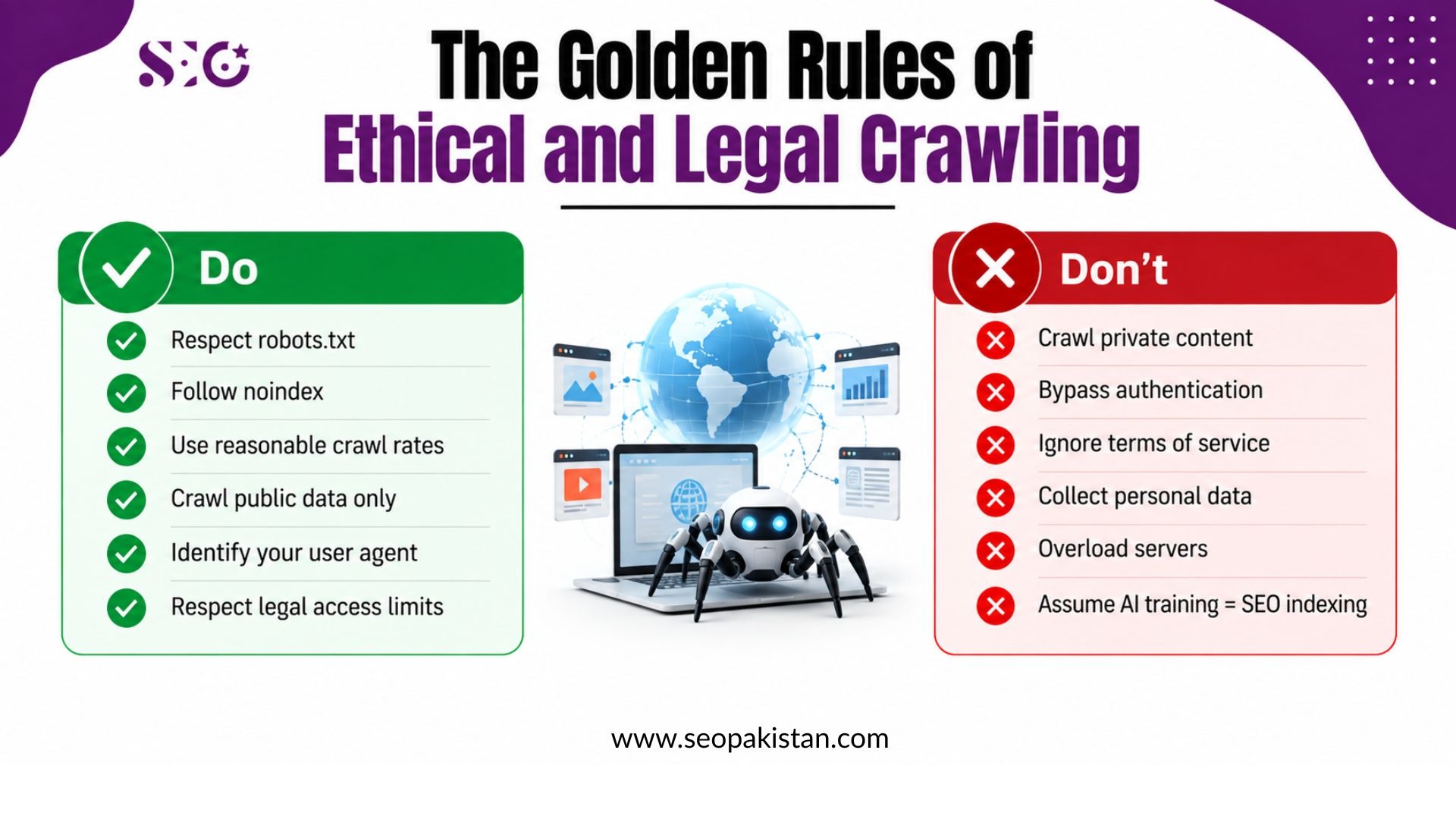
Following ethical and legal web crawling practices helps organizations reduce compliance risks while maintaining responsible automated data collection.
By respecting website policies, privacy regulations, and technical restrictions, businesses can legally scrape data and build sustainable web crawling processes that protect both their operations and the rights of website owners and users.
Do:
- Respect robots.txt files
- Honor meta directives like noindex
- Set reasonable crawl rates
- Crawl only publicly available data
- Use legitimate user agent identification
- Limit activity to information you can legally access
Don’t:
- Crawl private content behind logins
- Attempt to bypass authentication or circumvent technical controls
- Ignore a website’s terms of service
- Collect personal data without legal authority
- Overload servers with excessive request volume
- Assume commercial AI training use carries the same legal footing as SEO indexing
The Bottom Line on Web Crawling Legality
Web crawling legality isn’t determined by the technology itself but by how responsibly you implement it. The question isn’t whether web scraping is illegal or whether web scraping is legal; it depends on the circumstances, applicable copyright law, privacy regulations, and contractual obligations.
Successful organizations use web scrapers and scraping tools responsibly for market research, price monitoring, and other business purposes while respecting website owners, online platforms, and legal obligations.
Businesses should also consider whether the scraped data, data collected, or extracted information includes protected content or only data that is publicly available. Some organizations rely on fair use arguments, while others obtain legal permission before collecting data.
For organizations using data in commercial AI models or commercial AI training, the legal analysis continues to evolve. Companies should seek legal advice when operating across jurisdictions or handling large-scale datasets.
Ignoring legal obligations can result in a cease and desist letter, allegations of copyright violation, or claims under the Computer Fraud and Abuse Act.
The question “Is Web Crawling Legal?” will continue evolving as courts refine legal theories, issue new decisions that support claims, and lawmakers adapt to emerging technologies.
Conclusion
Is web crawling legal? In most cases, yes, when it respects public data boundaries, honors robots.txt, and avoids bypassing authentication or collecting personal information without a lawful basis. Crawling legality depends on the circumstances, applicable copyright law, privacy regulations like GDPR, and the contractual obligations set by a site’s terms of service, not on the technology itself.
Responsible organizations use crawlers for indexing, market research, and competitive intelligence while respecting website owners, and ignoring these obligations risks a cease and desist letter or CFAA claims. Our SEO services build technically sound, compliant crawling strategies from day one.
Frequently Asked Questions
Is web crawling legal?
Yes. Web crawling is generally legal when collecting publicly accessible information without bypassing security measures or violating applicable laws. The legality depends on the data collected, the crawling method, and compliance with website policies and privacy regulations.
Is web scraping the same as web crawling?
No. Web crawling discovers and indexes web pages, while web scraping extracts specific information from those pages. Crawling often comes before scraping, although the terms are sometimes used interchangeably.
Does robots.txt make web crawling illegal?
Not necessarily. A robots.txt file is not a law, but ignoring it may violate website policies or Terms of Service and can increase legal or contractual risk depending on the circumstances.
Can businesses crawl competitor websites?
Yes, businesses may crawl publicly available competitor information for market research and SEO purposes, provided they do not access restricted areas, overload servers, or violate applicable laws.
Does GDPR prohibit web crawling?
No. GDPR does not prohibit web crawling itself. However, organizations collecting or processing personally identifiable information (PII) of EU residents must have a lawful basis and comply with GDPR requirements.